
Loading, please wait...


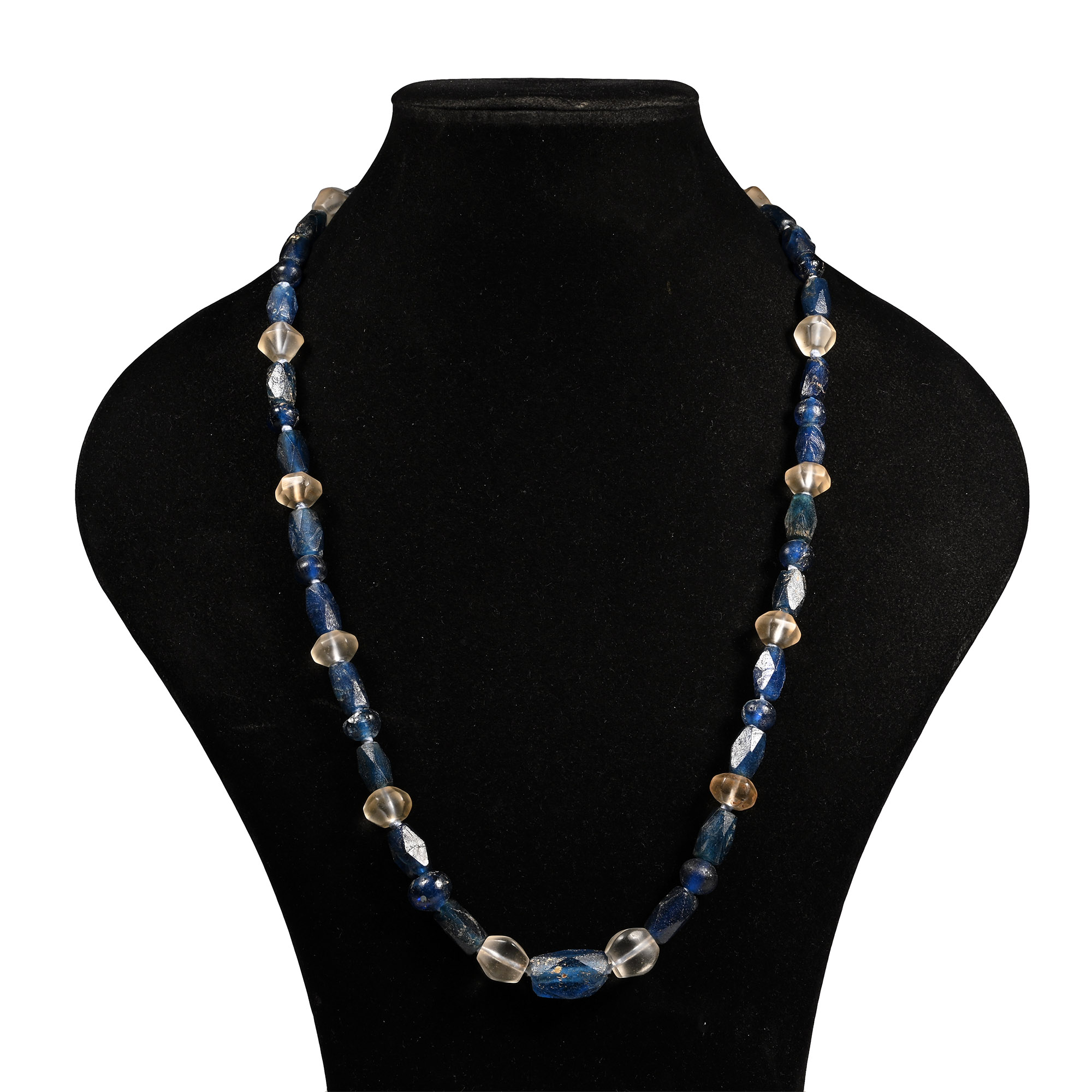
LOT 0656
Roman Blue Cut-Glass and Rock Crystal Bead Necklace
CIRCA 4TH CENTURY A.D. AND LATER
29 in. (89 grams, 74 cm long).
Restrung necklace of graduated blue glass polyhedral and fusiform beads, with possibly later interstitial biconvex and polyhedral rock crystal beads.
Provenancewith a London, UK gallery, 1971-early 2000s.
CONDITIONTimeLine Auctions follows a vetting process to ensure the authenticity and legality of all items, reinforcing our commitment to integrity and responsible trading. Each antiquity, antique, and coin lot undergoes thorough examination by a vetting committee of at least ten external specialists, professional trade association members, scientists, and archaeologists: Our Vetting Process
AUCTIONS:
TimeLine is a leading auction house specialising in antiquities, ancient art, collectables, natural history, coins, medals, and books. Our auctions offer museums, collectors, historians, and enthusiasts the opportunity to acquire unique and historically significant pieces.
LOT 0656
Roman Blue Cut-Glass and Rock Crystal Bead Necklace
Estimate £300 - 400€350 - 460 (for guidance only)$410 - 540 (for guidance only)
-
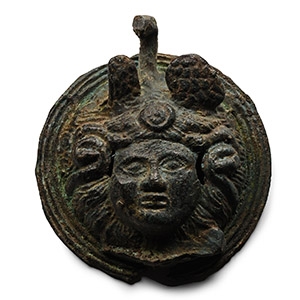
Roman Bronze Phalera with Medusa
2nd-3rd century A.D.Sold for (Inc. bp): £260
Domed with mask of Medusa, wings to the brow and serpent above; ribbed border. 49 grams, 61 mm
Ex USA private collection, early 1990s. -
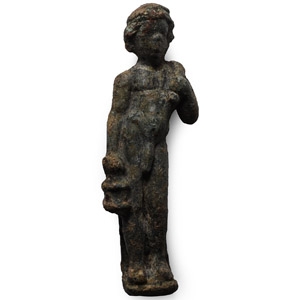
Roman Bronze Statuette of a Nude Male
1st-4th century A.D.Sold for (Inc. bp): £286
Modelled in the round standing on a small discoid base with tongue-shaped leaf to the rear of the legs holding a vessel in his proper right hand, net(?) thrown over his left shoulder. 47 grams, 68 mm
From the collection of a gentleman, acquired on the London art market in the 1990s. -
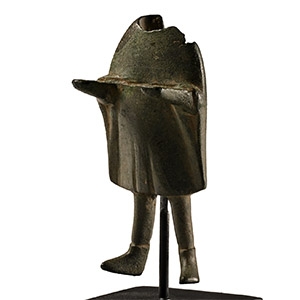
Roman Bronze Traveller Statuette
2nd-3rd century A.D.Sold for (Inc. bp): £91
Hollow-formed figure wearing a paenula and with hands extended to support a patera or salver; mounted on a custom-made stand. 35.8 grams total, 64 mm including stand
From a collection acquired on the UK art market from various auction houses and collections mostly before 2000. From an important Cambridgeshire estate; thence by descent.
