
Loading, please wait...

LOT 0965
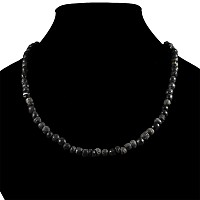
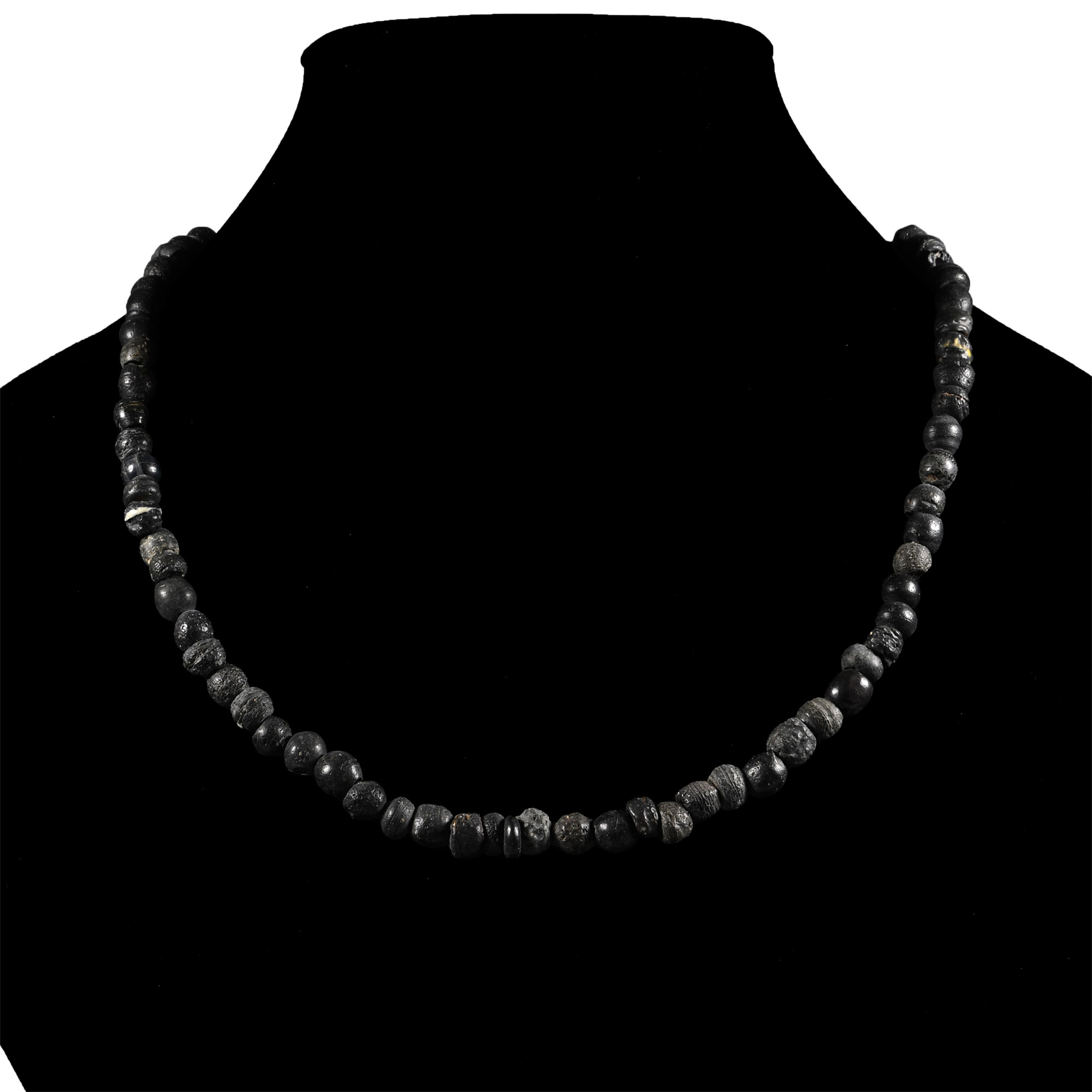
Roman Black Glass Bead Necklace String
1ST-4TH CENTURY A.D. AND LATER
15 3/4 in. (31.3 grams, 40 cm).
Composed of oblate beads; restrung. [No Reserve]
ProvenanceAcquired 1980-2015.
Ex Abelita family collection.
This lot is accompanied by an illustrated lot declaration signed by the Head of the Antiquities Department, Dr Raffaele D’Amato.
TimeLine Auctions follows a vetting process to ensure the authenticity and legality of all items, reinforcing our commitment to integrity and responsible trading. Each antiquity, antique, and coin lot undergoes thorough examination by a vetting committee of at least ten external specialists, professional trade association members, scientists, and archaeologists: Our Vetting Process
AUCTIONS:
TimeLine is a leading auction house specialising in antiquities, ancient art, collectables, natural history, coins, medals, and books. Our auctions offer museums, collectors, historians, and enthusiasts the opportunity to acquire unique and historically significant pieces.
-
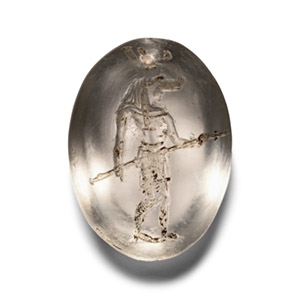
Roman Rock Crystal Gemstone with Sobek
1st century A.D.Sold for (Inc. bp): £975
Lentoid in section with engraved image of the crocodile-headed god Sobek, wearing a broad collar and pleated kilt, advancing with a spear, wearing the Pa-sekhemty crown; supplied with a museum-quality impression. 1.24 grams, 15 mm
From the Fadel family collection, London, UK, 1970s. This lot is accompanied by an illustrated lot declaration signed by the Head of the Antiquities Department, Dr Raffaele D’Amato.
The primary centres of worship for Sobek during the Roman Period were Medinet el-Fayum (ancient Shedet) in the Fayum region and Kom Ombo in Upper Egypt, where live crocodiles were kept within the temple precincts. Sobek was associated with other deities and the pharaoh, symbolising procreative and vegetative fertility, as well as strength and power. -
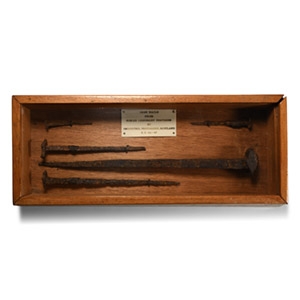
Romano-Scottish Legion XX Valeria Victrix 'Inchtuthil Fort' Boxed Educational Iron Nail Hoard Set
Circa 83-87 A.D.Sold for (Inc. bp): £845
Group of five iron clout-nails permanently mounted in a wooden display case with sloping sides and sliding glazed lid; with information panel 'Iron Nails / From / Roman Legionary Fortress / at / Inchtuthil, Perthshire, Scotland / A.D.83-87'; supplied with a printout on the subject of the Inchtuthil fortress. 589 grams total, 35.7 x 15 cm
From excavations started by Richmond in Perthshire, Scotland, from the 1950s, and discovered in the summer of 1960. Selected and boxed by David Colville & Sons by 1963. Acquired from a private Scottish collection in the early 2000s. Ian Wilkinson collection, Nottinghamshire, UK, formed since 1985. Accompanied by a copy of an online information sheet. This lot is accompanied by an illustrated lot declaration signed by the Head of the Antiquities Department, Dr Raffaele D’Amato.
The fortress at Inchtuthil was a fortified headquarters and forward supply depot for the forces led by the Roman governor, Gnaeus Julius Agricola, when he undertook a lengthy campaign against the Caledonian tribes in the north of Britain. The campaign is mentioned in the biographical work written by his son-in-law, the historian Tacitus, which has been studied in order to understand the Roman plan for the subjugation of the island. The troops chosen for the campaign were drawn from the 20th Legion (Legio XX Valeria Victrix). While the construction of Inchtuthil and other strongholds took place, the troops lived in temporary encampments which were also fortified and formed a chain of defensive sites from which domination of the surrounding territory could be achieved. Subsequently once the site was abandoned late in the 1st century A.D., (around 86 A.D.) no further building took place there or in the area. Excavation in the 20th century by Sir Ian Richmond (begun in 1952) revealed a pristine site with its complete plan recoverable - unique in the Roman Empire. The defences were a broad ditch and turf wall with stone facing, with watchtowers and gatehouses. The site was thought to have been abandoned due to relocation of troops to counter an invasion from eastern Europe into the province of Dacia, although this is no longer certain. A huge quantity of iron nails (more than 875,000) was recovered from a pit in the fort as well as other ironware; the goods had been buried in order not to let them fall into the hands of the Caledonians. The excavated nails and other items were sorted and sold in small parcels, which was completed by 1963.The nails range in size from small nails between thirty-eight and seventy millimetres long, up to the massive spikes three hundred and seventy-two millimetres long. These kind of long nails were also used for crucifixions. -
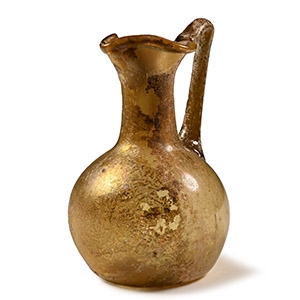
Roman Glass Flask with Handle
1st-3rd century ADSold for (Inc. bp): £468
Amber glass flask with bulbous body, dimple base, tapering neck, flared mouth folded into a pouring lip, applied handle to the rear. 57 grams, 11.5 cm
From a London, UK, collection, 1990s. This lot is accompanied by an illustrated lot declaration signed by the Head of the Antiquities Department, Dr Raffaele D’Amato.
