
Loading, please wait...


LOT 0673
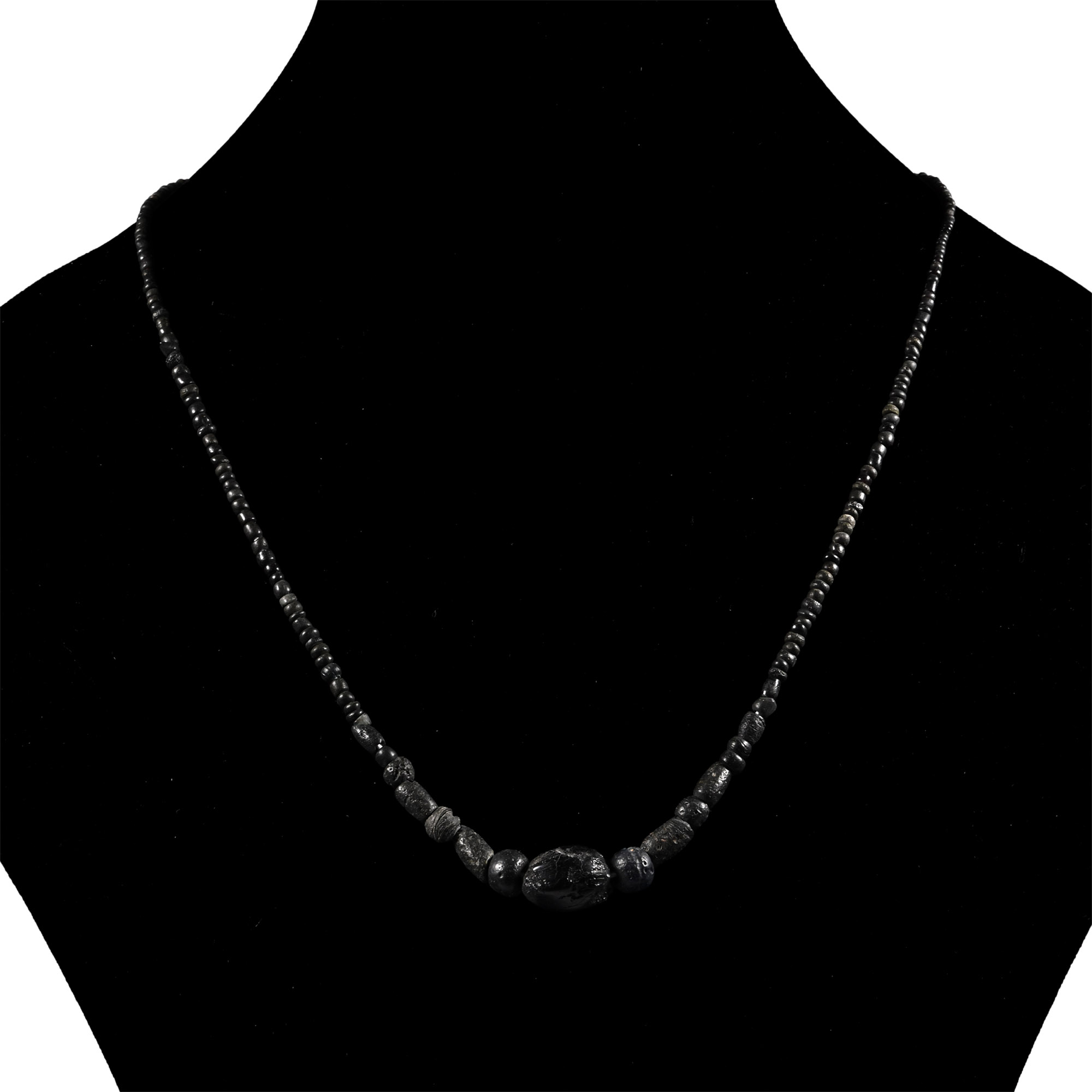
Roman Black Glass Bead Necklace String
1ST-4TH CENTURY A.D. AND LATER
18 7/8 in. (11.4 grams, 48 cm).
Restrung using gently graduating beads, larger beads to the centre with a large barrel-shaped feature bead. [No Reserve]
ProvenanceAcquired 1980-2015.
Ex Abelita family collection.
This lot is accompanied by an illustrated lot declaration signed by the Head of the Antiquities Department, Dr Raffaele D’Amato.
TimeLine Auctions follows a vetting process to ensure the authenticity and legality of all items, reinforcing our commitment to integrity and responsible trading. Each antiquity, antique, and coin lot undergoes thorough examination by a vetting committee of at least ten external specialists, professional trade association members, scientists, and archaeologists: Our Vetting Process
AUCTIONS:
TimeLine is a leading auction house specialising in antiquities, ancient art, collectables, natural history, coins, medals, and books. Our auctions offer museums, collectors, historians, and enthusiasts the opportunity to acquire unique and historically significant pieces.
-
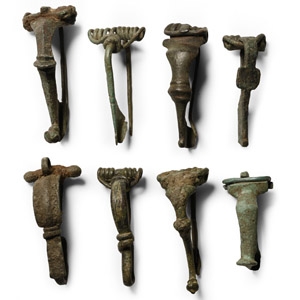
Roman Bronze Bow Brooch Collection
1st-3rd century A.D.Sold for (Inc. bp): £650
Including La Tène II, knee-brooch, dolphin type and others. 54 grams total, 32-46 mm
From an English collection formed before 2000. This lot is accompanied by an illustrated lot declaration signed by the Head of the Antiquities Department, Dr Raffaele D’Amato. -
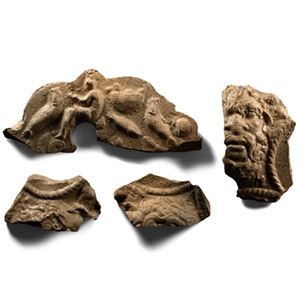
Roman Terracotta Vessel Fragment Group
1st-4th century A.D.Sold for (Inc. bp): £156
Each of curved profile with moulded ropework swags and other detailing. 96 grams total, 6-12.4 cm
Ex German art market, 2000s. Acquired from an EU collector living in London. From the collection of Surrey, UK, gentleman. This lot is accompanied by an illustrated lot declaration signed by the Head of the Antiquities Department, Dr Raffaele D’Amato. -
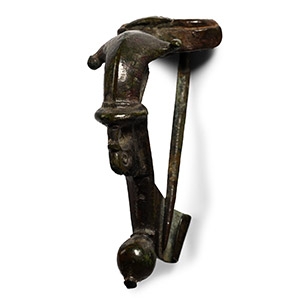
Romano-British Bronze Dolphin Bow Brooch
1st-2nd century A.D.Sold for (Inc. bp): £78
With chord developing to a sturdy pin, carinated bow with lateral knops, collar to the equator with duck-head below, recurved foot with bulb finial, long catchplate. 21.5 grams, 51 mm
Found Yorkshire, UK, in 1971. Acquired from Spinks, The Shambles, York, 2011. Ian Wilkinson collection, Nottinghamshire, UK, formed since 1985. Accompanied by an old handwritten dealer's ticket. This lot is accompanied by an illustrated lot declaration signed by the Head of the Antiquities Department, Dr Raffaele D’Amato.
