
Loading, please wait...
LOT 0952
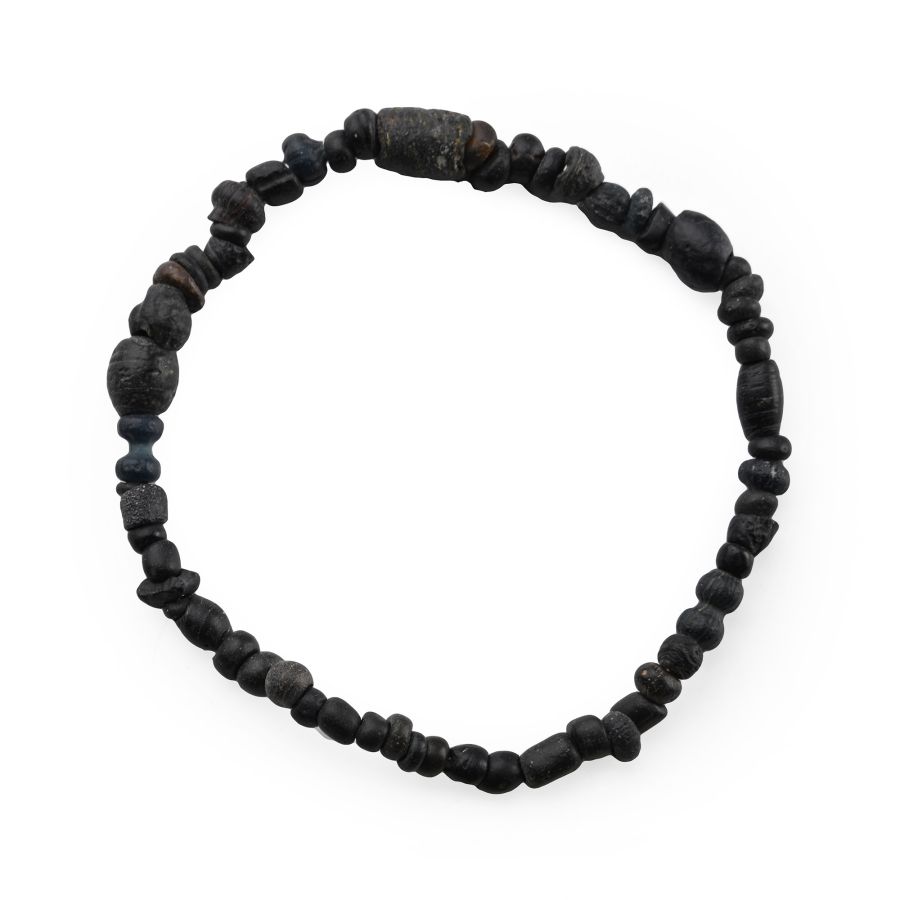
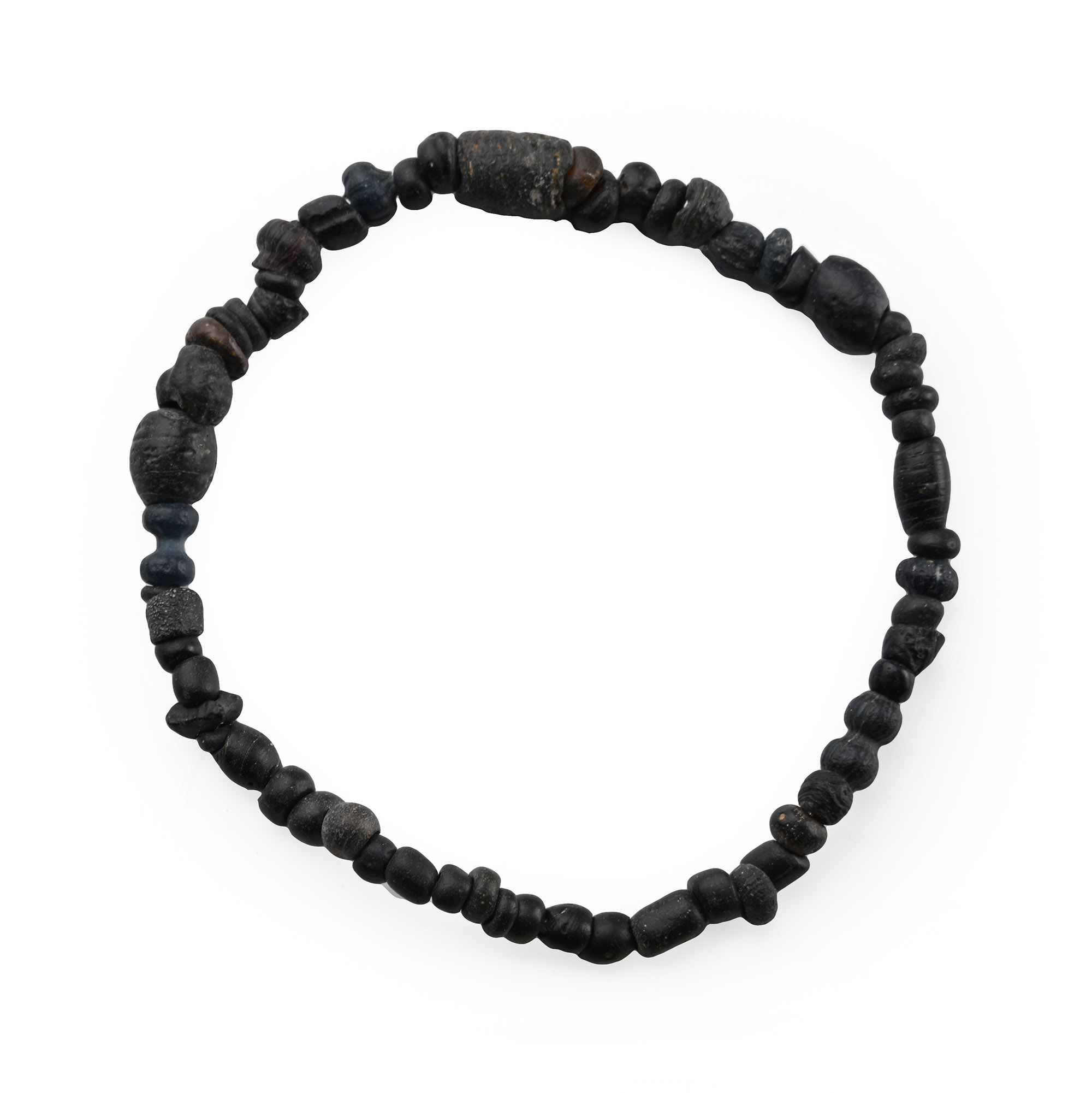
Roman Black Glass Bead Bracelet
CIRCA 1ST-4TH CENTURY A.D.
6 3/4 in. (4.79 grams, 17 cm).
Composed of mixed beads, restrung with an elasticated string. [No Reserve]
ProvenanceEx Ancient Art Shop, Windsor, UK, 1990s.
Ex private collection.
TimeLine Auctions follows a vetting process to ensure the authenticity and legality of all items, reinforcing our commitment to integrity and responsible trading. Each antiquity, antique, and coin lot undergoes thorough examination by a vetting committee of at least ten external specialists, professional trade association members, scientists, and archaeologists: Our Vetting Process
AUCTIONS:
TimeLine is a leading auction house specialising in antiquities, ancient art, collectables, natural history, coins, medals, and books. Our auctions offer museums, collectors, historians, and enthusiasts the opportunity to acquire unique and historically significant pieces.
LOT 0952
Roman Black Glass Bead Bracelet
Estimate £50 - 70€58 - 81 (for guidance only)$68 - 95 (for guidance only)
Opening Bid
£5 (EUR 6; USD 7) +BP*
-
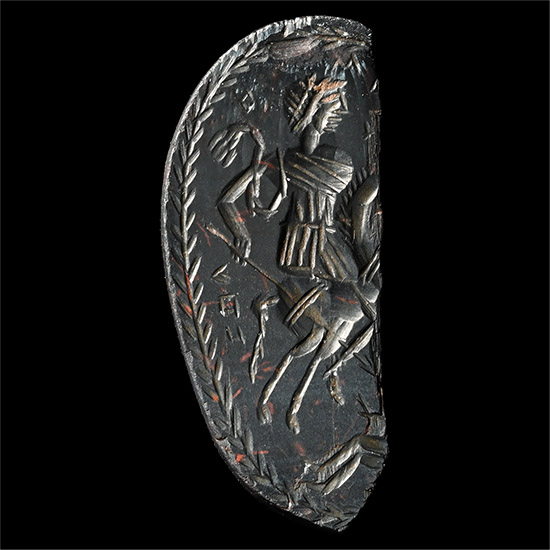
Large Roman Haematite Bifacial Gnostic Gemstone with Inscription
Circa 4th century A.D.Estimate: £100 - 140 (+bp*)
Bids: 1 | Current Bid: £5
Ellipsoid plaque fragment with figural scene and legend; obverse - wreath border enclosing a horseman with spear trampling a fallen enemy supine with legs flexed, 'IDA / Δ / M'; reverse -three lines of pseudo-Greek text '-ΦΡΑ / -ΙΠΘ / -ΟV' and 'X'; supplied with a museum-quality impression. 4.22 grams, 31 mm
From the private collection of a European gentleman (1942-2024), formed since the 1970s. -
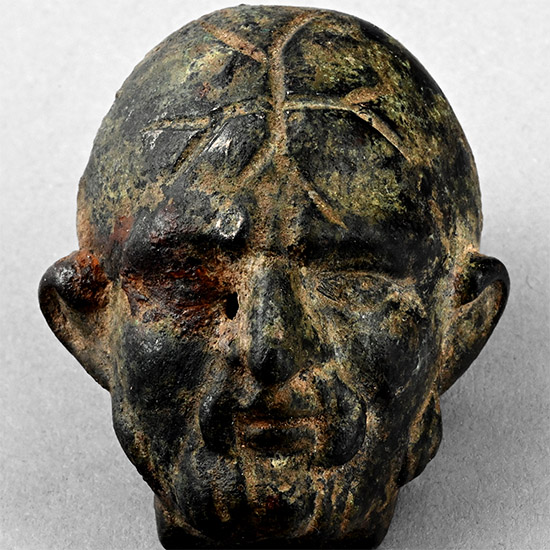
Roman Bronze Head with Cross Fourchee
4th century A.D.Estimate: £1,800 - 2,400 (‡+bp*)
Opening Bid: £950
Hollow-formed model male head with aperture to underside used as a 'money box'; with short beard and incised expanding-arm cross to the brow. 89 grams, 54 mm
German private collection, 1980s. with Artemis Gallery, 1990s. Private collection, acquired in 1999. This lot has been checked against the Interpol Database of stolen works of art and is accompanied by a search certificate number no.12866-241640.
Money boxes in the Roman Empire, particularly in the 4th century A.D., were used as practical containers for storing coins in everyday life. They were often made from pottery or metal, and while many examples had to be broken open, others were made with small doors or openings to allow access to the contents. -
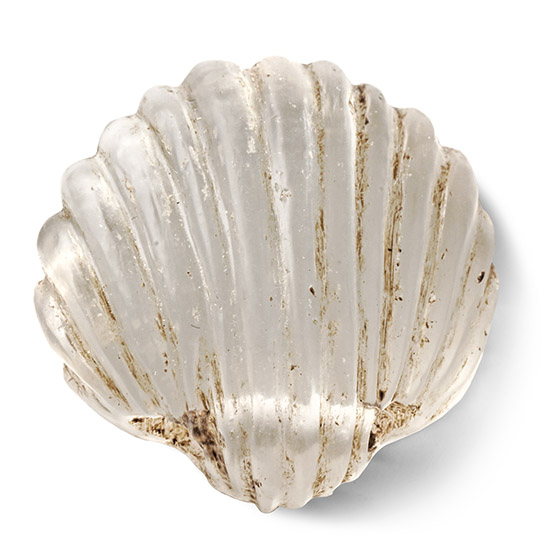
Roman Rock Crystal Shell-Shaped Amulet
1st-2nd century A.D.Estimate: £1,000 - 1,400 (+bp*)
Opening Bid: £500
Transparent clam shell-shaped amulet with deep striations and a slightly concave underside, pierced through the hinge for suspension. 5.4 grams, 25 mm
Private collection, London, UK.
