
Loading, please wait...
LOT 0656
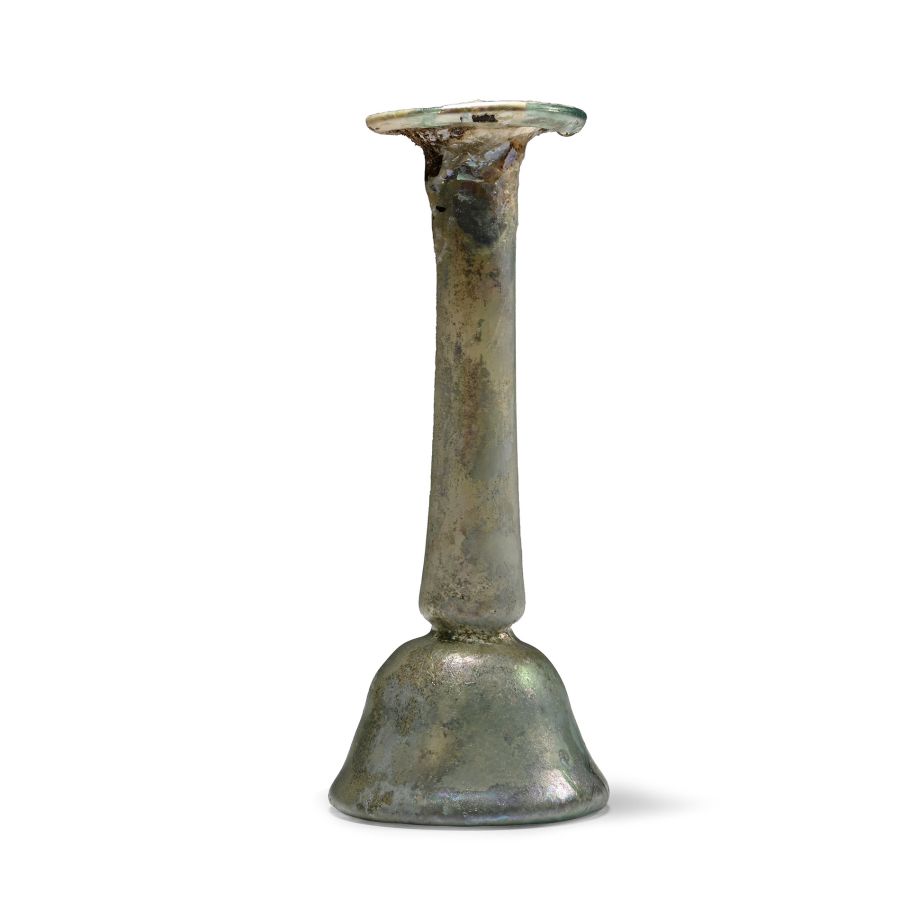
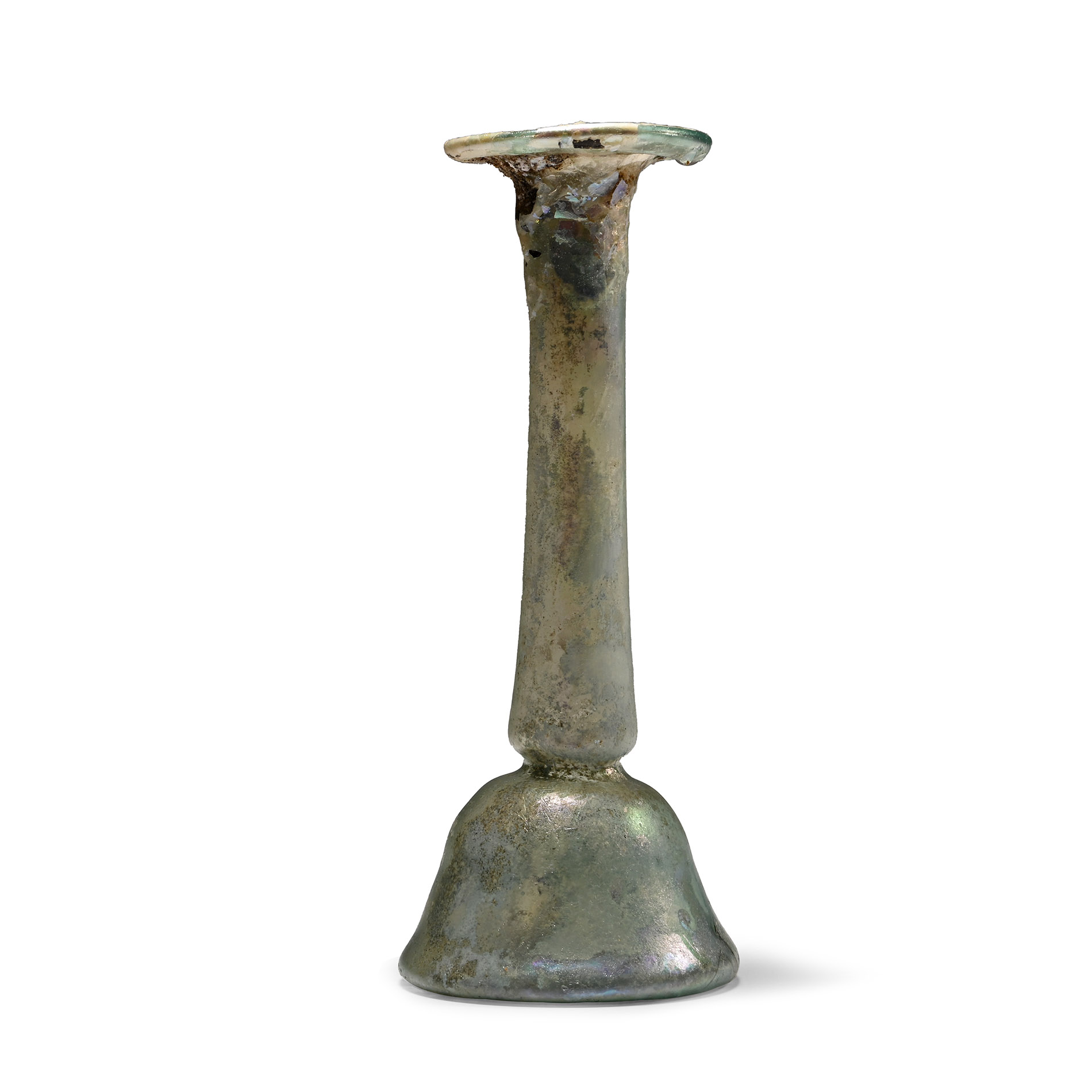
Roman Bell-Shaped Glass Vessel
3RD CENTURY A.D.
4 3/4 in. (20.3 grams, 12 cm).
Wide bell-shaped body with dimple base, tall narrow piriform neck and splayed rim with rolled edge; iridescent surface. [No Reserve]
ProvenanceEx London art market 1990s.
From a London, UK, collection.
This lot is accompanied by an illustrated lot declaration signed by the Head of the Antiquities Department, Dr Raffaele D’Amato.
Cf. Whitehouse, D., Roman Glass in the Corning Museum of Glass, vol.1, New York, 1997, item 259, for type.
CONDITIONTimeLine Auctions follows a vetting process to ensure the authenticity and legality of all items, reinforcing our commitment to integrity and responsible trading. Each antiquity, antique, and coin lot undergoes thorough examination by a vetting committee of at least ten external specialists, professional trade association members, scientists, and archaeologists: Our Vetting Process
AUCTIONS:
TimeLine is a leading auction house specialising in antiquities, ancient art, collectables, natural history, coins, medals, and books. Our auctions offer museums, collectors, historians, and enthusiasts the opportunity to acquire unique and historically significant pieces.
-
.jpg)
Roman Bronze Jupiter Statuette
1st-2nd century A.D.Sold for (Inc. bp): £1,105
Modelled standing with mantle over the left shoulder, thunderbolt in the right hand. 56 grams, 70 mm
Acquired on the UK art market from various auction houses and collections mostly before 2000. From an important Cambridgeshire estate; thence by descent. This lot is accompanied by an illustrated lot declaration signed by the Head of the Antiquities Department, Dr Raffaele D’Amato. -
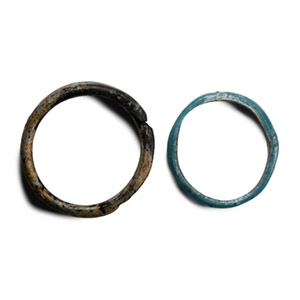
Roman Blue Glass Bangle Pair
Circa 4th century A.D.Sold for (Inc. bp): £72
One flat-section with light blue ribbed outer face; the other flattened at the juncture with some iridescence remaining. 20.4 grams total, 50-58 mm
From an old English collection. Acquired from Helios Gallery in 2011. Ian Wilkinson collection, Nottinghamshire, UK, formed since 1985. This lot is accompanied by an illustrated lot declaration signed by the Head of the Antiquities Department, Dr Raffaele D’Amato.
The mass production of glass in ancient Rome prompted the development of glass jewellery of unique qualities. The ancient Romans considered jewellery to be an essential accessory, being a public display of the wealth of high social classes. Recent excavations have provided better information on the use of glass for necklaces and bracelets, and in some cases it has been possible to understand the exact arrangement of the jewellery. -
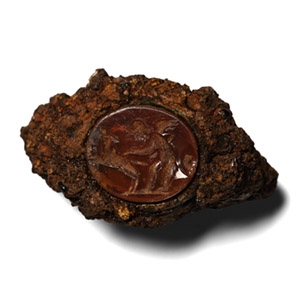
Roman Carnelian Gemstone with Cupid and Dog
2nd-3rd century A.D.Sold for (Inc. bp): £169
Fragment of iron hoop and bezel, inset carnelian cloison with intaglio scene of a putto restraining a barking dog. 2.49 grams, 22 mm
From the Fadel family collection, London, UK, 1970s. This lot is accompanied by an illustrated lot declaration signed by the Head of the Antiquities Department, Dr Raffaele D’Amato.
