
Loading, please wait...


LOT 0747
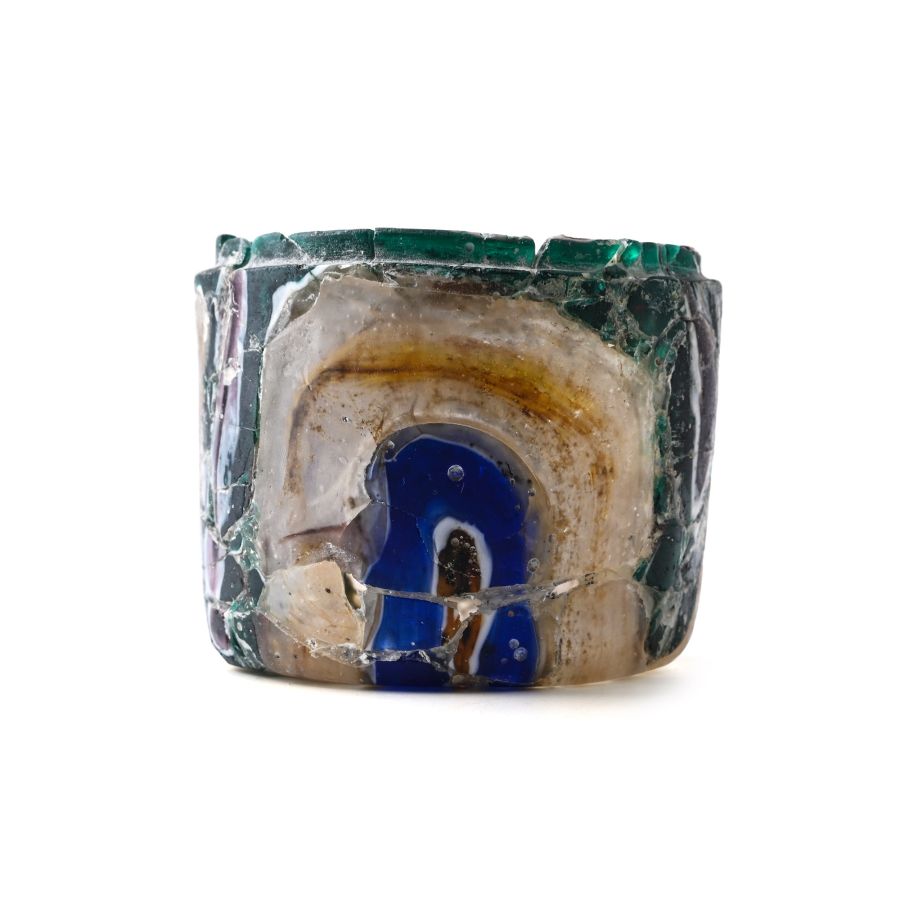
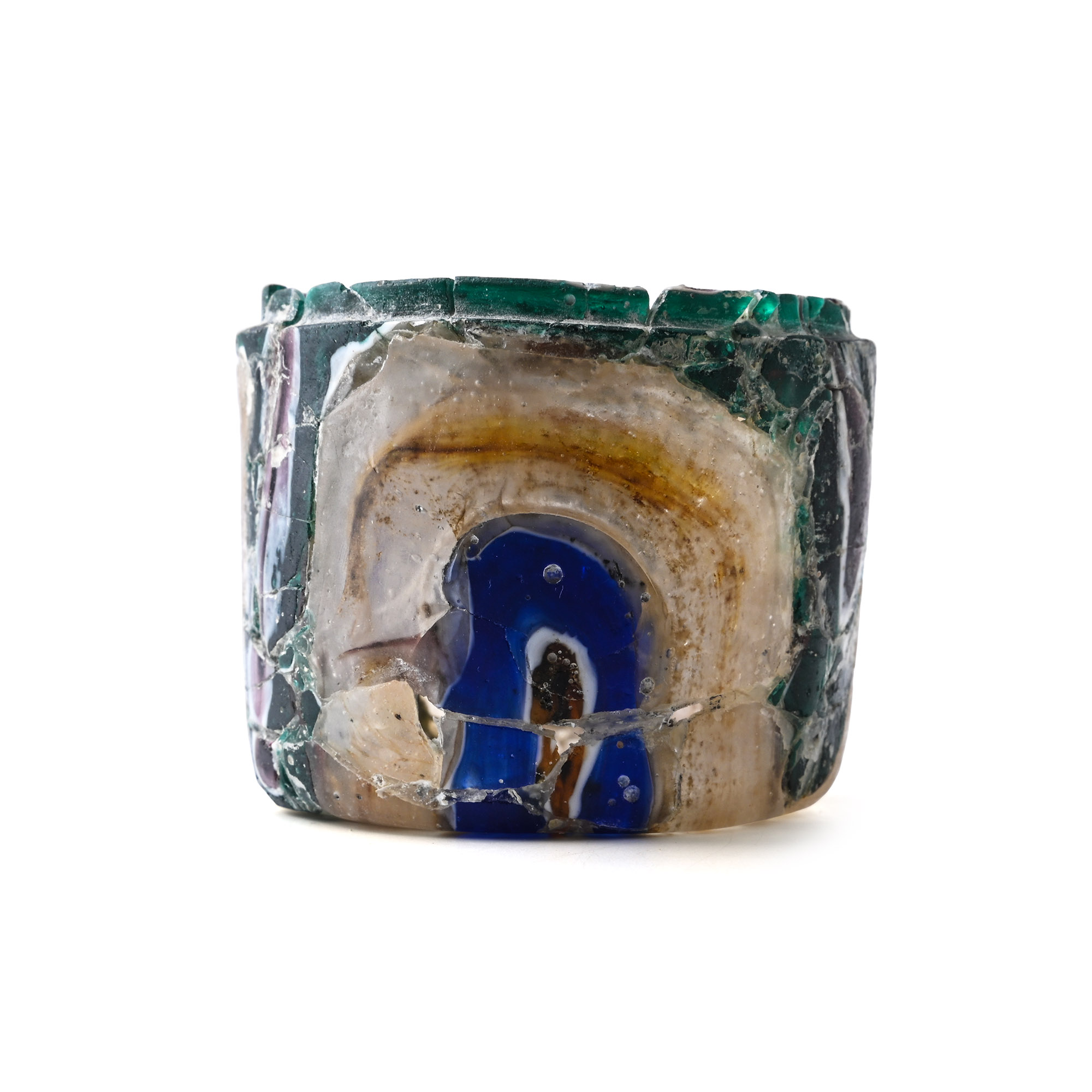
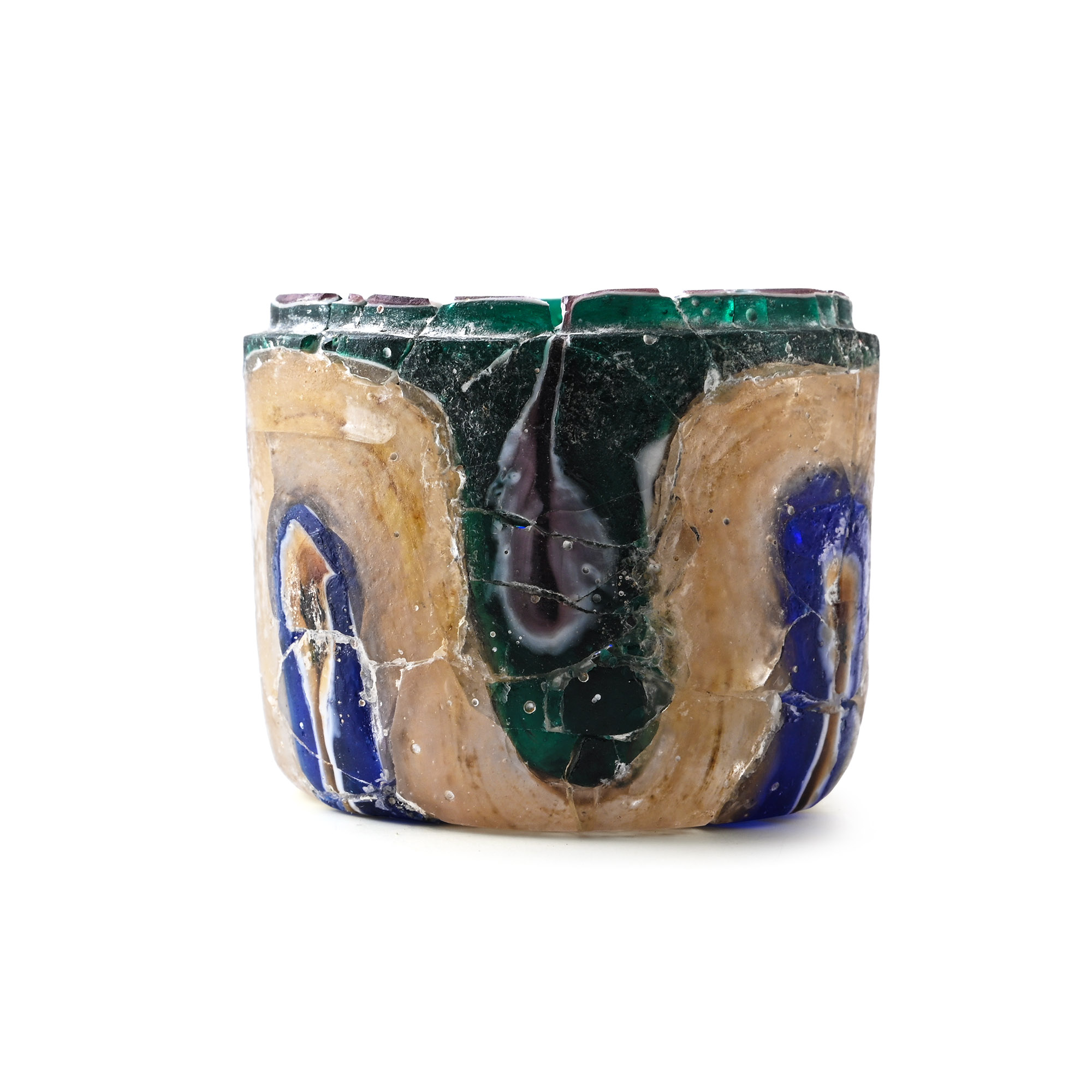
Roman Banded Glass Pyxis
1ST CENTURY A.D.
2 3/8 in. (87 grams, 60 mm).
Drum-shaped in profile with stepped rim; repaired.
ProvenanceAcquired in the late 1980s.
Private collection, thence by descent.
Private collection, since the late 1990s.
TimeLine Auctions follows a vetting process to ensure the authenticity and legality of all items, reinforcing our commitment to integrity and responsible trading. Each antiquity, antique, and coin lot undergoes thorough examination by a vetting committee of at least ten external specialists, professional trade association members, scientists, and archaeologists: Our Vetting Process
AUCTIONS:
TimeLine is a leading auction house specialising in antiquities, ancient art, collectables, natural history, coins, medals, and books. Our auctions offer museums, collectors, historians, and enthusiasts the opportunity to acquire unique and historically significant pieces.
LOT 0747
Roman Banded Glass Pyxis
Estimate £400 - 600€460 - 700 (for guidance only)$540 - 810 (for guidance only)
-
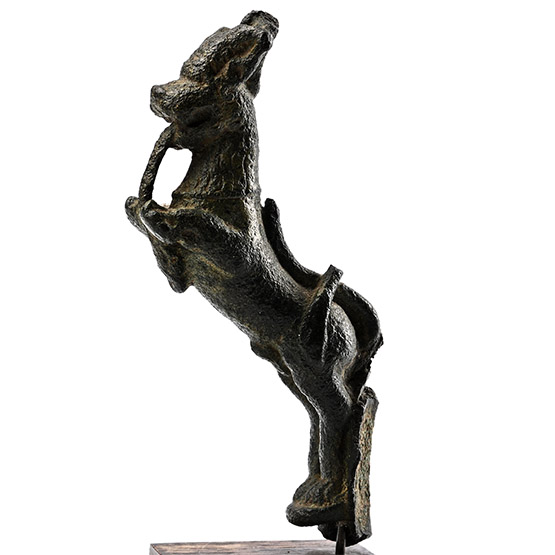
Roman Bronze Prancing Lion Statuette
1st-3rd century A.D.Sold for (Inc. bp): £715
Modelled in the round with the tail laid along the spine, collar to the neck and crest between the pricked ears; tongue protruding to form a loop against the chest, possibly from a handle; mounted on a display stand. 226 grams total, 13 cm including stand
Acquired from Bath Antiques Centre, 1990s; and inspected and verified by Robert Knox of the British Museum. From the private collection of a Somerset gentleman. -
.jpg)
Roman Enamelled Bronze Openwork 'Camp Gate' Plate Brooch
1st-2nd century A.D.Sold for (Inc. bp): £325
Tongue-shaped openwork plate with knob finial and yellow enamel; pin, pin-lugs and catchplate to the reverse. 21.2 grams, 44 mm
Ex property of an Essex, UK, gentleman collector. From the private collection of a Colchester, UK, gentleman. -
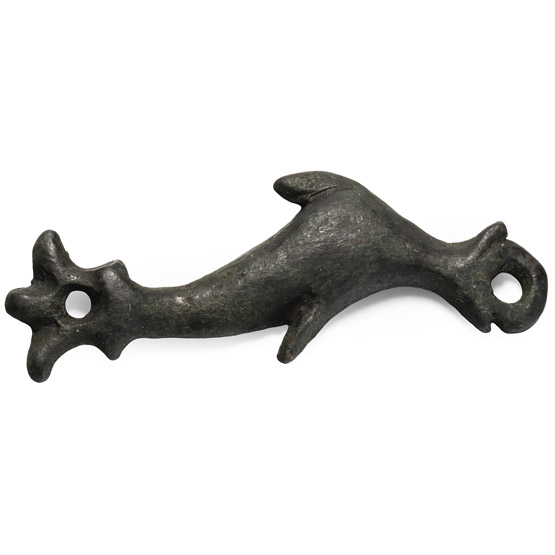
Roman Bronze Dolphin Mount
Circa 3rd century A.D.Sold for (Inc. bp): £91
Hollow to the reverse, formed as a dolphin with body and tail raised, lateral fins flared; a suspension loop to each end. 5.78 grams, 45 mm
Ex Cambridgeshire, UK, gentleman's collection.
