
Loading, please wait...
_900x900.jpg "Roman Banded Agate Gemstone with Silenus")
_200x200.jpg "Roman Banded Agate Gemstone with Silenus")
.jpg "Roman Banded Agate Gemstone with Silenus")
LOT 0014
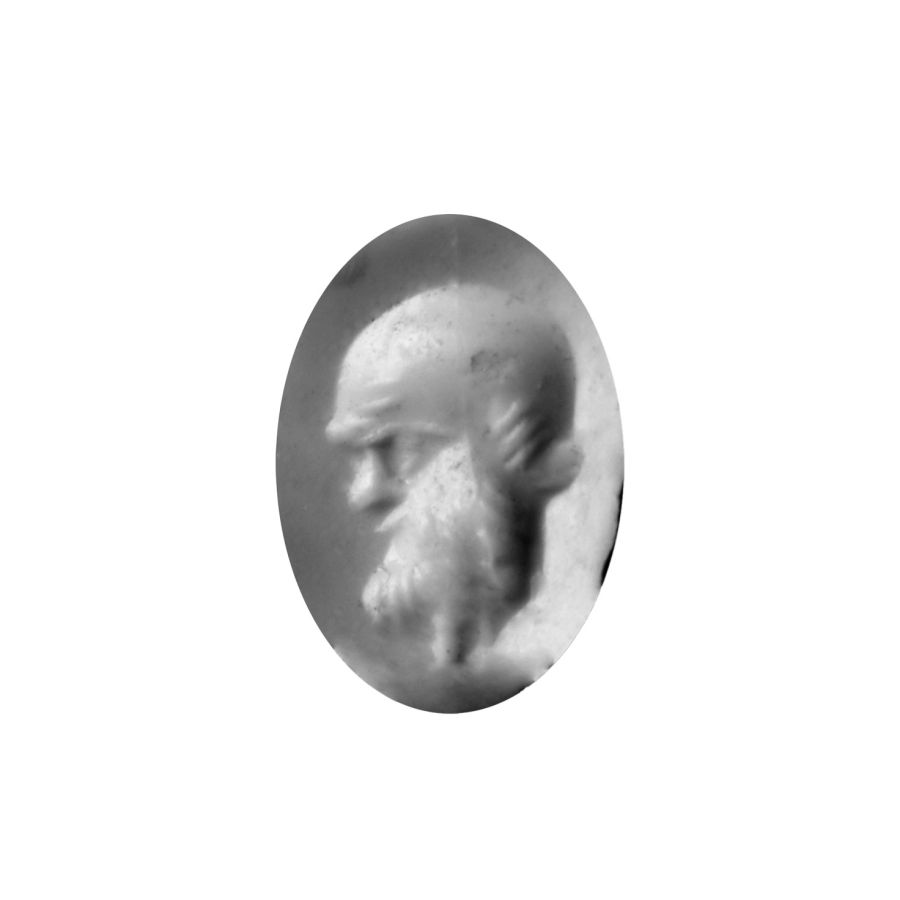
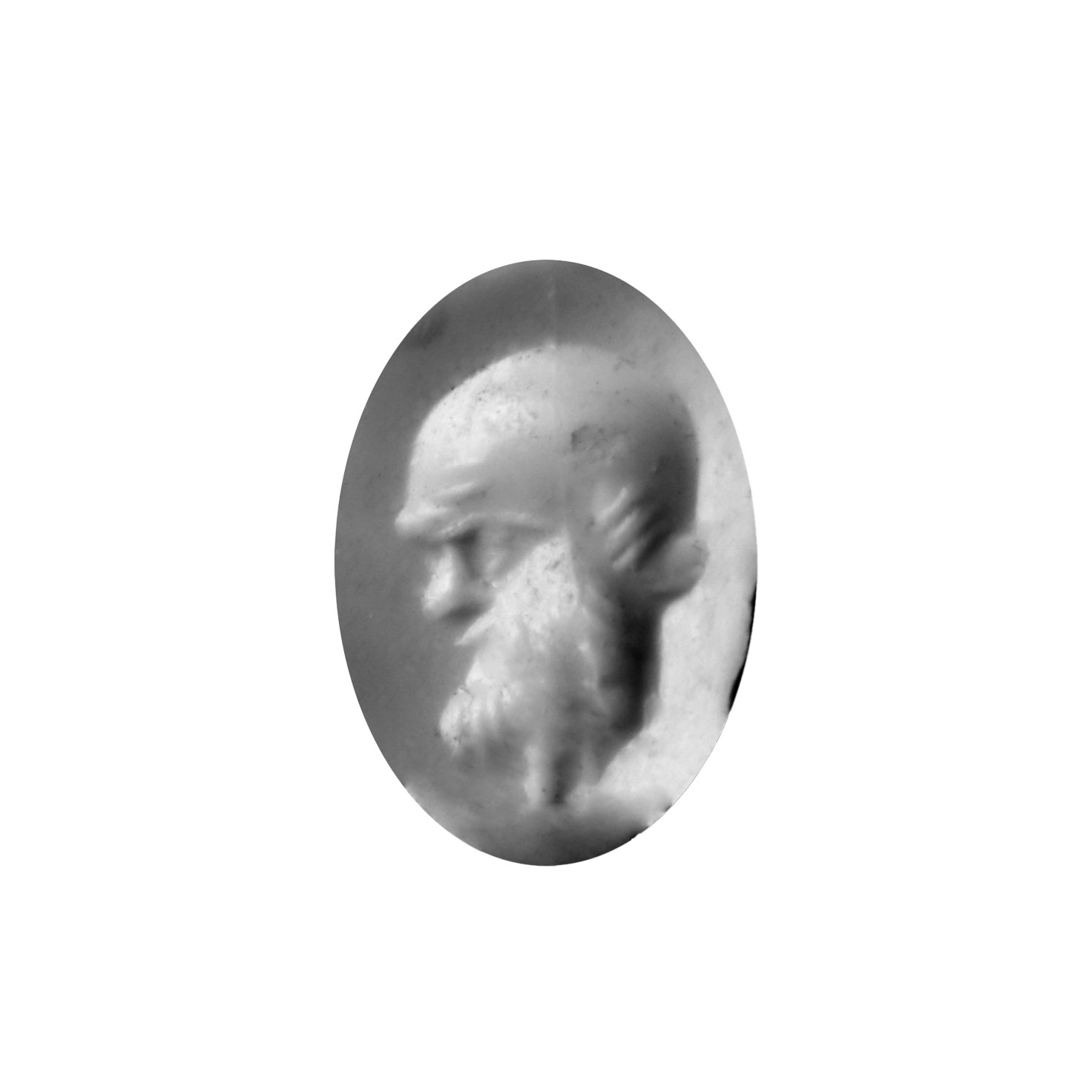
Roman Banded Agate Gemstone with Silenus
2ND-3RD CENTURY A.D.
3/8 in. (0.30 grams, 9.87 mm).
With intaglio head of Silenus in profile; supplied with a museum-quality impression. [No Reserve]
ProvenanceFrom the private collection of a European gentleman (1942-2024), formed since the 1970s.
CONDITIONTimeLine Auctions follows a vetting process to ensure the authenticity and legality of all items, reinforcing our commitment to integrity and responsible trading. Each antiquity, antique, and coin lot undergoes thorough examination by a vetting committee of at least ten external specialists, professional trade association members, scientists, and archaeologists: Our Vetting Process
AUCTIONS:
TimeLine is a leading auction house specialising in antiquities, ancient art, collectables, natural history, coins, medals, and books. Our auctions offer museums, collectors, historians, and enthusiasts the opportunity to acquire unique and historically significant pieces.
-
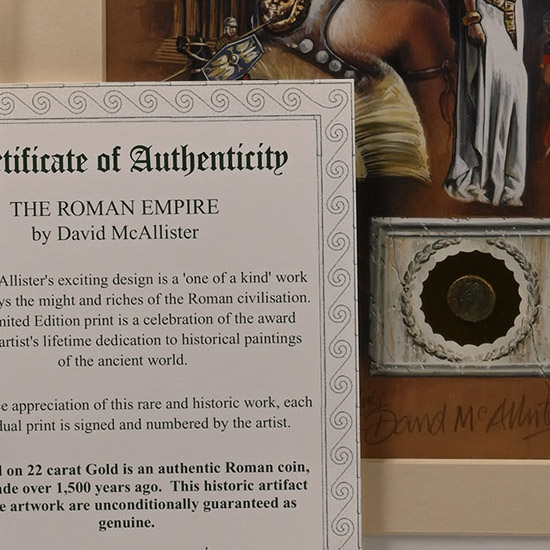
Bronze Roman Coin and Framed Limited Edition Print
3rd century A.D. and laterSold for (Inc. bp): £20
The coin of Constantine the Great (272-337 A.D.) mounted on 22 carat gold foil, framed with an art print signed by the artist David McAllister, depicting scenes of Roman military activity; limited edition number 169/1150. 1.26 kg, 49.5 x 37.5 cm
UK gallery, early 2000s. Accompanied by a previous certificate of authenticity.
David McAllister's exciting design is a 'one of a kind' work that portrays the might and riches of the Roman civilisation. This limited edition print is a celebration of the award winning artist's lifetime dedication to historical paintings of the ancient world. To enhance appreciation of this rare and historic work, each individual print is signed and numbered by the artist. -
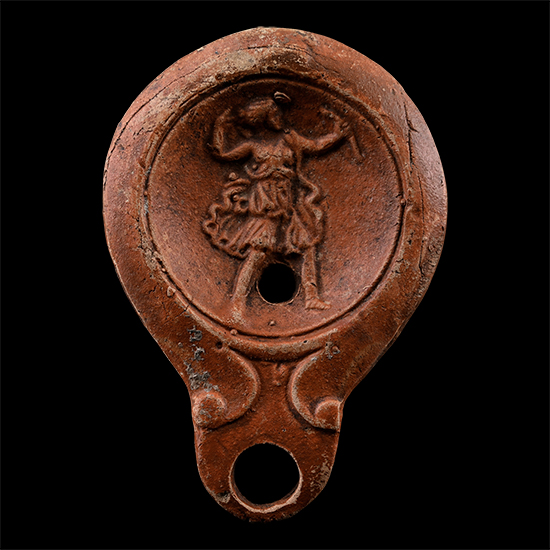
Roman Terracotta Oil Lamp with the Goddess Diana
Circa 1st-2nd century A.D.Sold for (Inc. bp): £260
Round body with volute nozzle, narrow shoulder, discus with low-relief image of Diana shooting her bow. 58.5 grams, 95 mm
From the private collection of Mr Brian Edwards, New Malden, Surrey, UK, formed from the late 1970s-early 1980s; thence by descent. -
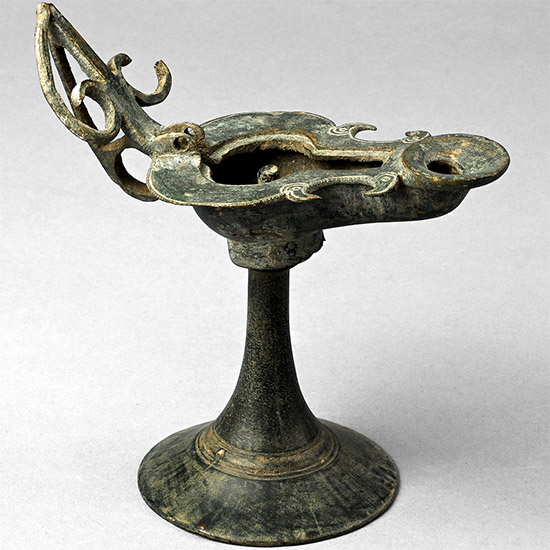
Late Roman Bronze Lamp and Stand
Circa 5th-6th century A.D.Sold for (Inc. bp): £585
Comprising a slipper-shaped lamp with broad flange rim to the shoulder and rear with hooked spurs; scooped recessed nozzle; handle to rear formed as a vertical bar with lateral coils converging at the apex (one partly absent) and finger-loop below; two small hinge lugs to the rear of the flange to attach a hinged cover (absent); base with socket and portion of peg; separate conical stand with carination and collar to top. 543 grams total, 8.6-15.4 cm
Ex German art market, 2000s. Acquired from an EU collector living in London. From the collection of a Surrey, UK, gentleman.
