
Loading, please wait...

LOT 0128
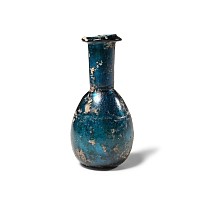
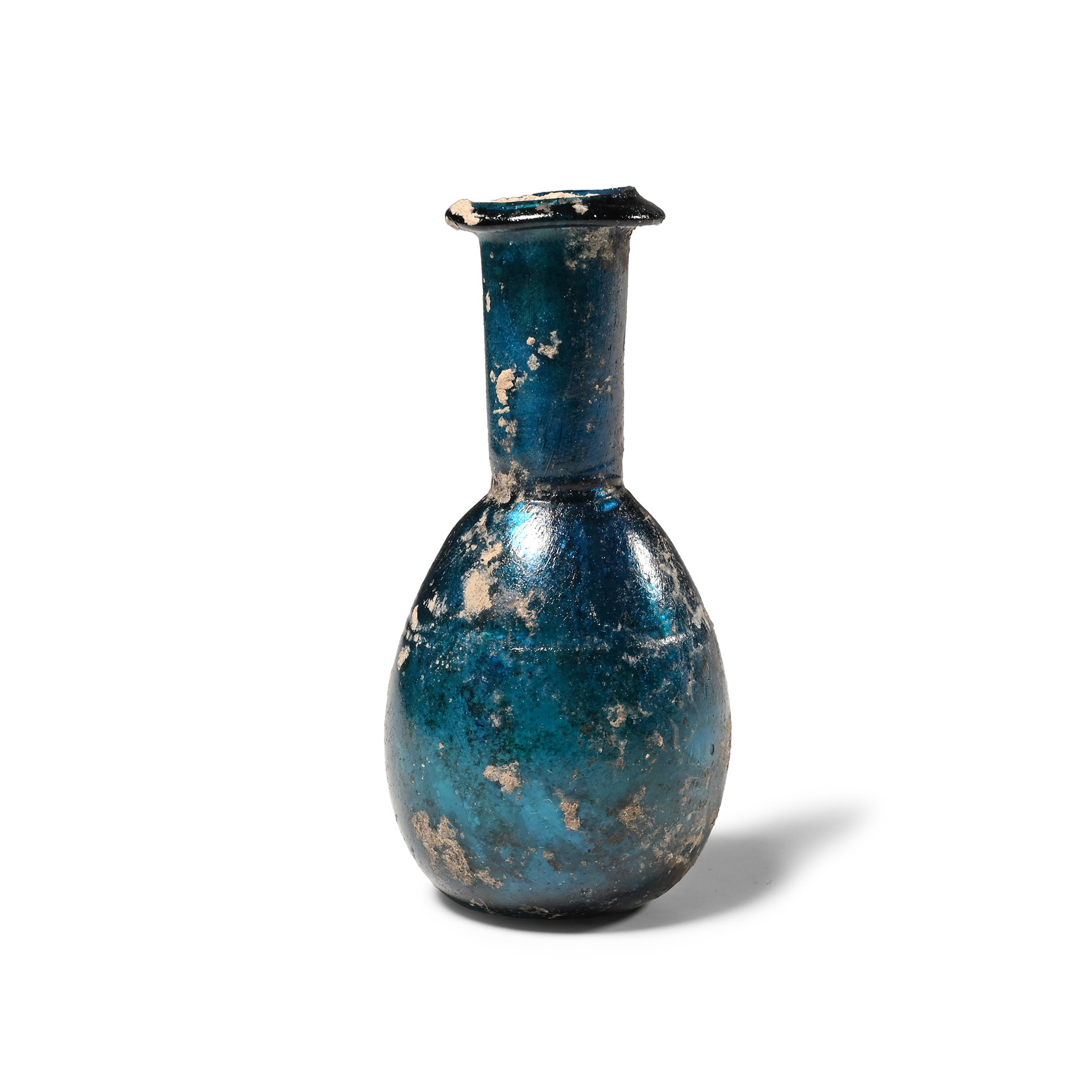
Roman Azure Blue Glass Unguentarium
1ST-4TH CENTURY A.D.
2 3/4 in. (22.23 grams, 71 mm).
With piriform body and dimple base, narrow neck and everted rim; rich blue iridescent surface.
ProvenanceFrom a London, UK, collection, 1990s.
LiteratureCf. Whitehouse, D., Roman Glass in the Corning Museum of Glass, vol.2, New York, 2001, item 772, for type.
CONDITIONTimeLine Auctions follows a vetting process to ensure the authenticity and legality of all items, reinforcing our commitment to integrity and responsible trading. Each antiquity, antique, and coin lot undergoes thorough examination by a vetting committee of at least ten external specialists, professional trade association members, scientists, and archaeologists: Our Vetting Process
AUCTIONS:
TimeLine is a leading auction house specialising in antiquities, ancient art, collectables, natural history, coins, medals, and books. Our auctions offer museums, collectors, historians, and enthusiasts the opportunity to acquire unique and historically significant pieces.
-
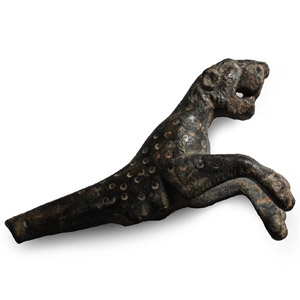
Roman Bronze Leopard Finial
1st-4th century A.D.Sold for (Inc. bp): £65
Mount formed as a leaping lioness with mouth gaping and forelegs extended, paws hooked; pointillé texturing to the flanks, teats to the underside, tapering body. 27 grams, 50 mm
From the collection of a gentleman, acquired on the London art market in the 1990s. -
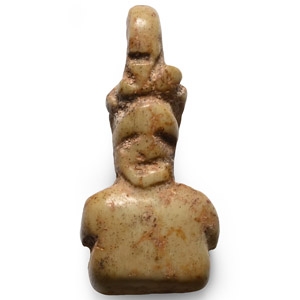
Roman Bone Pendant of a Nude Man
1st-4th century A.D.Sold for (Inc. bp): £26
Carved bust with pierced suspension lug above. 1.2 grams, 22 mm
From the collection of a gentleman, acquired on the London art market in the 1990s. -
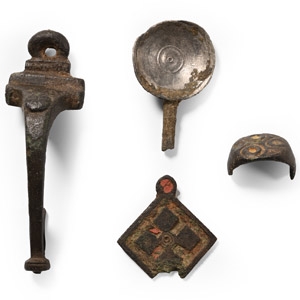
Roman Bronze and Silver Artefact Collection
2nd-4th century A.D.Sold for (Inc. bp): £52
Including head-stud brooch, enamelled pendant and other items. 34 grams total, 18-63 mm
From a private Barnsley, UK, family collection.
