
Loading, please wait...
LOT 0668
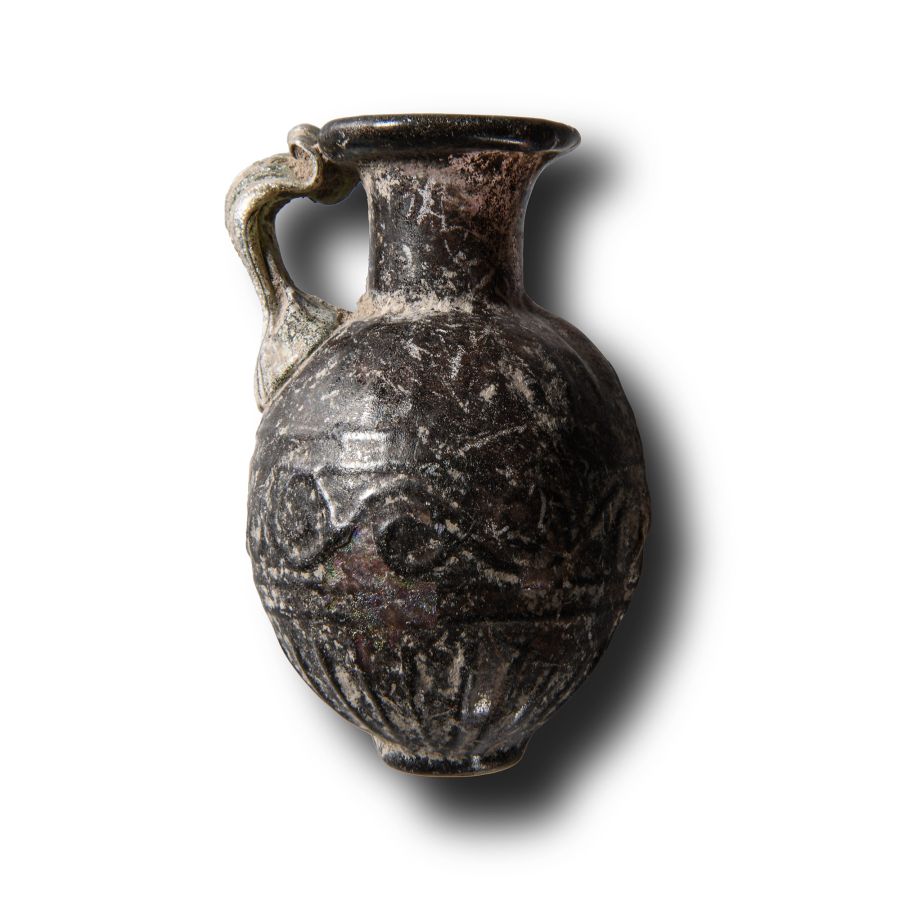
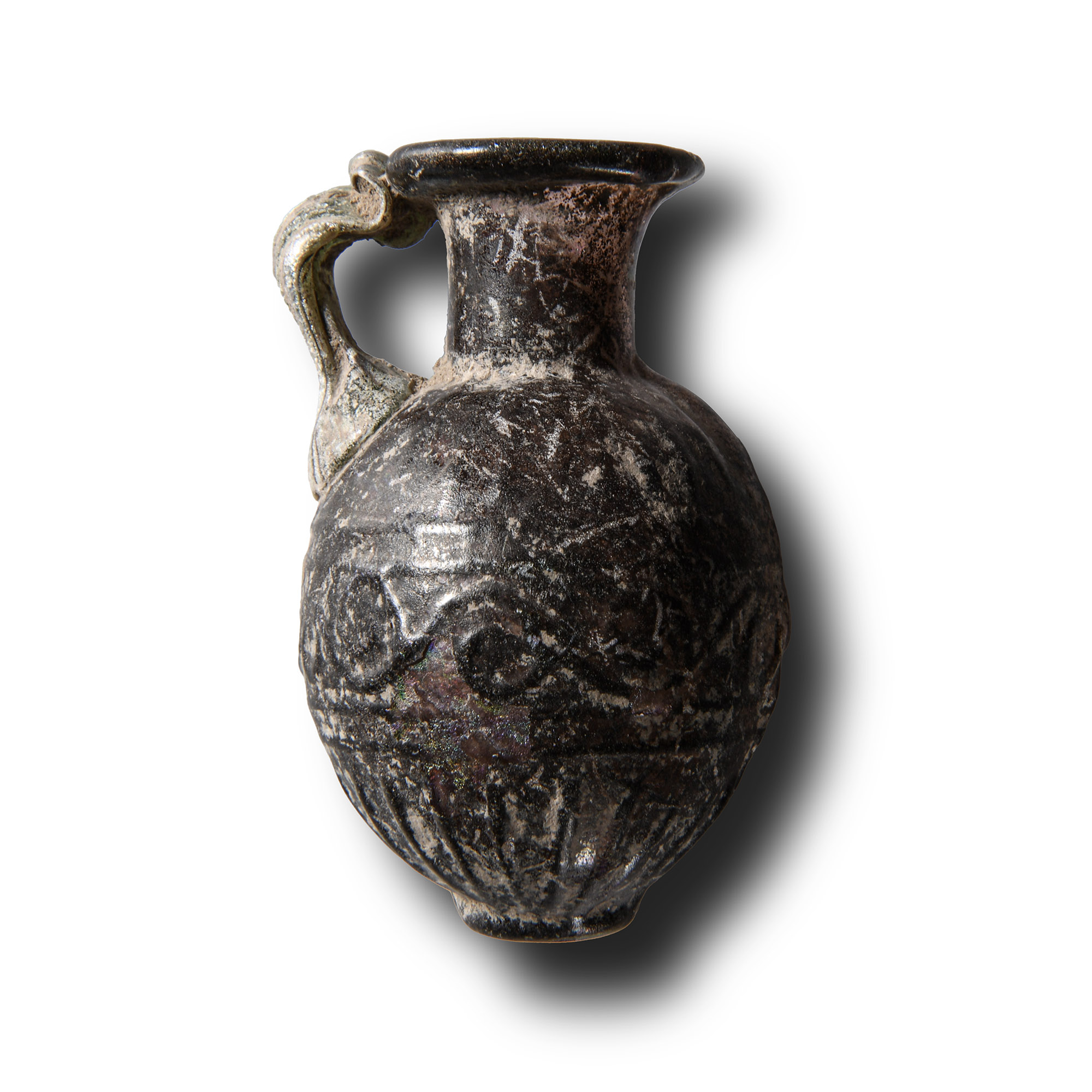
Roman Aubergine Mould Blown Amphoriskos
1ST CENTURY A.D.
2 5/8 in. (17.3 grams, 66 mm high).
Miniature egg-shaped juglet with applied handle and integral foot, mould-blown decoration formed as a medial frieze of scrolling motifs and lines radiating upwards from the base; iridescent surfaces; chipped rim.
ProvenanceAcquired early 1990s.
Ex private American collection; thence by descent.
Private collection since 1998.
Cf. The Metropolitan Museum, New York, accession numbers 17.194.224 and 199407, for a similar.
CONDITIONTimeLine Auctions follows a vetting process to ensure the authenticity and legality of all items, reinforcing our commitment to integrity and responsible trading. Each antiquity, antique, and coin lot undergoes thorough examination by a vetting committee of at least ten external specialists, professional trade association members, scientists, and archaeologists: Our Vetting Process
AUCTIONS:
TimeLine is a leading auction house specialising in antiquities, ancient art, collectables, natural history, coins, medals, and books. Our auctions offer museums, collectors, historians, and enthusiasts the opportunity to acquire unique and historically significant pieces.
-
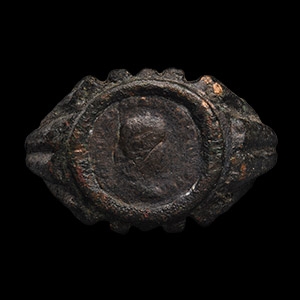
Roman Bronze Ring with Portrait
3rd century A.D.Sold for (Inc. bp): £182
Hoop composed of angled and fluted shoulders and an oval bezel displaying a portrait bust in profile right, in relief. 34.93 grams, 38.63 mm overall, 22.43 mm internal diameter (approximate size British O 1/2, USA 7 1/4, Europe 15.61, Japan 15)
Acquired 1990s-early 2000s. East Anglian private collection. -

British Roman Bronze Votive Beneficiarius Sceptre
2nd-3rd century A.D.Sold for (Inc. bp): £910
The upper part of a Beneficiarius dedicatory spear or sceptre, comprising a circular-section shaft with an ivy leaf finial, a crescent (lunula) below and the point with triple acorn-shaped spheres; the lower end of the shaft square-section and with a rosette for attaching it to the wooden part, engraved with X-motifs and circumferential lines. 62 grams, 49 cm
Found Cambridgeshire, UK. Accompanied by an academic report by Dr Raffaele D’Amato.
The beneficiarii, within the Roman army, were soldiers exempted from menial duties and acting as orderlies of senior officers; they were also charged with particular duties by governors and generals. Their distinctive insignia were decorated spears, often with a point shaped like an ivy leaf. The military stela from Perinth depicting a 3rd century beneficiarius shows a very similar spear, mounted over a particular structure on the midshaft of the spear. -
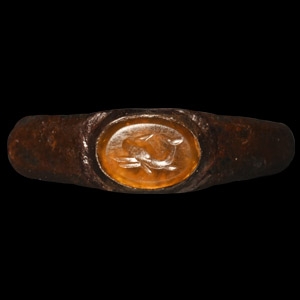
Late Roman Bronze Ring with Dolphin Gemstone
Circa 3rd-4th century A.D.Sold for (Inc. bp): £169
With facetted angled shoulders, small plaque with inset carnelian intaglio of a dolphin with raised tail. 3.15 grams, 24.52 mm overall, 18.01 mm internal diameter (approximate size British O 1/2, USA 7 1/4, Europe 15.61, Japan 15)
Acquired on the German art market before 2000. Property of a Surrey, UK, collector.
