
Loading, please wait...
LOT 0666
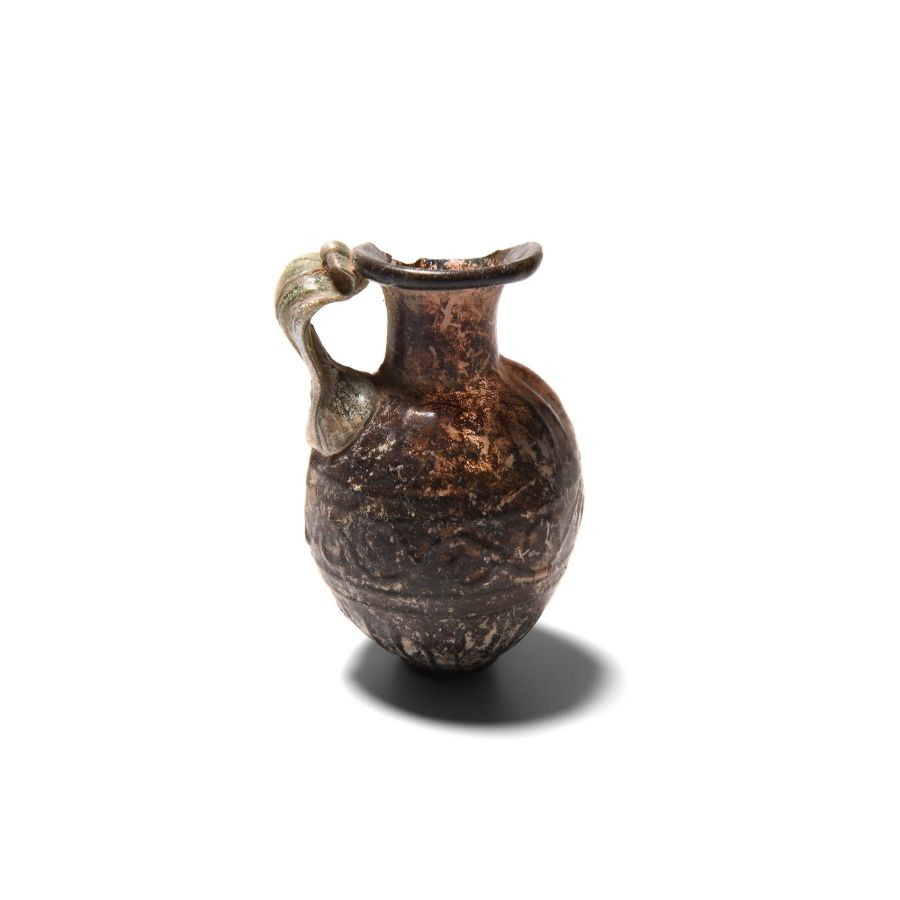
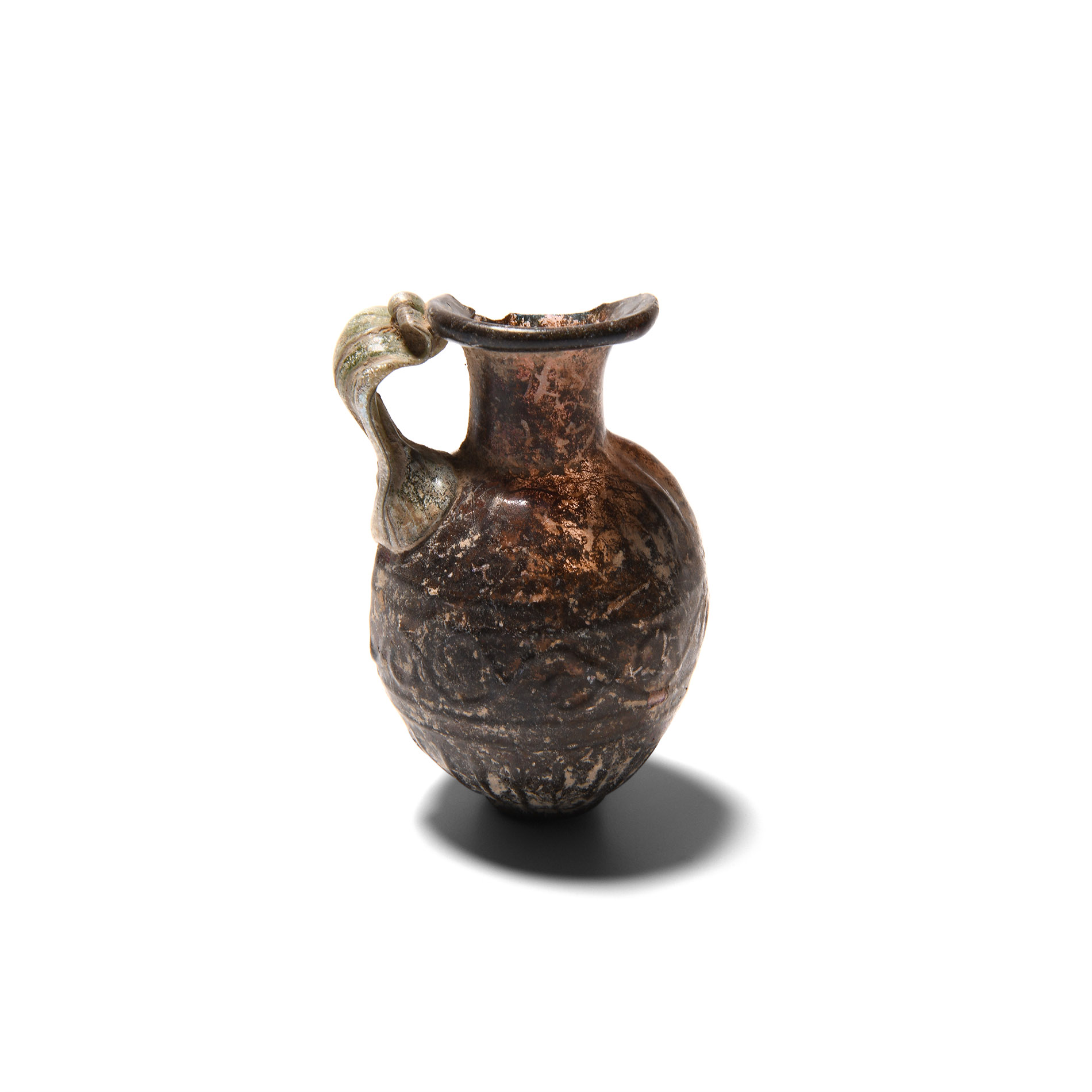
Roman Aubergine Mould Blown Amphoriskos
1ST CENTURY A.D.
2 5/8 in. (17.3 grams, 66 mm high).
An aubergine-coloured miniature egg-shaped juglet with applied handle and integral foot, mould-blown decoration formed as a medial frieze of scrolling motifs and lines radiating upwards from the base; iridescent surfaces; chipped rim.
ProvenanceAcquired early 1990s.
Ex private American collection; thence by descent.
Private collection since 1998.
Cf. The Metropolitan Museum, New York, accession numbers 17.194.224 and 199407, for a similar.
CONDITIONTimeLine Auctions follows a vetting process to ensure the authenticity and legality of all items, reinforcing our commitment to integrity and responsible trading. Each antiquity, antique, and coin lot undergoes thorough examination by a vetting committee of at least ten external specialists, professional trade association members, scientists, and archaeologists: Our Vetting Process
AUCTIONS:
TimeLine is a leading auction house specialising in antiquities, ancient art, collectables, natural history, coins, medals, and books. Our auctions offer museums, collectors, historians, and enthusiasts the opportunity to acquire unique and historically significant pieces.
LOT 0666
Roman Aubergine Mould Blown Amphoriskos
Estimate £300 - 400€350 - 460 (for guidance only)$410 - 540 (for guidance only)
-
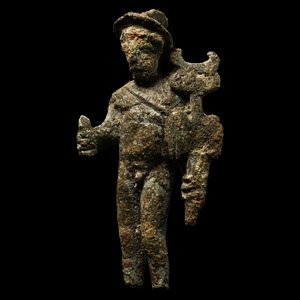
Roman Bronze Hermes Figure
2nd-3rd century A.D.Estimate: £200 - 300 (‡+bp*)
Opening Bid: £100
A nude bronze figure of Hermes, modelled standing, holding a caduceus and a coin bag, wearing a winged petasos. 38.5 grams, 61 mm
Acquired early 1990s. Ex private American collection; thence by descent. Private collection since 1998. -
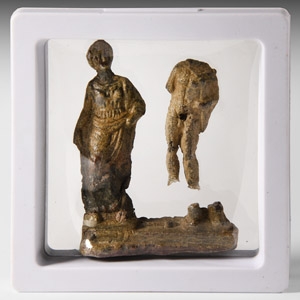
Roman Lead Figural Scene
1st-4th century A.D.Sold for (Inc. bp): £117
A lead figural scene composed of a male and female figure standing facing on a rectangular base; the male figure detached and with head absent; set in a display frame. 91 grams total, 70 x 70 mm including case
Acquired before 2000. From the collection of a European gentleman living in the UK. -
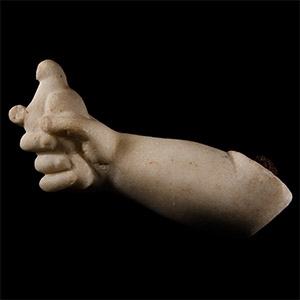
Roman Marble Hand Holding Bird
1st-2nd century A.D. or laterSold for (Inc. bp): £845
A white marble right forearm and hand, modelled in the round gripping a bird; simple detailing to the bird's head and to the folds of the skin on the palm of the hand and the nail beds; remains of iron rod inserted into the limb. 531 grams, 17 cm
New York art market, 1992.
