
Loading, please wait...
LOT 0139
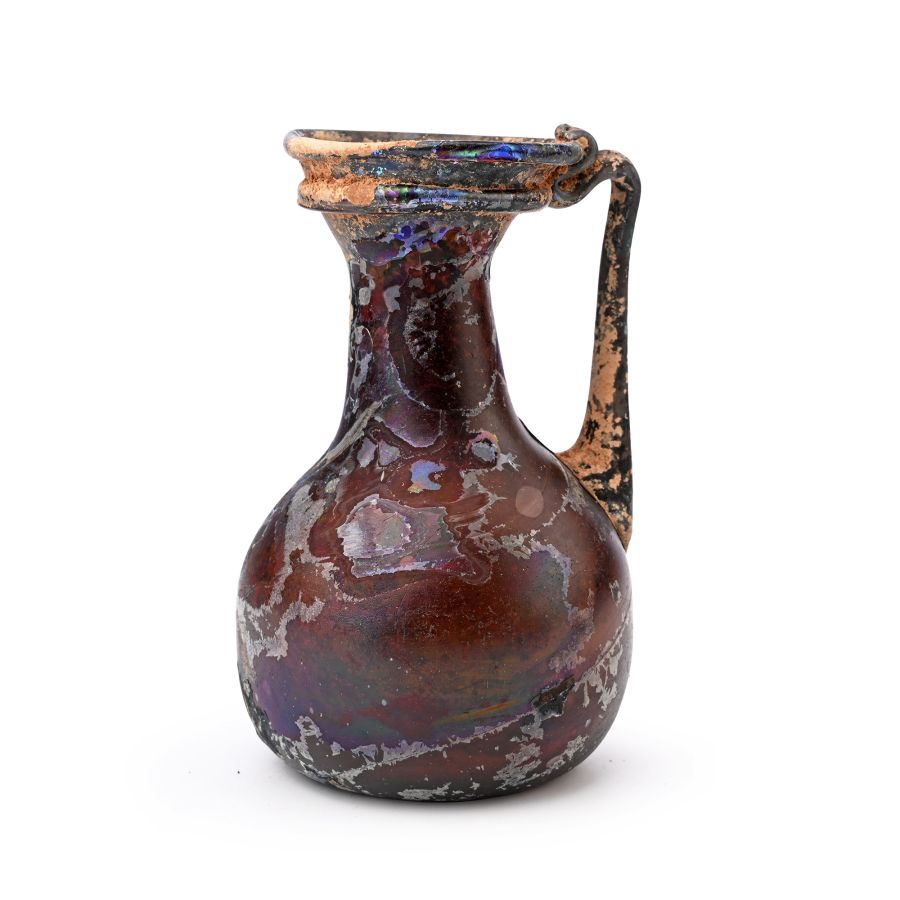
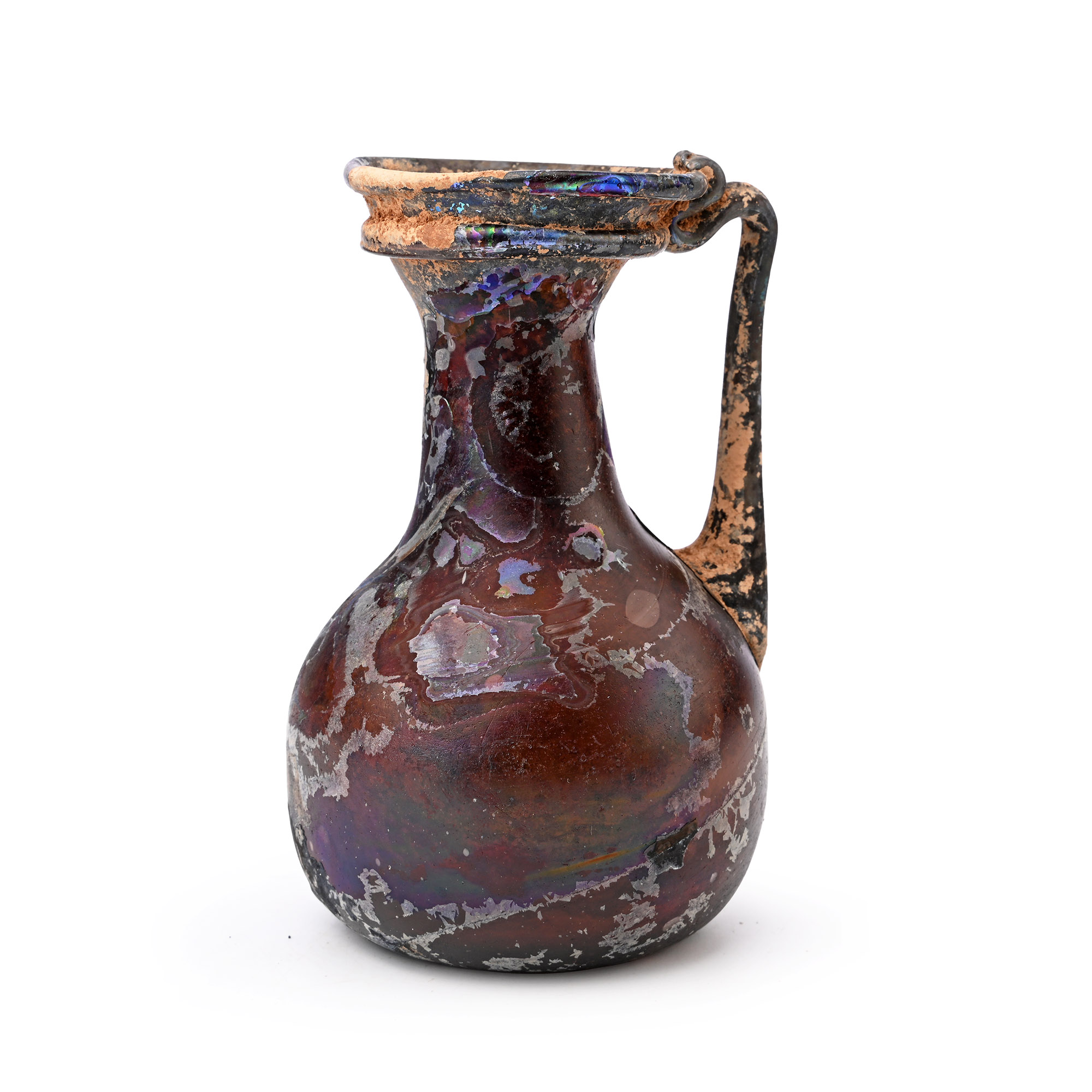
Roman Aubergine Glass Pitcher
3RD-4TH CENTURY A.D.
4 1/4 in. (93.2 grams, 10.8 cm).
Comprising a bulbous body with a dimple base and a funicular neck with an applied band below the rim and a handle to the rear.
ProvenanceFrom an important London, UK, collection 1980-2020.
LiteratureCf. Kunstmuseum Luzern, 3000 Jahre Glaskunst, Luzern, 1981, no.442, p.112, for the type.
FootnotesThe pitcher shows the style of production of the Roman Rhine workshops. Several hundred vessels with applied decoration are known from the Roman Rhineland. The numerous finds from graves and the evidence of glass furnaces in Cologne suggest that a large proportion of these vessels were produced in local workshops, then spread throughout the empire.
CONDITIONTimeLine Auctions follows a vetting process to ensure the authenticity and legality of all items, reinforcing our commitment to integrity and responsible trading. Each antiquity, antique, and coin lot undergoes thorough examination by a vetting committee of at least ten external specialists, professional trade association members, scientists, and archaeologists: Our Vetting Process
AUCTIONS:
TimeLine is a leading auction house specialising in antiquities, ancient art, collectables, natural history, coins, medals, and books. Our auctions offer museums, collectors, historians, and enthusiasts the opportunity to acquire unique and historically significant pieces.
-
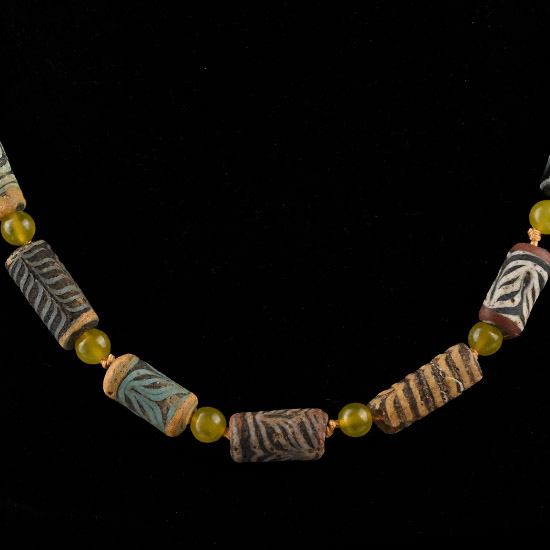
Roman Polychrome Glass Bead Necklace
3rd-4th century A.D.Estimate: £350 - 450 (+bp*)
Opening Bid: £158
Designer necklace composed of cylindrical glass beads with dragged trails, alternating with later spherical beads, hook-and-loop closure, restrung. 66 grams, 58 cm
London, UK gallery, 1971-early 2000s. Private collection, London, UK. -
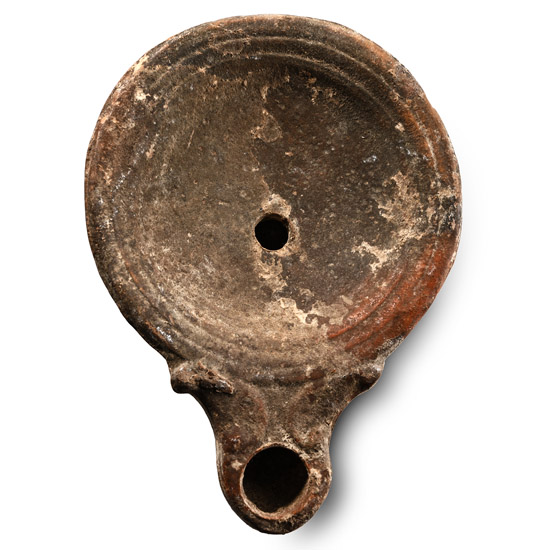
Roman Voluted Terracotta Oil Lamp
1st-2nd century A.D.Sold for (Inc. bp): £33
Piriform in plan with short spout flanked by volutes, segmented shoulder and dished discus, basal ring. 39.4 grams, 91 mm
From a UK private collection since at least 1946. Property of a West London, UK, gentleman. -
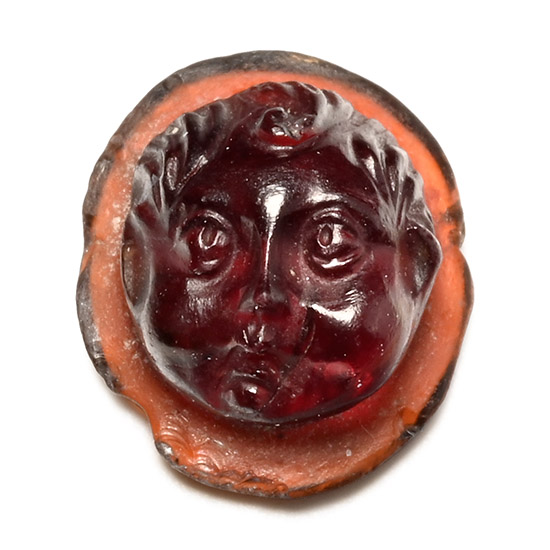
Roman Garnet Cameo of Eros the Greek God of Love
1st century A.D. or laterSold for (Inc. bp): £780
Discoid in plan with a high-relief plastic head of Cupid (Greek Eros). 0.42 grams, 8 mm
Private English collection, formed between the late 1970s and early 1990s. Private collection, London, UK.
The finely engraved head on the cameo represents a young child, probably intended as Eros (Cupid). Such depictions were produced in numerous variations to illustrate the stages of childhood and the capacity of children to undertake meaningful or symbolic actions. The high relief type appears to have been especially popular and was probably derived from metalwork, like the plaster medallion from Begram, Afghanistan.
