
Loading, please wait...
LOT 0832
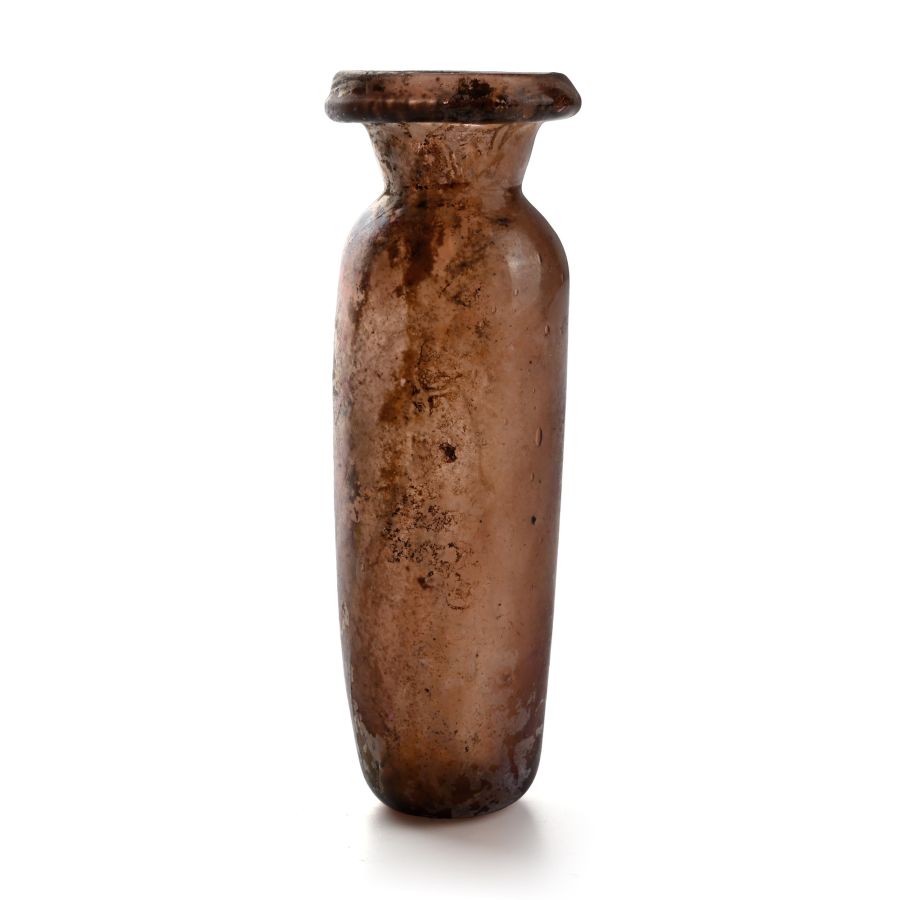
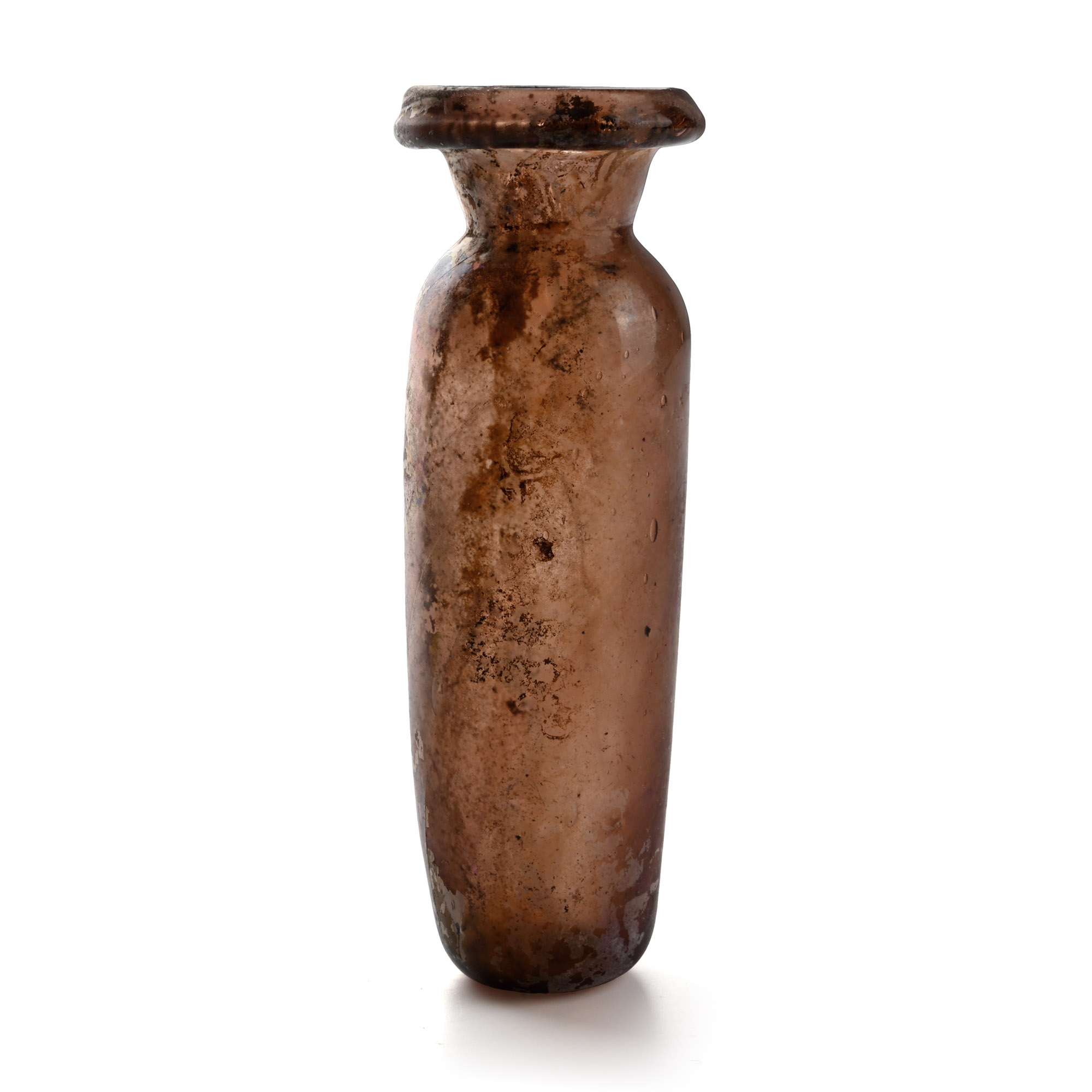
Roman Aubergine Glass Flask
1ST-4TH CENTURY A.D.
4 1/8 in. (39 grams, 10.5 cm).
Core formed with rounded base, everted rim.
ProvenanceEx Mayfair, London, UK, gallery, 1990s-2000s.
From an important collection of glass, the property of a London gentleman.
This lot is accompanied by an illustrated lot declaration signed by the Head of the Antiquities Department, Dr Raffaele D'Amato.
Cf. British Museum reference number.1899,1229.6, for a vessel of similar form.
CONDITIONTimeLine Auctions follows a vetting process to ensure the authenticity and legality of all items, reinforcing our commitment to integrity and responsible trading. Each antiquity, antique, and coin lot undergoes thorough examination by a vetting committee of at least ten external specialists, professional trade association members, scientists, and archaeologists: Our Vetting Process
AUCTIONS:
TimeLine is a leading auction house specialising in antiquities, ancient art, collectables, natural history, coins, medals, and books. Our auctions offer museums, collectors, historians, and enthusiasts the opportunity to acquire unique and historically significant pieces.
LOT 0832
Roman Aubergine Glass Flask
Estimate £300 - 400€350 - 460 (for guidance only)$410 - 540 (for guidance only)
-
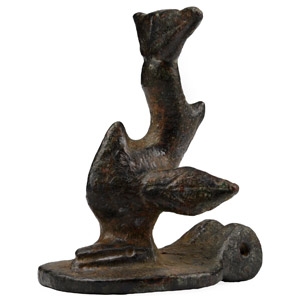
Roman Bronze Oil Lamp Lid with Dolphin
2nd-4th century A.D.Estimate: £150 - 200 (+bp*)
Opening Bid: £75
Discoid lid with hinge plates on the rear edge, stylised dolphin balancing on its elongated snout, large pectoral fins. 49 grams, 43 mm
Ex German art market, 2000s. Acquired from an EU collector living in London. From the collection of a Surrey, UK, gentleman. This lot is accompanied by an illustrated lot declaration signed by the Head of the Antiquities Department, Dr Raffaele D'Amato. -
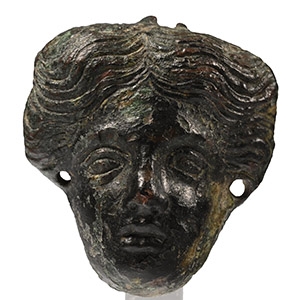
Roman Bronze Female Head Applique
2nd-3rd century A.D.Sold for (Inc. bp): £124
Forehead framed by long centrally parted wavy tresses, almond-shaped eyes with pronounced lids, ears pierced for attachment, smoothed back, remains of suspension loop on top of head; mounted on a custom-made display stand. 25.3 grams total, 61 mm including stand
Ex V.R., Basel, prior to 2000. Accompanied by a copy of an Art Loss Register certificate no.S00034415. This lot is accompanied by an illustrated lot declaration signed by the Head of the Antiquities Department, Dr Raffaele D’Amato. This lot is accompanied by an illustrated lot declaration signed by the Head of the Antiquities Department, Dr Raffaele D'Amato. -
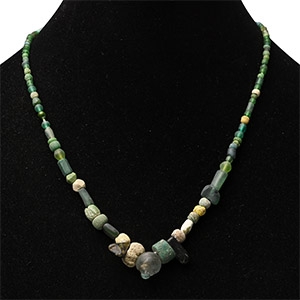
Roman Green Glass Bead Necklace String
1st-4th century A.D. and laterSold for (Inc. bp): £33
Composed of mixed graduated beads with larger beads as a central feature; restrung. 19.3 grams, 40.5 cm
From the London, UK, art market in the 1990s. This lot is accompanied by an illustrated lot declaration signed by the Head of the Antiquities Department, Dr Raffaele D'Amato.
In the Roman period there was a strong formal and chromatic diversity of glass beads used for necklaces and bracelets. The most common beads in forms were small biconical (lenticular), barrel-shaped, spherical and annular; the most common colours were dark blue, followed by green and yellow. The succession of glass beads often imitates jewellery made of costly materials (gold, silver, semi-precious and precious stones).
