
Loading, please wait...

LOT 0642
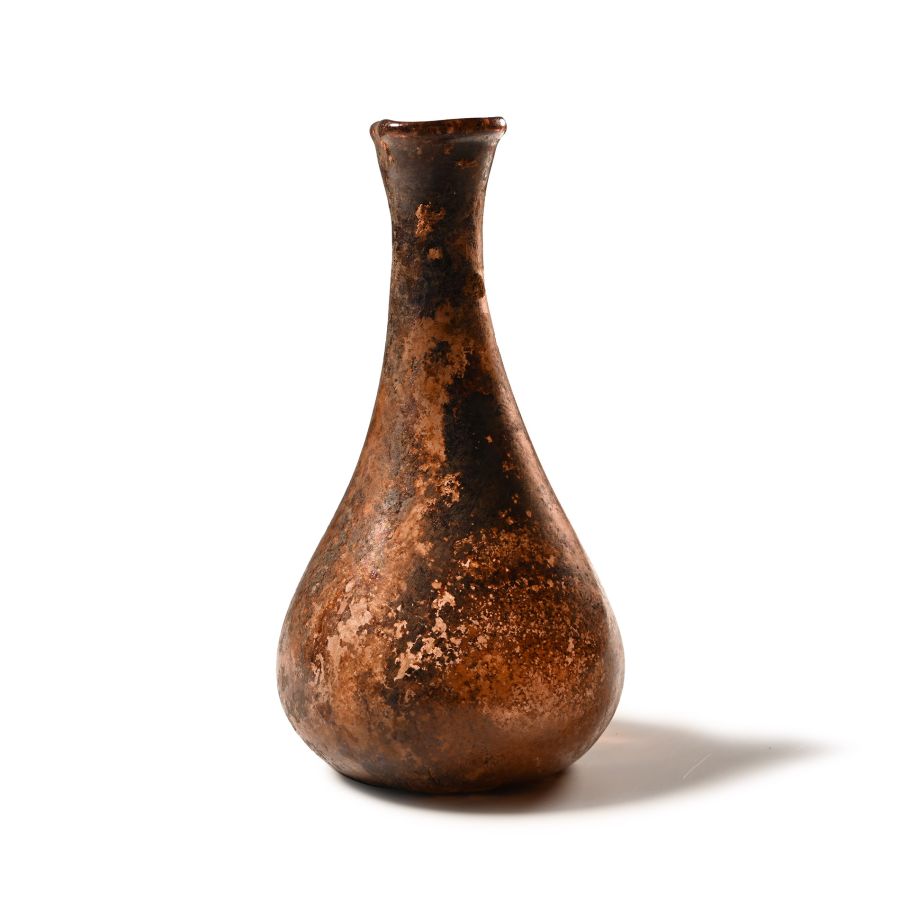
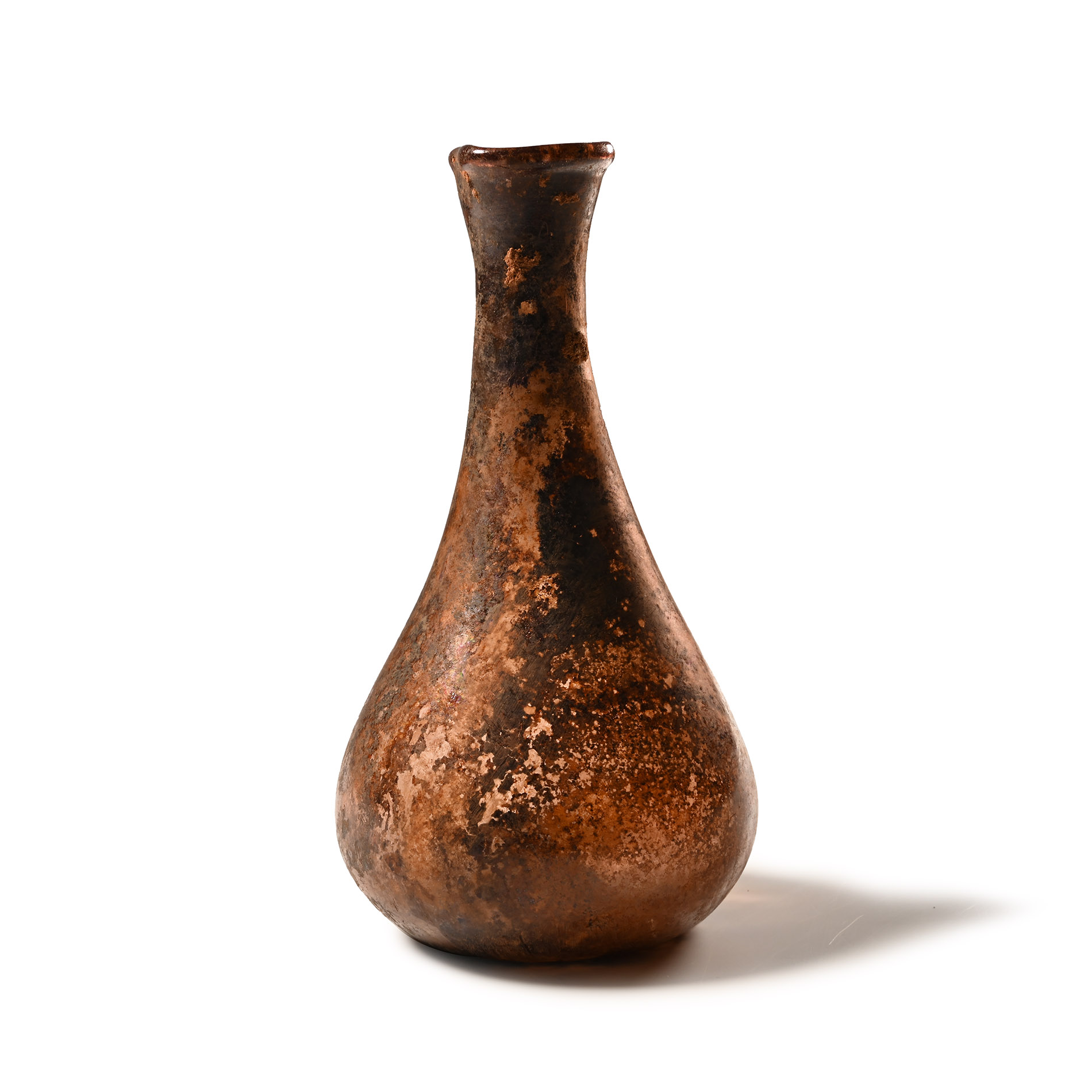
Roman Aubergine Glass Flask
1ST-3RD CENTURY A.D.
4 1/2 in. (19 grams, 11.5 cm).
With piriform body, dimpled base, tapering tubular neck with pinched and everted rolled rim.
ProvenanceFrom an important London, UK, collection, 1970-1990s.
LiteratureCf. Whitehouse, D., Roman Glass in the Corning Museum of Glass, vol.1, New York, 1997, item 236, for type.
CONDITIONTimeLine Auctions follows a vetting process to ensure the authenticity and legality of all items, reinforcing our commitment to integrity and responsible trading. Each antiquity, antique, and coin lot undergoes thorough examination by a vetting committee of at least ten external specialists, professional trade association members, scientists, and archaeologists: Our Vetting Process
AUCTIONS:
TimeLine is a leading auction house specialising in antiquities, ancient art, collectables, natural history, coins, medals, and books. Our auctions offer museums, collectors, historians, and enthusiasts the opportunity to acquire unique and historically significant pieces.
LOT 0642
Roman Aubergine Glass Flask
Estimate £350 - 450€410 - 520 (for guidance only)$470 - 610 (for guidance only)
-
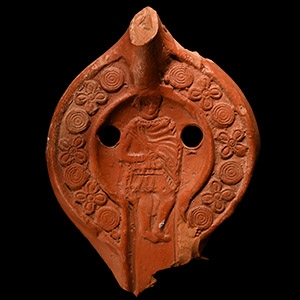
Late Roman Redware Lamp Face with Military Officer
Late 5th-early 6th century A.DSold for (Inc. bp): £156
Comprising the upper part of an oil lamp with part of the handle in situ; band of concentric circles and floral motifs to the shoulder; discus with low-relief figure seated with flexed knees, wearing a thigh-length tunic and cingulum military belt over bracae, and a short sagum clasped at the right shoulder; with short hair and beard; right arm folded across the body holding the hem of the sagum; modern suspension ring to reverse. 101 grams, 11.4 cm
Acquired 1960s-1990s. From the late Alison Barker collection, a retired London barrister.
The lamp belongs to the type Atlante X or Hayes II A. The so-called Christian lamps in Terra Sigillata Africana have been classified by Hayes into two major types, I and II. He has distinguished two classes in his type II, according to geographic place of manufacture or origin. Subtype II A group lamps from central Tunisia are characterised by the use of fine clay, glossy light orange slip, and carefully executed decoration using a great number of neatly drawn shoulder motifs. The image of this military officer is unusual, and it can represent an imperial primikerios of the African army after the reconquest of Belisarius in 533 A.D. -
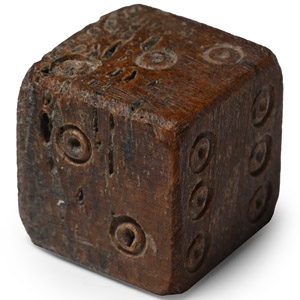
Roman Bone Dice
1st-4th century A.D.Sold for (Inc. bp): £143
Cuboid with ring-and-dot marks disposed 1:6, 2:5, 3:4. 4.7 grams, 14 mm
Acquired 1980-2015. Ex Abelita family collection. -
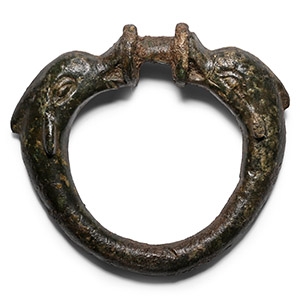
Roman Bronze Chariot Terret with Dolphins
1st-2nd century A.D.Sold for (Inc. bp): £624
Comprising a D-section hoop with shoulders formed as opposed dolphins holding in their mouths a pair of discs and median bar. 82 grams, 65 mm
Ex German art market, 2000s. Acquired from an EU collector living in London. From the collection of Surrey, UK, gentleman.
