
Loading, please wait...
LOT 0709
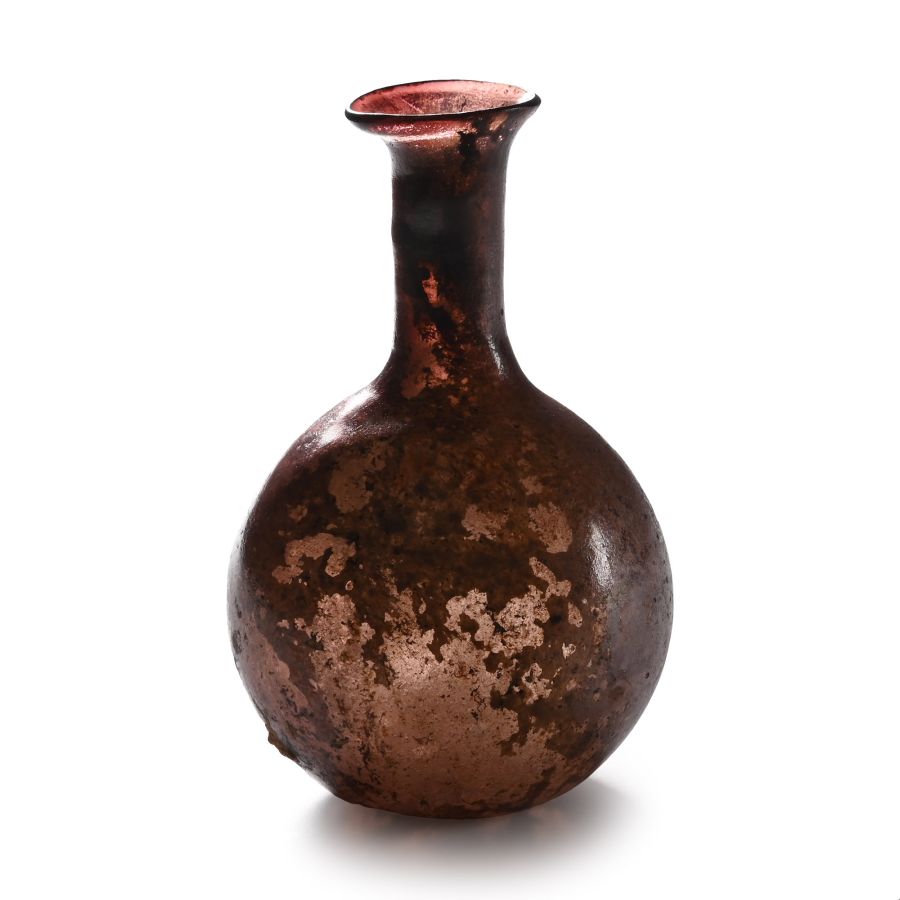
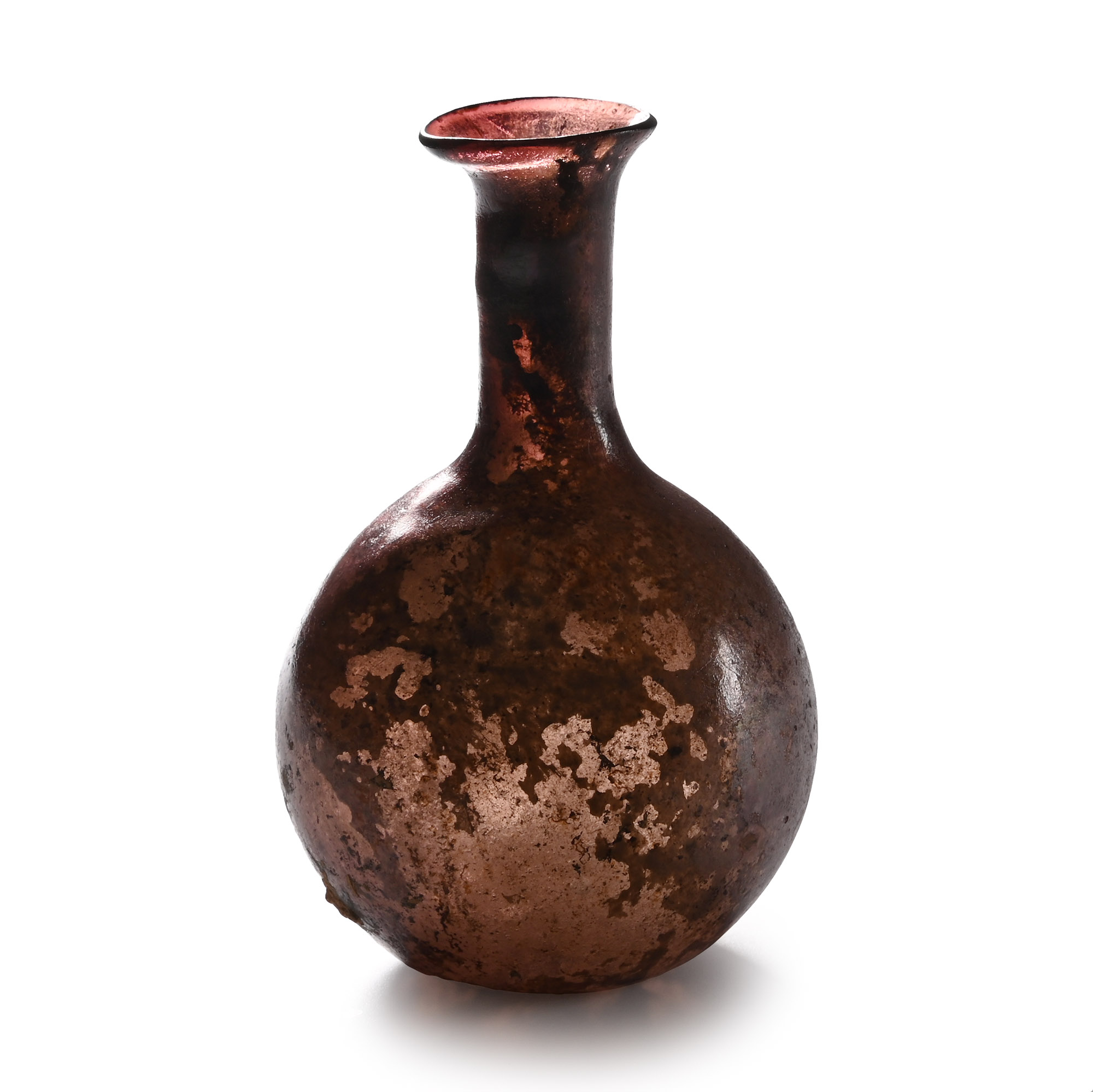
Roman Aubergine Glass Bottle
1ST CENTURY B.C-1ST CENTURY A.D.
2 3/4 in. (10.6 grams, 70 mm).
With bulbous body, tubular neck, broad everted rim; extensive iridescence.
ProvenanceFrom an important London collection of glass, 1990s.
LiteratureCf. Whitehouse, D., Roman Glass in the Corning Museum of Glass, vol.1, New York, 1997, item 203, for type.
FootnotesSimilar bottles were found in the Cemetery of Ein-Gedi in the Judaean Desert, in a settlement abandoned in 40-37 B.C, and in Homs, Syria, dated to the first half of the first century A.D. These are among the first earliest datable blown bottles.
CONDITIONTimeLine Auctions follows a vetting process to ensure the authenticity and legality of all items, reinforcing our commitment to integrity and responsible trading. Each antiquity, antique, and coin lot undergoes thorough examination by a vetting committee of at least ten external specialists, professional trade association members, scientists, and archaeologists: Our Vetting Process
AUCTIONS:
TimeLine is a leading auction house specialising in antiquities, ancient art, collectables, natural history, coins, medals, and books. Our auctions offer museums, collectors, historians, and enthusiasts the opportunity to acquire unique and historically significant pieces.
-
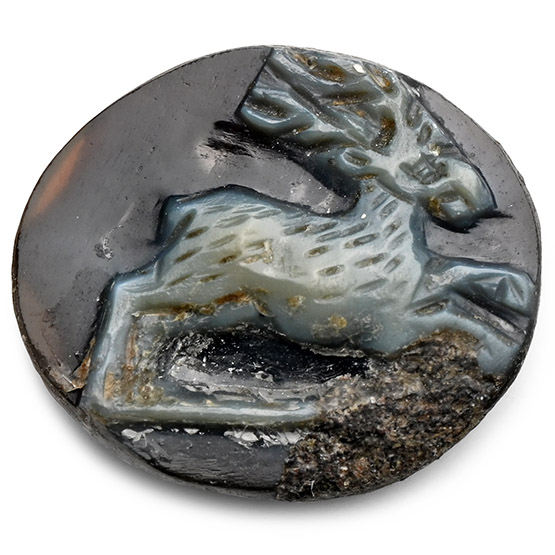
Roman Sardonyx Cameo of a Leaping Stag
2nd-3rd century A.D.Sold for (Inc. bp): £468
With a cameo image of a male antelope jumping right; supplied with a museum-quality impression. 0.43 grams, 11 mm
Private English collection, formed between the late 1970s and early 1990s. Private collection, London, UK. -
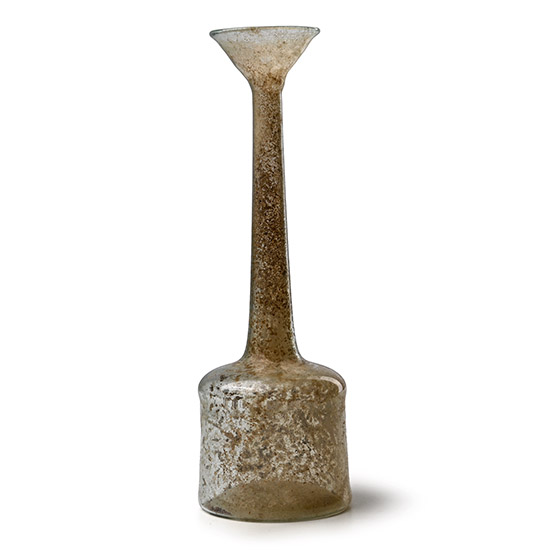
Roman Glass Flask
Circa 1st-4th century A.D.Sold for (Inc. bp): £494
Squat body with long tubular tapering neck and wide trumpet-stype rim. 58 grams, 19.6 cm
From a London, UK, collection of glass, 1970-2000s. -
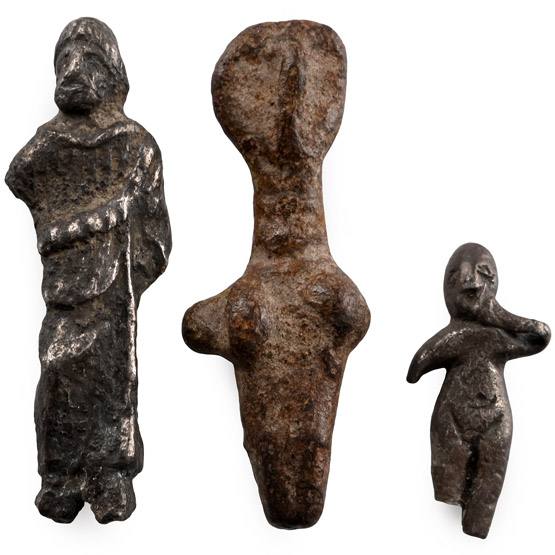
Roman and Earlier Miniature Statue Collection
1st-3rd century A.D. and earlierSold for (Inc. bp): £104
Including standing figure in fringed cloak and other types. 21.8 grams total, 22-39 mm
Acquired on the European art market. Private collection, England.
