
Loading, please wait...
LOT 0828
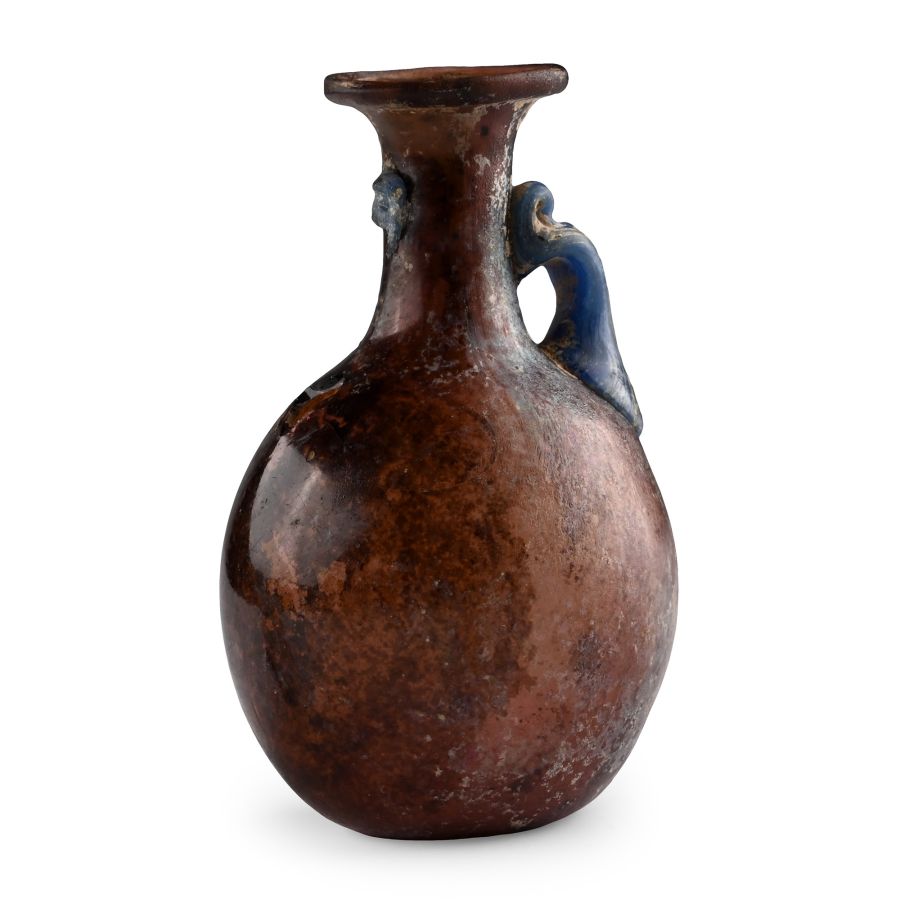
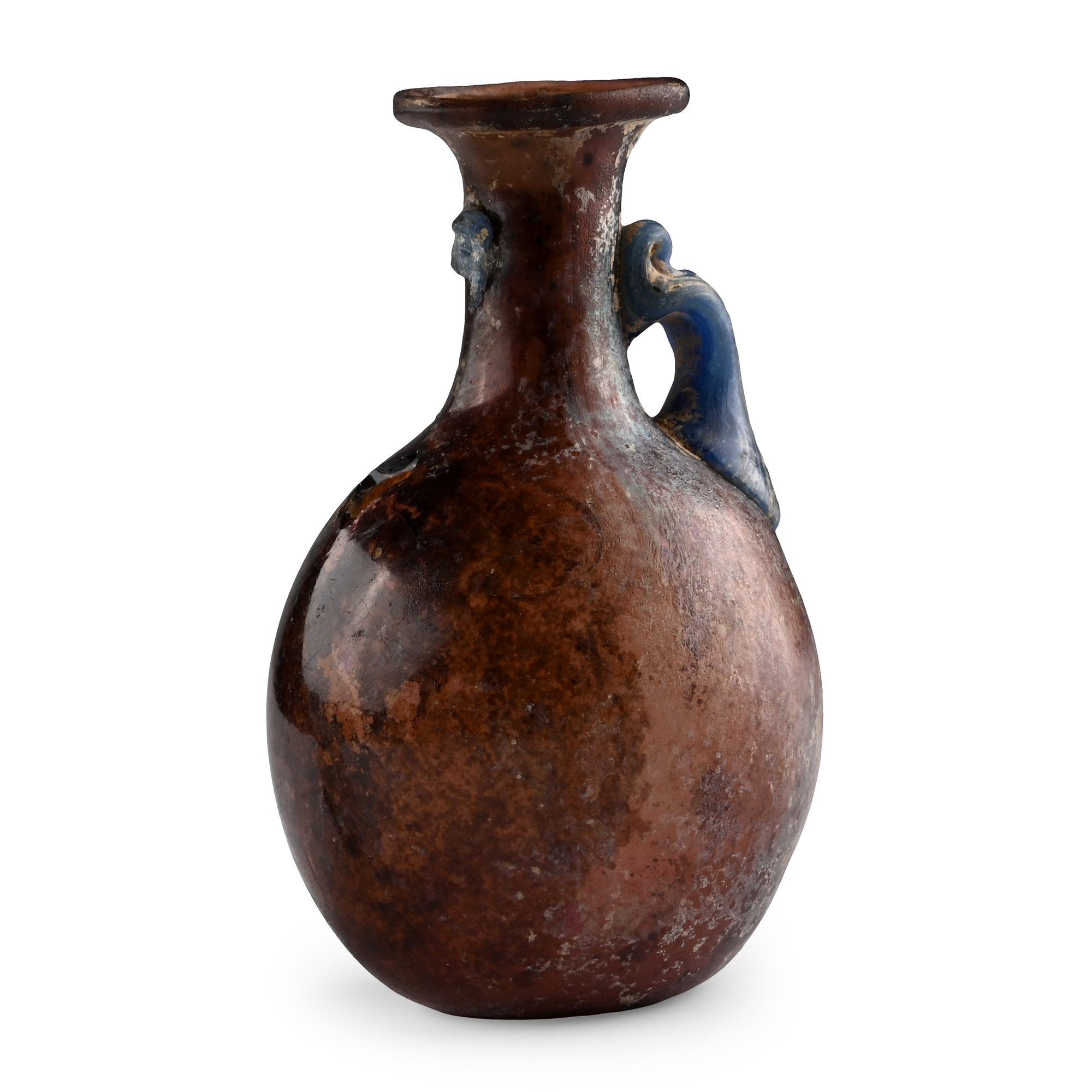
Roman Aubergine Glass Bottle
3RD CENTURY A.D.
3 in. (22.77 grams, 77 mm).
With slightly flattened base and spherical body, tubular neck with flared and rolled rim, one handle absent. [No Reserve]
ProvenanceEx property of a London collector; acquired 1960s.
Property of a North London, UK, lady.
This lot is accompanied by an illustrated lot declaration signed by the Head of the Antiquities Department, Dr Raffaele D'Amato.
Cf. Whitehouse, D., Roman Glass in the Corning Museum of Glass, vol.2, New York, 2001, item 621, for type.
CONDITIONTimeLine Auctions follows a vetting process to ensure the authenticity and legality of all items, reinforcing our commitment to integrity and responsible trading. Each antiquity, antique, and coin lot undergoes thorough examination by a vetting committee of at least ten external specialists, professional trade association members, scientists, and archaeologists: Our Vetting Process
AUCTIONS:
TimeLine is a leading auction house specialising in antiquities, ancient art, collectables, natural history, coins, medals, and books. Our auctions offer museums, collectors, historians, and enthusiasts the opportunity to acquire unique and historically significant pieces.
-
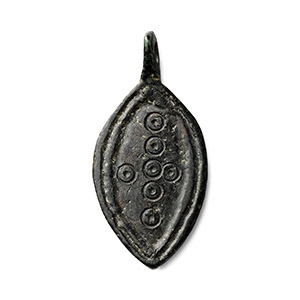
Late Roman Bronze Cross Pendant
4th-5th century A.D.Sold for (Inc. bp): £85
Scaphoid in plan with raised rim to the obverse, cruciform arrangement of ring-and-dot motifs. 3.6 grams, 29 mm
Ex German art market, 2000s. Acquired from an EU collector living in London. From the collection of a Surrey, UK, gentleman. This lot is accompanied by an illustrated lot declaration signed by the Head of the Antiquities Department, Dr Raffaele D'Amato. -
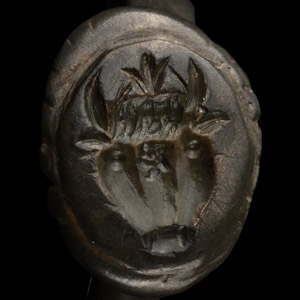
Roman Bronze Signet Ring with Bull's Head
4th-5th century A.D.Sold for (Inc. bp): £221
Ellipsoid bezel with incuse bucranium motif, star between the horns. 5.93 grams, 23.28 mm overall, 19.28 mm internal diameter (approximate size British R, USA 8 1/2, Europe 18 3/4, Japan 18)
Ex German art market, 2000s. Acquired from an EU collector living in London. From the collection of a Surrey, UK, gentleman. This lot is accompanied by an illustrated lot declaration signed by the Head of the Antiquities Department, Dr Raffaele D'Amato.
The bull-head motif is used in Mithraism, where it represents masculine power. -
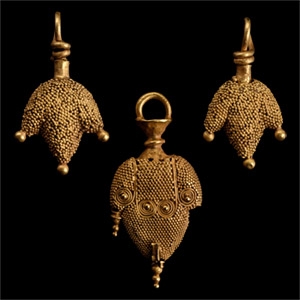
Roman Gold 'Bunched Grape' Jewellery Set
1st century A.D.Sold for (Inc. bp): £5,200
Group of three gold pendants comprising: two formed as a cluster of granules with three lobes, larger granule to each apex and coiled wire suspension; one of similar profile, larger with filigree lines and coils to both faces, trumpet-shaped finial with loop; two repaired; housed in a custom-made display case. 8.83 grams total, 24-32 mm
Acquired in the late 1980s-early 1990s. Private collection, London, UK. This lot has been checked against the Interpol Database of stolen works of art and is accompanied by search certificate number no.12812-241415. This lot has been cleared against the Art Loss Register database, and is accompanied by an illustrated lot declaration signed by the Head of the Antiquities Department, Dr Raffaele D'Amato.
Typologically related earrings were particularly common in the Caucasus, where they have been dated by archaeologists to the first centuries A.D. This was mainly a product of Hellenised workers of the area of Pontus or Asia Minor, and the material culture of the Greek cities of the North Pontus region was completely absorbed by their new Roman rulers and largely diffused in style and orientation in the Eastern Roman provinces.
