
Loading, please wait...
LOT 1012
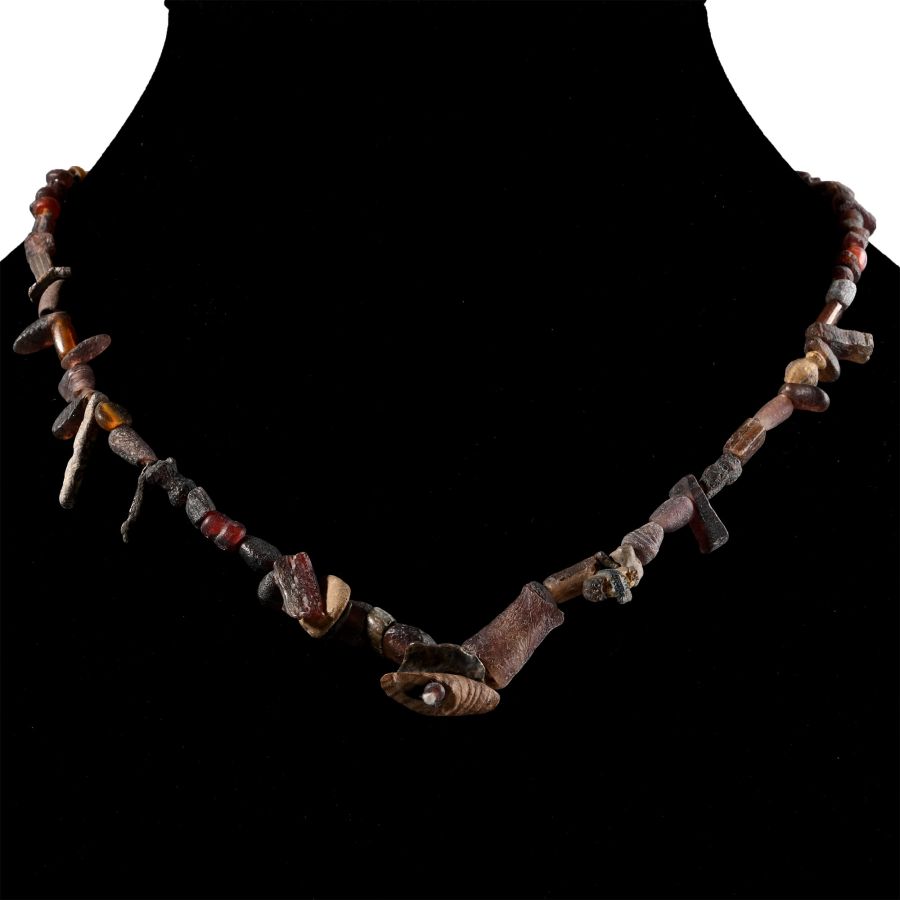
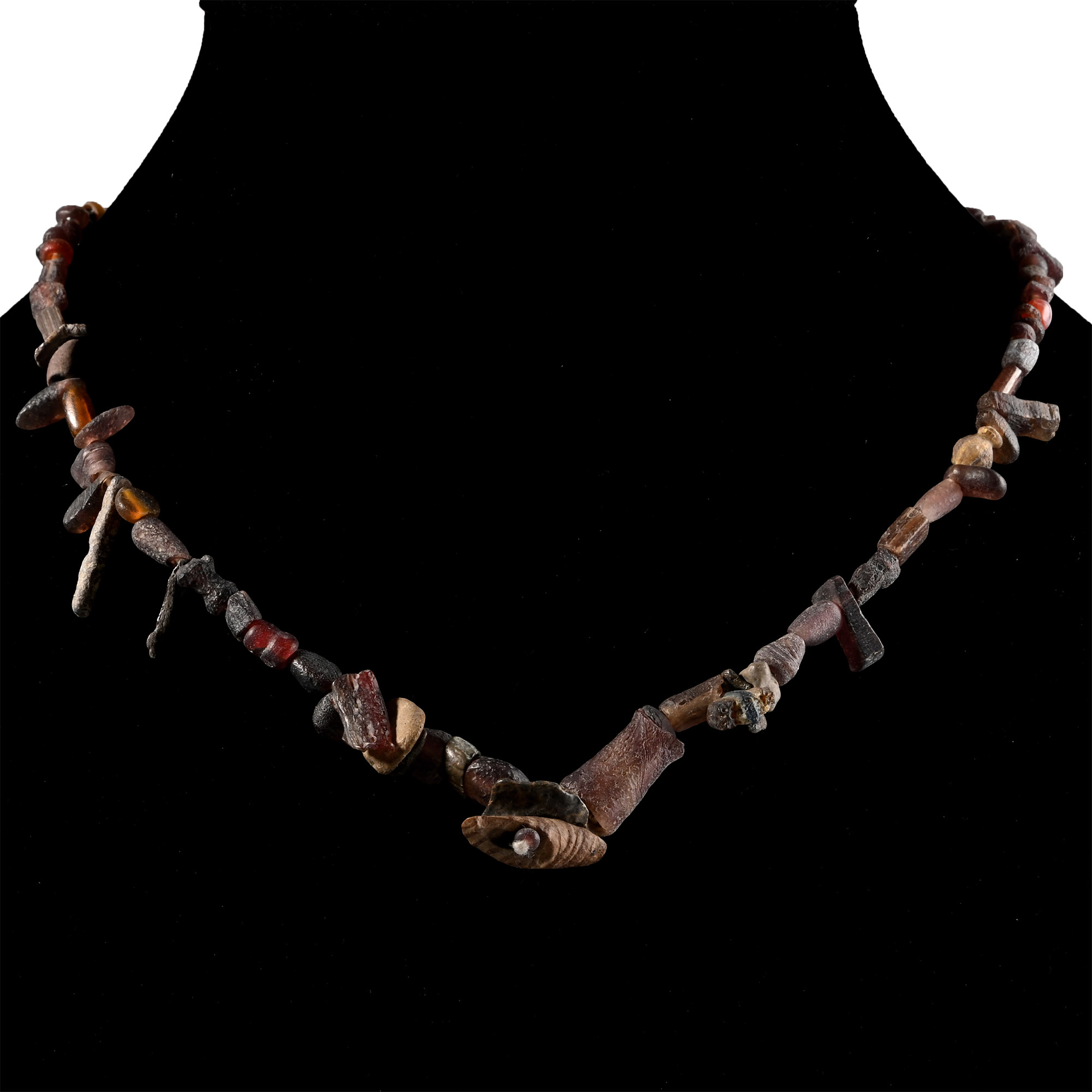
Roman Aubergine Glass Bead Necklace String
1ST-4TH CENTURY A.D. AND LATER
16 3/8 in. (20.2 grams, 41.5 cm).
Composed of mixed beads and bead fragments, restrung. [No Reserve]
ProvenanceAcquired in the 1990s.
Ex London, UK, collection.
TimeLine Auctions follows a vetting process to ensure the authenticity and legality of all items, reinforcing our commitment to integrity and responsible trading. Each antiquity, antique, and coin lot undergoes thorough examination by a vetting committee of at least ten external specialists, professional trade association members, scientists, and archaeologists: Our Vetting Process
AUCTIONS:
TimeLine is a leading auction house specialising in antiquities, ancient art, collectables, natural history, coins, medals, and books. Our auctions offer museums, collectors, historians, and enthusiasts the opportunity to acquire unique and historically significant pieces.
-
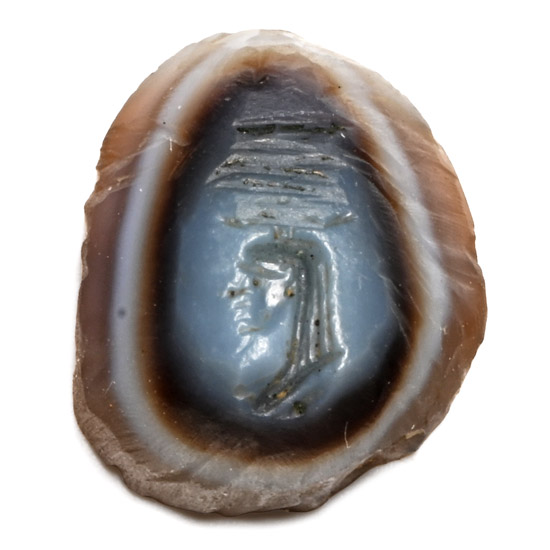
Roman Banded Agate Gemstone with Head of a Goddesss
1st-2nd century A.D.Sold for (Inc. bp): £546
Scaraboid type with incuse design of a female bust in profile; supplied with a museum-quality impression. 0.68 grams, 11 mm
From the private collection of a European gentleman (1942-2024), formed since the 1970s. -
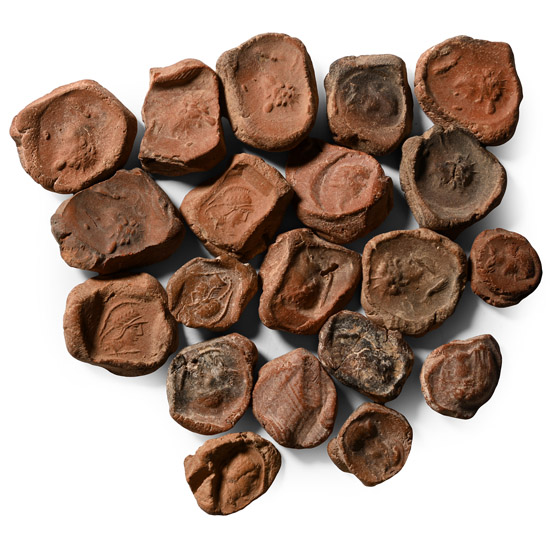
Roman Terracotta Bullae, Tesserae or Token Group
3rd century B.C.-1st century A.D.Sold for (Inc. bp): £130
A mixed group of ceramic bullae, tesserae or theatre tokens bearing low-relief motifs, mainly consisting of profile busts of deities. 33.6 grams total, 13-22 mm
From the private collection of a European gentleman (1942-2024), formed since the 1970s.
The term 'tessera' was used in Roman times to convey the Greek term σύμβολον (token). Small tiles are known as tokens, often shaped like coins, made of metal (copper, lead, iron), clay, bone, wood, or glass, stamped as well as engraved. The tokens, however, are not exclusively coin-shaped, as the Latin term 'tessera' refers to a four-sided shape. Tokens and tesserae seem to have been used both in Athens and Rome for the distribution of goods. According to written sources, the term ‘token’ is identified with credentials of the official authorities. They have also been interpreted as tokens of identity, as entrance tickets to theatre performances, tribunals or assemblies of citizens, archival material of seal engraving, as pawns in games, Charon’s obols and even as amulets. -
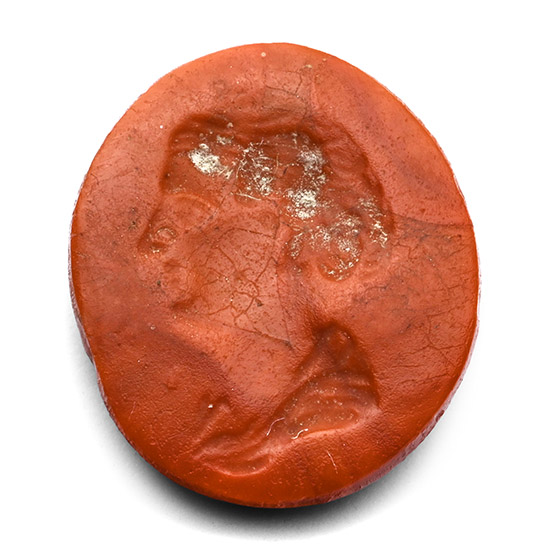
Roman Jasper Gemstone with Female Bust
2nd century A.D.Sold for (Inc. bp): £46
Ellipsoid in plan with an incuse female profile bust. 1.03 grams, 15 mm
Property of a European gentleman, acquired from the estate of a London collector (formed before 2000).
