
Loading, please wait...
LOT 0158
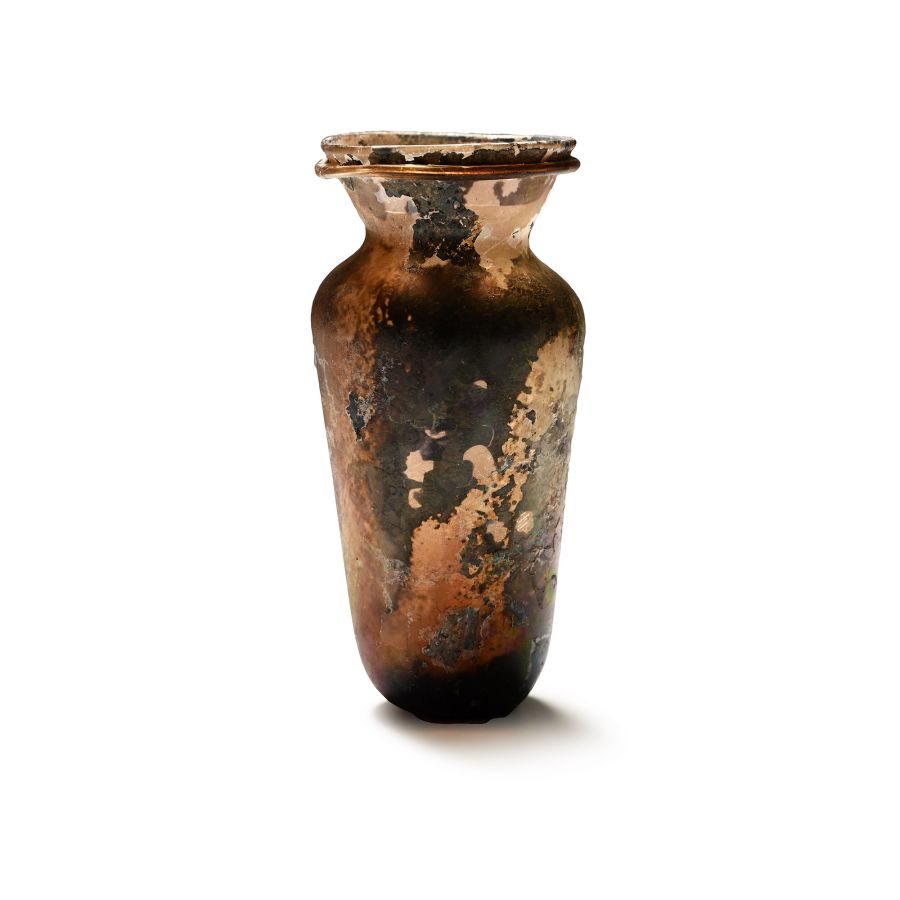
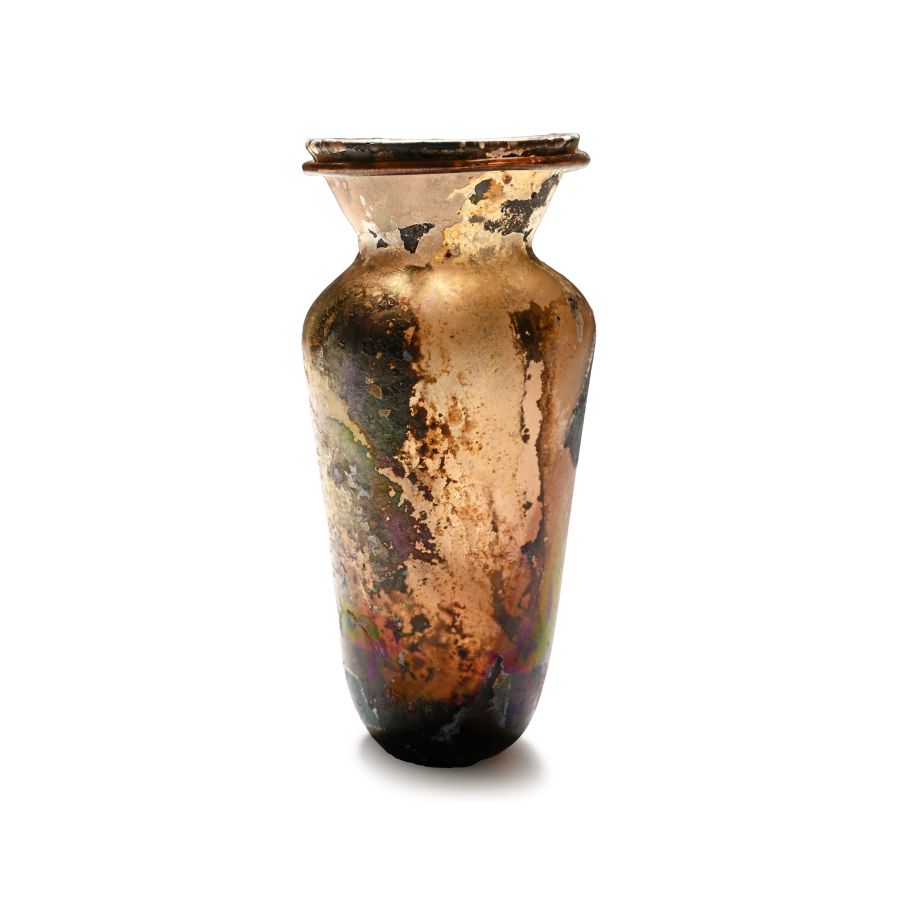
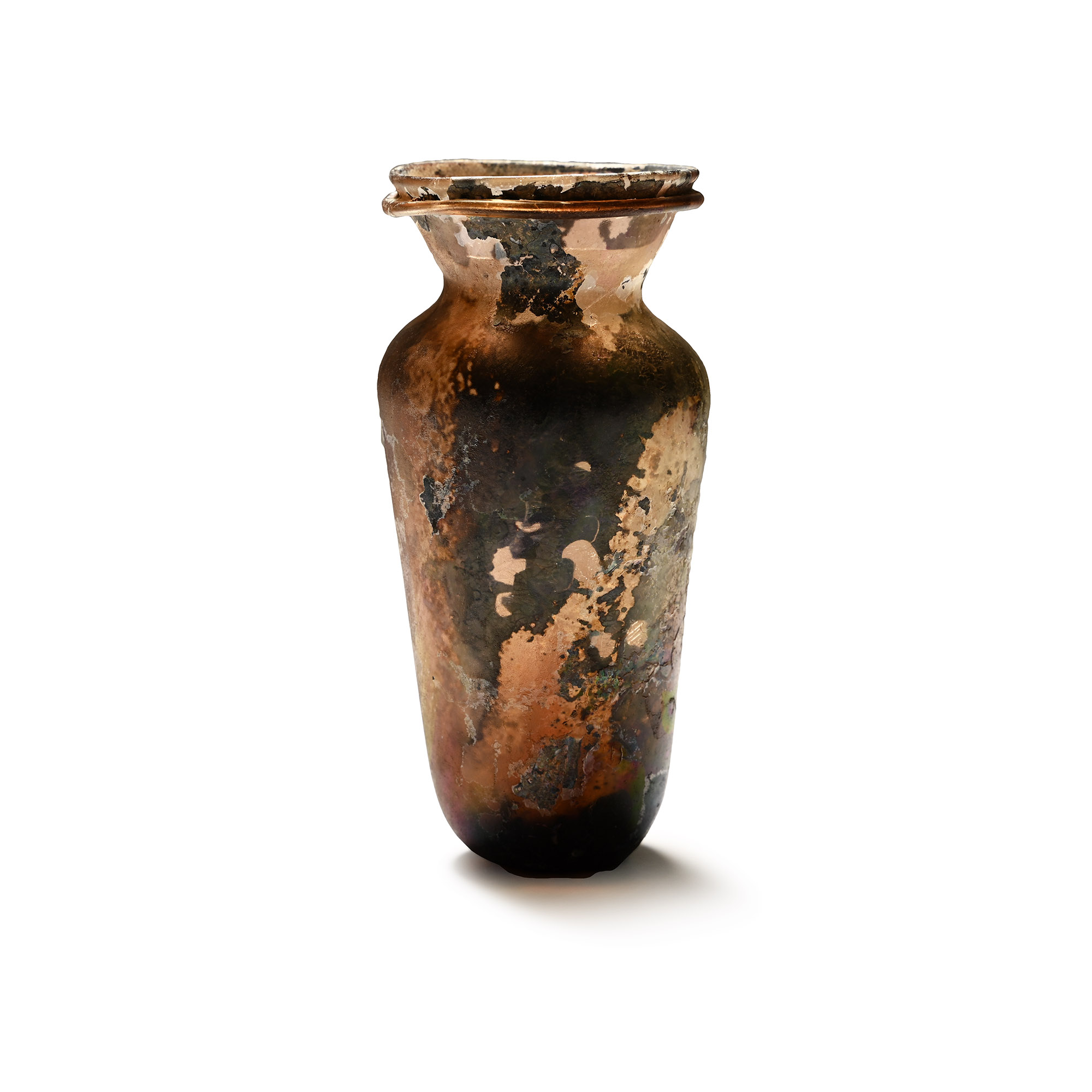
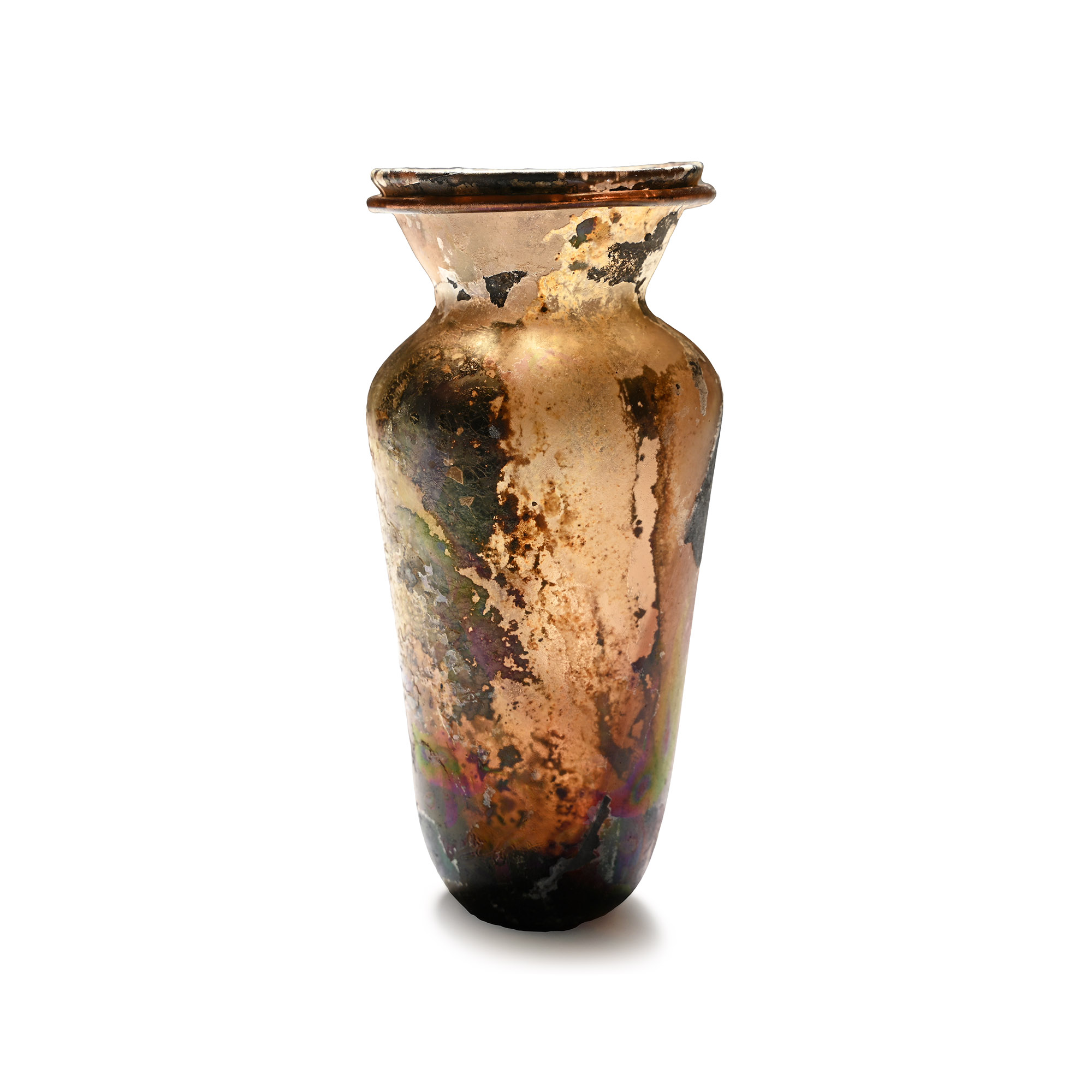
Roman Aubergine Cylindrical Glass Flask
1ST-2ND CENTURY A.D.
4 3/4 in. (89 grams, 12 cm).
Conical flask with rounded shoulder and trumpet-shaped neck with stepped everted rim.
ProvenanceFrom an important glass collection, London, UK, 1980-1990.
This lot is accompanied by an illustrated lot declaration signed by the Head of the Antiquities Department, Dr Raffaele D’Amato.
See Whitehouse, D., Roman Glass in the Corning Museum of Glass, vol.2, New York, 2001, item 631, for type.
CONDITIONTimeLine Auctions follows a vetting process to ensure the authenticity and legality of all items, reinforcing our commitment to integrity and responsible trading. Each antiquity, antique, and coin lot undergoes thorough examination by a vetting committee of at least ten external specialists, professional trade association members, scientists, and archaeologists: Our Vetting Process
AUCTIONS:
TimeLine is a leading auction house specialising in antiquities, ancient art, collectables, natural history, coins, medals, and books. Our auctions offer museums, collectors, historians, and enthusiasts the opportunity to acquire unique and historically significant pieces.
LOT 0158
Roman Aubergine Cylindrical Glass Flask
Estimate £400 - 600€460 - 700 (for guidance only)$540 - 810 (for guidance only)
-
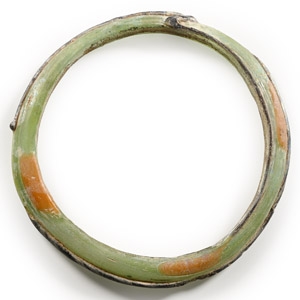
Romano-Phoenician Multicoloured Glass Bracelet
2nd century B.C.-1st century A.D.Sold for (Inc. bp): £52
D-section bangle in aqua glass with applied dark red trails to the outer face. 24 grams, 86 mm
Ex London, UK, collection, 1990s. This lot is accompanied by an illustrated lot declaration signed by the Head of the Antiquities Department, Dr Raffaele D’Amato. -
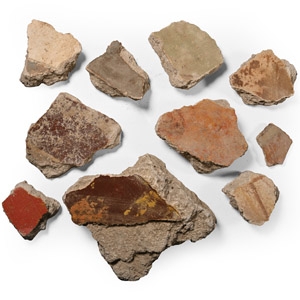
Roman Fresco Wall Plaster Collection
1st century A.D.Sold for (Inc. bp): £20
Fragments of wall plaster with rendered surface painted with mainly red and brown detailing; some with impression of timber laths to the reverse. 1.73 kg total, 4.5-17 cm
Acquired in the 19th century. Ex Jeger collection, Switzerland. UK gallery, early 2000s. This lot is accompanied by an illustrated lot declaration signed by the Head of the Antiquities Department, Dr Raffaele D’Amato.
These small fragments, for analogies with the fragments of Pompeii, seems to belong to the second style of Roman painting, red panels representing highlight and shadow, decorated with vegetal interlaces. Some panels were probably framed by a red grenade fillet. A fragment shows alternate blue and red colour over a cream background, maybe pertinent to a socle. -

Roman Bronze Legionary Signum
1st-3rd century A.D.Estimate: £4,000 - 6,000 (‡+bp*)
Opening Bid: £2,000
Hollow-formed with fine detailing to the fingers and nails; with fixing points for a military standard (signum) used by each unit under a centurion, originally fixed with the palm facing forwards inside a wreath. 718 grams, 21 cm
Acquired in Europe before 2000. European private collection. Accompanied by an academic report by Dr Raffaele D'Amato. This lot has been checked against the Interpol Database of stolen works of art and is accompanied by a search certificate number no.12003-211851. This lot has been cleared against the Art Loss Register database, and is accompanied by an illustrated lot declaration signed by the Head of the Antiquities Department, Dr Raffaele D’Amato.
Roman military signa decorated by phalerae and surmounted by a right hand were used from the Late Consular Age. The hand (manus) symbolised the fides, i.e. the allegiance between the soldiers and the Res Publica. It is also possible that the hand belonged to a statue in which it was extended as a sign of silence, to allow the speaker to speak. However, the iconography of military hands, and also the resemblance to a bronze hand (military signum) preserved in the Vindonissa museum (Windisch), support the possibility that the object was part of a military standard.
