
Loading, please wait...
LOT 0157
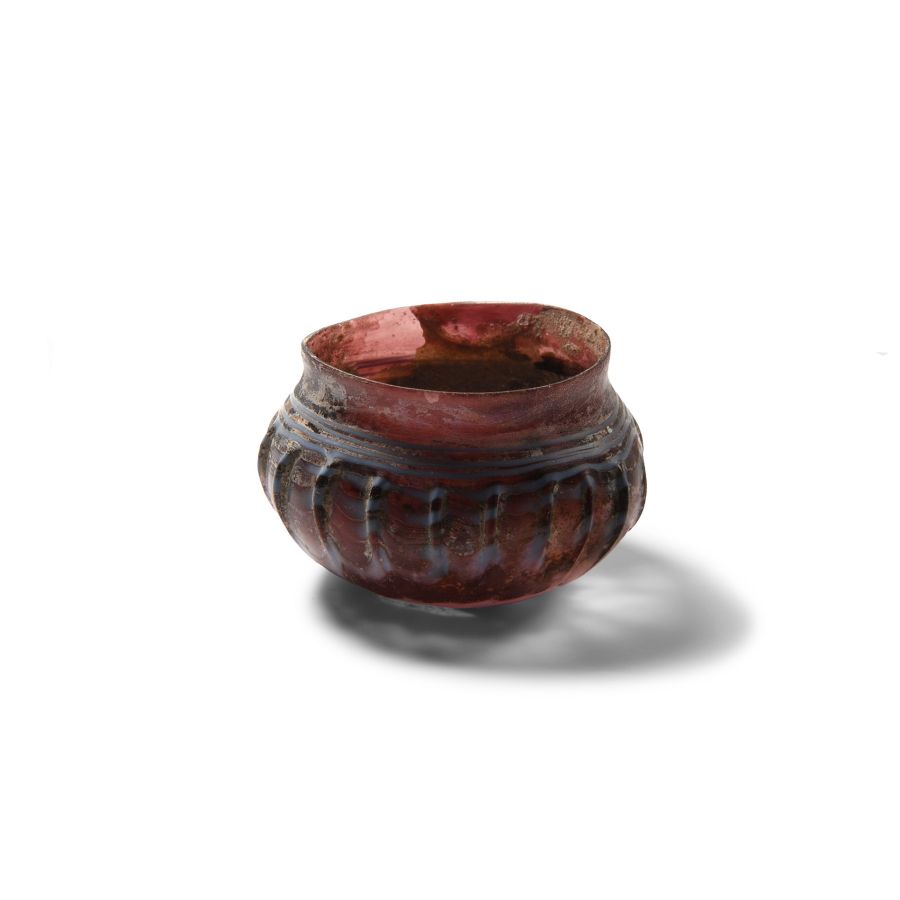
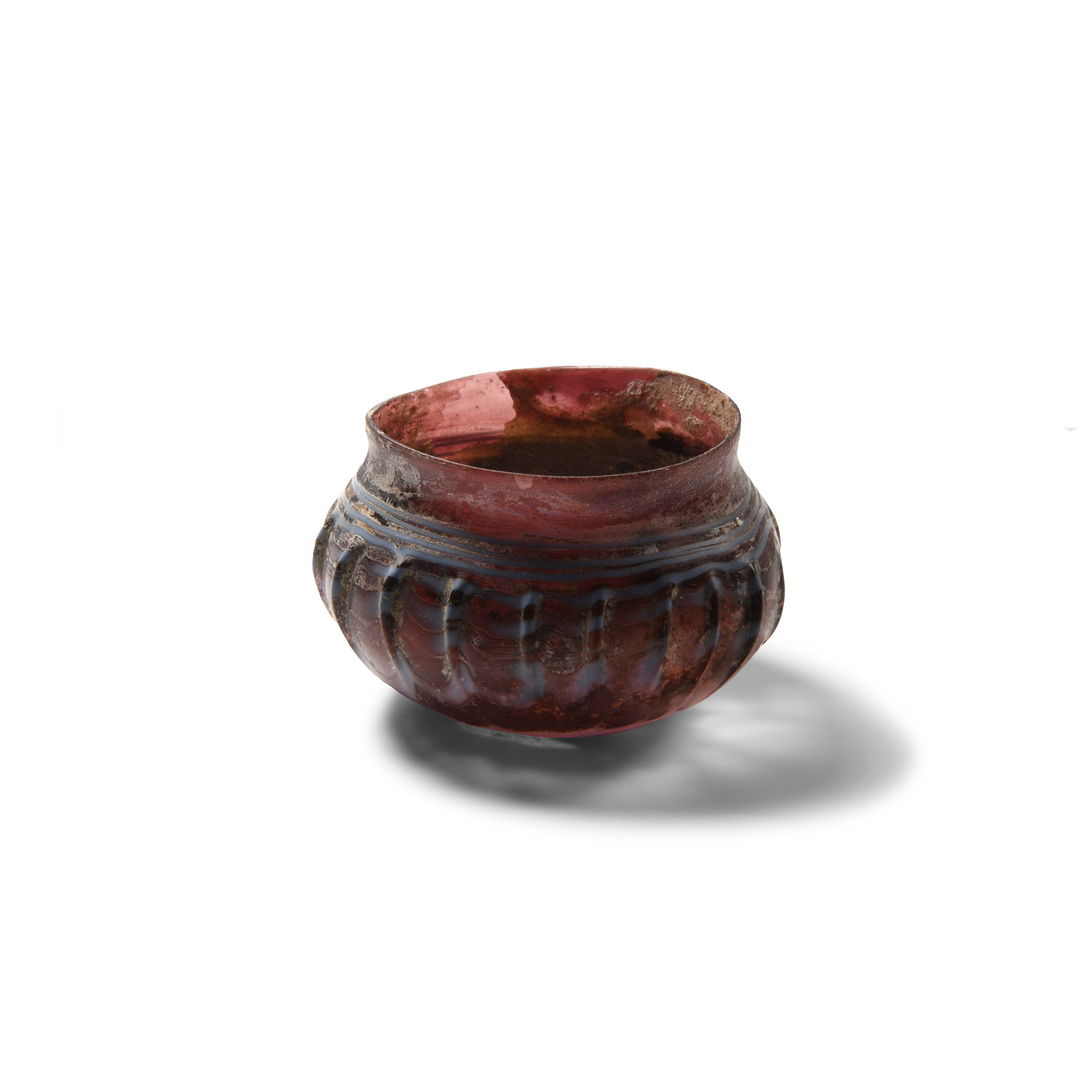
Roman Aubergine and Blue Marbled Glass Bowl
1ST-2ND CENTURY A.D.
3 1/4 in. (54 grams, 81 mm wide).
An aubergine-coloured glass bowl with a gently carinated and squat body, broad neck, medial raised ribs and decorative white trails.
ProvenanceAcquired early 1990s.
Ex private American collection; thence by descent.
Private collection since 1998.
Cf. Lightfoot, C.S., Ancient Glass in the National Museums of Scotland, Edinburgh, 2007, item 201, for type.
CONDITIONTimeLine Auctions follows a vetting process to ensure the authenticity and legality of all items, reinforcing our commitment to integrity and responsible trading. Each antiquity, antique, and coin lot undergoes thorough examination by a vetting committee of at least ten external specialists, professional trade association members, scientists, and archaeologists: Our Vetting Process
AUCTIONS:
TimeLine is a leading auction house specialising in antiquities, ancient art, collectables, natural history, coins, medals, and books. Our auctions offer museums, collectors, historians, and enthusiasts the opportunity to acquire unique and historically significant pieces.
-
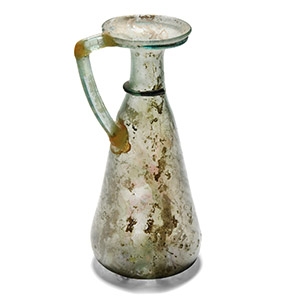
Roman Aqua Glass Jug
1st-4th century A.D.Estimate: £400 - 600 (‡+bp*)
Opening Bid: £200
An aqua-coloured glass vessel with rounded conical body, upward sloping everted rim with sloping internal face; applied trail to upper and lower neck, angular handle; iridescent surfaces; repaired. 57 grams, 14 cm high
Acquired early 1990s. Ex private American collection; thence by descent. Private collection since 1998. -
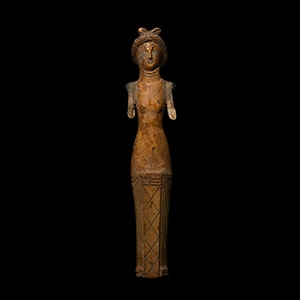
Romano-Parthian Female Bone Idol
3rd century B.C.-2nd century A.D.Estimate: £1,200 - 1,700 (+bp*)
Opening Bid: £480
A bone doll depicting a female figure with elaborately tied hairstyle, semi-naturalistic facial and anatomical detailing and geometric detailing to the garment wrapped around her lower body; stub arms; copper-alloy rivets to the shoulders. 77 grams, 19 cm high
with a London, UK gallery 1971-early 2000s. -
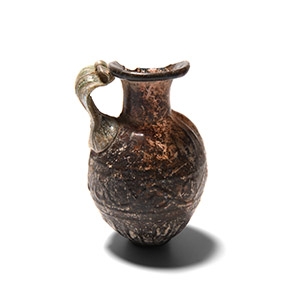
Roman Aubergine Mould Blown Amphoriskos
1st century A.D.Estimate: £300 - 400 (‡+bp*)
Opening Bid: £150
An aubergine-coloured miniature egg-shaped juglet with applied handle and integral foot, mould-blown decoration formed as a medial frieze of scrolling motifs and lines radiating upwards from the base; iridescent surfaces; chipped rim. 17.3 grams, 66 mm high
Acquired early 1990s. Ex private American collection; thence by descent. Private collection since 1998.
