
Loading, please wait...
LOT 0819
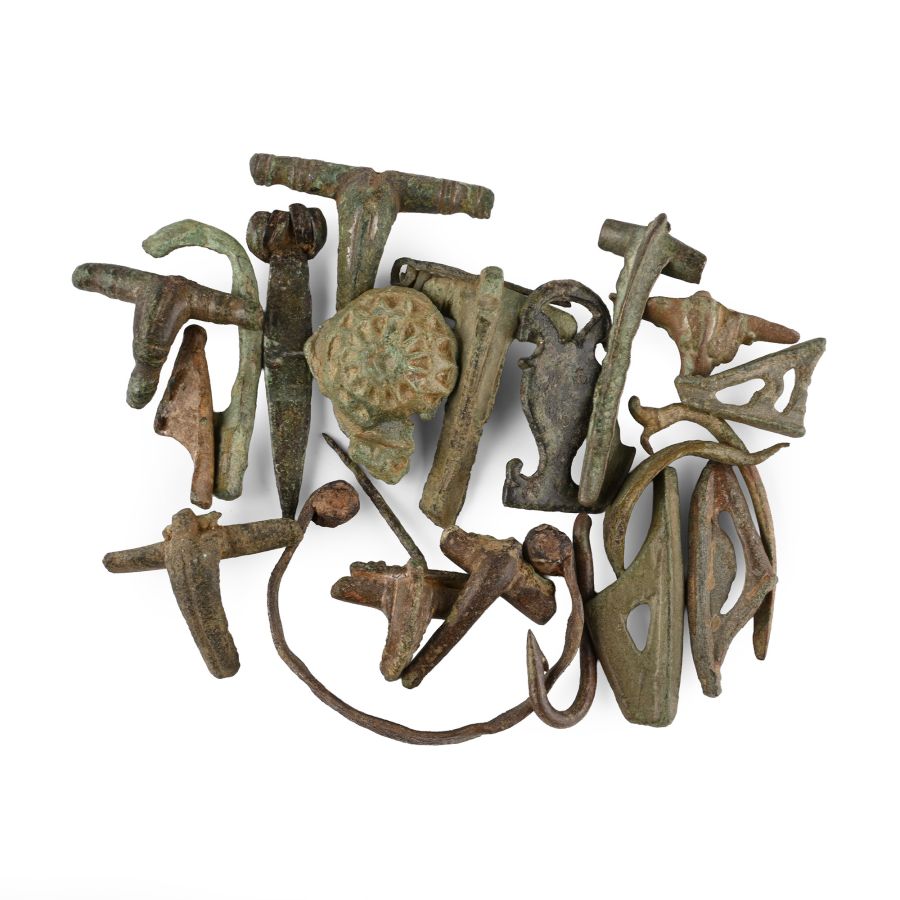
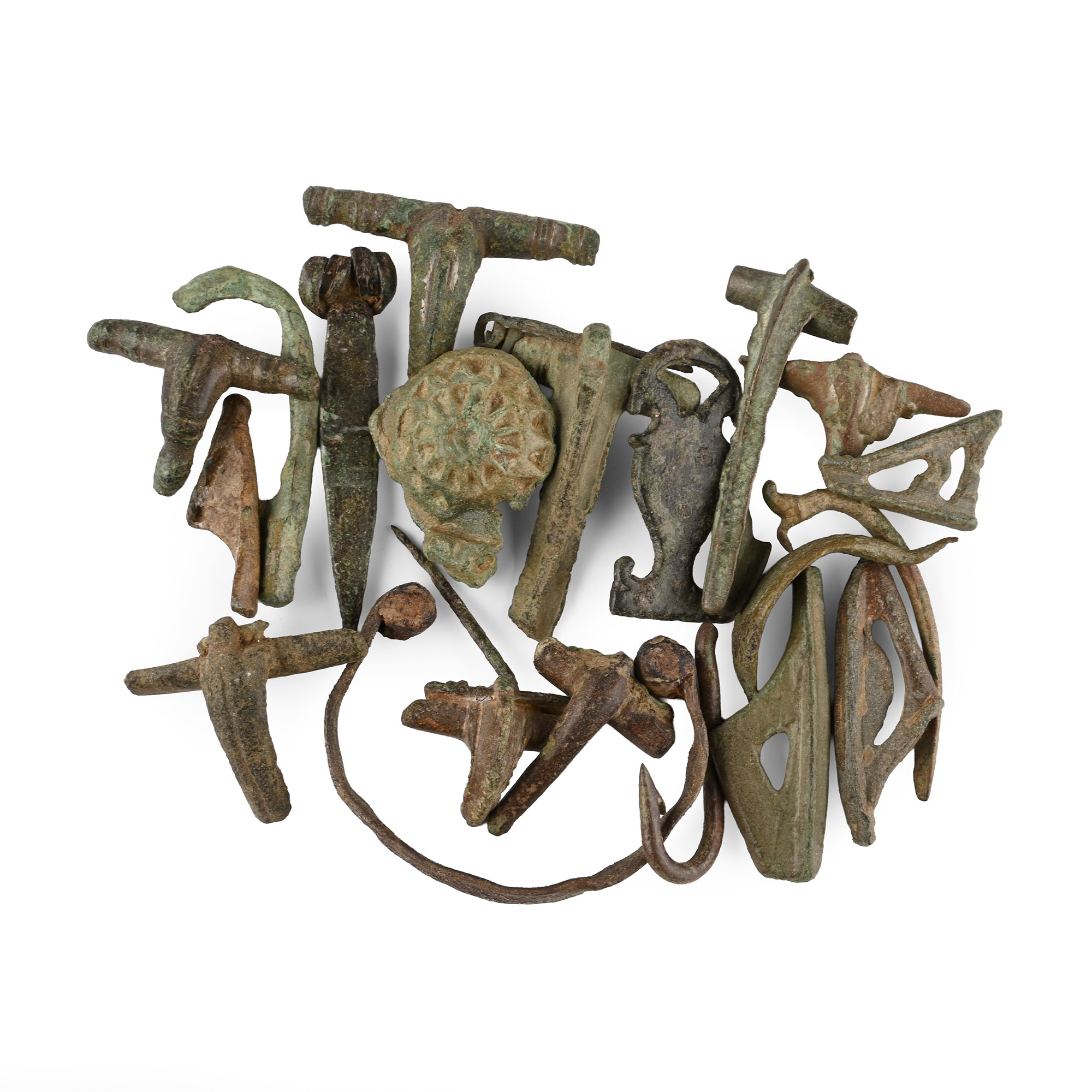
Roman Artefact Group
1ST-4TH CENTURY A.D.
1 - 1 7/8 in. (85 grams total, 24-48 mm).
Including a child's bracelet, fragments of brooches, button, fish hook, and other items. [20, No Reserve]
ProvenanceFound East Anglia, UK.
This lot is accompanied by an illustrated lot declaration signed by the Head of the Antiquities Department, Dr Raffaele D'Amato.
N.B. This lot is for UK buyers only.
CONDITIONTimeLine Auctions follows a vetting process to ensure the authenticity and legality of all items, reinforcing our commitment to integrity and responsible trading. Each antiquity, antique, and coin lot undergoes thorough examination by a vetting committee of at least ten external specialists, professional trade association members, scientists, and archaeologists: Our Vetting Process
AUCTIONS:
TimeLine is a leading auction house specialising in antiquities, ancient art, collectables, natural history, coins, medals, and books. Our auctions offer museums, collectors, historians, and enthusiasts the opportunity to acquire unique and historically significant pieces.
-
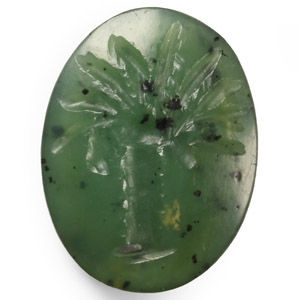
Roman Green Agate Gemstone Depicting a Palm Tree
1st-2nd century A.D.Estimate: £150 - 200 (+bp*)
Opening Bid: £75
Biconvex with intaglio palm-tree motif. 0.2 grams, 10 mm
From the private collection of Mr K.A., acquired in the 1990s-early 2000s. This lot is accompanied by an illustrated lot declaration signed by the Head of the Antiquities Department, Dr Raffaele D'Amato.
Diverse and sometimes exotic imagery can be found on Roman gemstones, like the ones from sites like Caerleon, showing a Roman gemstone in agate depicting a palm tree with dates. These gemstones, often featuring bucolic scenes and symbols of prosperity, were sometimes made of materials coming from the different corners of the empire or even distant lands like Cyprus, Egypt, India, and Sri Lanka. Palm trees were symbols of abundance and fertility, and were a common motif on Roman gemstones even before the advent of Christianity, when the palm tree was associated with the glorious entrance of God in Jerusalem. They were sometimes depicted with other elements like parrots, further highlighting the exotic nature of some Roman gemstone designs. -
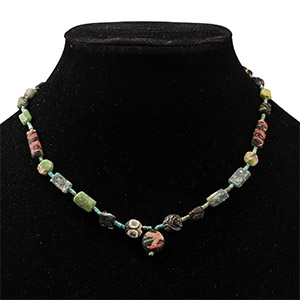
Roman Mixed Glass Bead Necklace String
1st-4th century A.D. and laterSold for (Inc. bp): £72
Restrung group of tabular, cylindrical, including Venetian and Indian lampwork beads with encrusted surface, and other beads. 14.6 grams, 41 cm
From the private collection of a Canadian gentleman living in Essex, UK, formed since the 1920s-circa 1990. Property of an Essex lady until the late 1990s; thence by descent. From the private collection of an Essex gentleman since the late 1990s. This lot is accompanied by an illustrated lot declaration signed by the Head of the Antiquities Department, Dr Raffaele D'Amato. -
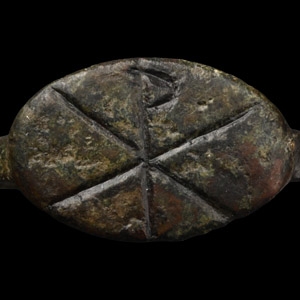
Late Roman Bronze Ring with Chi Rho
4th-6th century A.D.Sold for (Inc. bp): £260
Narrow hoop supporting an ellipsoid bezel, incised Christogram. 2.43 grams, 20.72 mm overall, 17.62 mm internal diameter (approximate size British N 1/2, USA 6 3/4, Europe 14.35, Japan 13)
Ex German art market, 2000s. Acquired from an EU collector living in London. From the collection of a Surrey, UK, gentleman. This lot is accompanied by an illustrated lot declaration signed by the Head of the Antiquities Department, Dr Raffaele D'Amato.
