
Loading, please wait...
LOT 0698
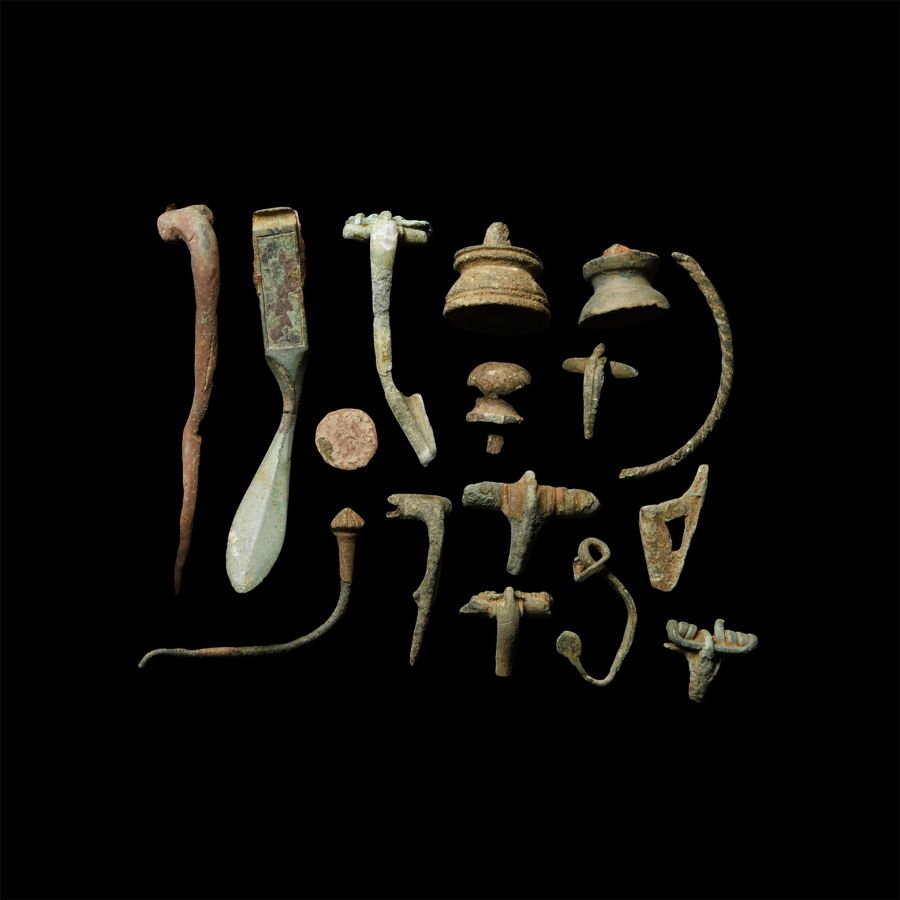
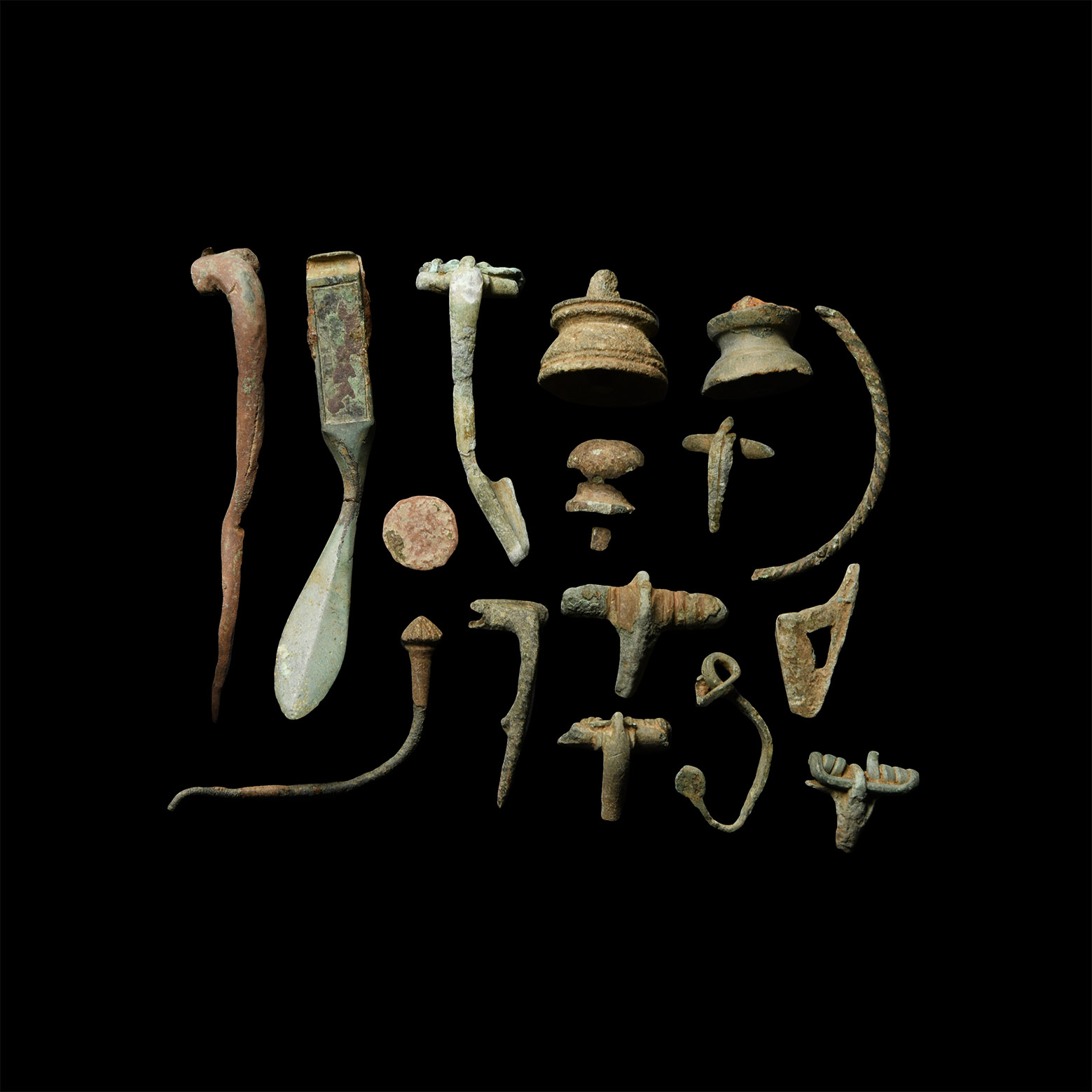
Roman Artefact Group
1ST-4TH CENTURY A.D.
1/2 - 3 1/4 in. (123 grams total, 13-82 mm).
A group of bronze artefacts comprising: two pommel or box mounts with concentric decoration, a section of a twisted wire bracelet, a dress pin, nice bow brooch fragments, a 4th century coin and a implement handle. [16, No Reserve]
ProvenanceFound Rodings, Essex, UK.
Acquired on the UK antiques market between 1974-1985.
Albert Ward collection, Essex, UK.
TimeLine Auctions follows a vetting process to ensure the authenticity and legality of all items, reinforcing our commitment to integrity and responsible trading. Each antiquity, antique, and coin lot undergoes thorough examination by a vetting committee of at least ten external specialists, professional trade association members, scientists, and archaeologists: Our Vetting Process
AUCTIONS:
TimeLine is a leading auction house specialising in antiquities, ancient art, collectables, natural history, coins, medals, and books. Our auctions offer museums, collectors, historians, and enthusiasts the opportunity to acquire unique and historically significant pieces.
-
Roman Marble Fragment Group
1st-2nd century A.D. or laterSold for (Inc. bp): £91
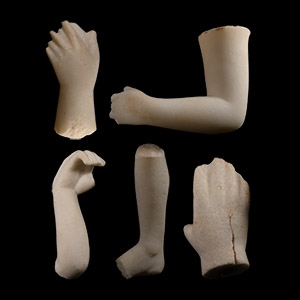
A group of five white marble human limb fragments with simple anatomical detailing: a left hand holding an enigmatic object; a left arm and hand with the remains of the fingers held open; a right leg with ankle and remains of the foot; a right arm and hand modelled held palm-downwards; a right hand modelled with fingers extended, remains of iron rod. 975 grams total, 9.8-12 cm
New York art market, 1992. -
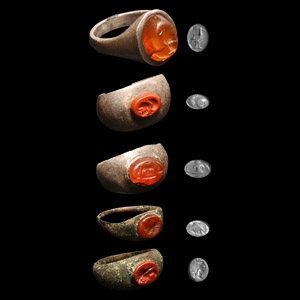
Roman Gemstone Collection
2nd-3rd century A.D.Estimate: £600 - 800 (+bp*)
Opening Bid: £300
A mixed group of stone intaglios each with an carnelian or jasper cloison with intaglio image including bird, profile bust and other types, all set bronze and silver finger rings 28.6 grams total, 19-29 mm
Acquired on the European art market. Ex private Bavarian collection H.W. with Gorny and Mosch, München, Germany, 12 December 2019, 656 [Part]. English private collection. -
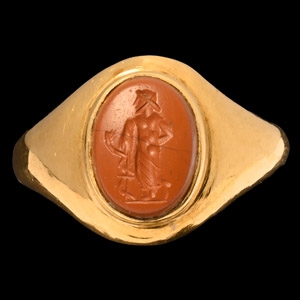
Roman Asclepius Gemstone in Gold Ring
2nd-3rd century A.D.Sold for (Inc. bp): £910
A carnelian intaglio of Asclepius in a loosely draped himation with serpent coiled around his forearm, probably Asclepius the Greek god of healing; set into a later gold ring. 4.99 grams, 23.32 mm overall, 16.68 mm internal diameter (approximate size British L 1/2, USA 6, Europe 11.87, Japan 11)
Ex private East Coast, USA, collection. with Artemis Gallery, Colorado, USA, 21 February 2017. English private collection. Accompanied by a copy of a certificate of authenticity from Artemis Gallery, dated 21 February 2017.
Asclepius was the Graeco-Roman god of medicine, healing, prophecy and a son of Apollo and Coronis. He had two daughters with Epione, the goddess of soothing- Hygeia (goddess of health) and Panacea (goddess of healing). As a child, Asclepius was given to the centaur Chiron, who raised him in the ways of the healing arts. During his training, Asclepius healed a snake, which in turn granted him secret knowledge. Asclepius became such a proficient healer that he discovered a way to resurrect the dead, for which Zeus had him killed, in order to maintain the balance of life on Earth, placing him on the night sky under the constellation of the Ophiuchus (the snake holder).
