
Loading, please wait...
_900x900.jpg "Roman Aquamarine Gemstone of a Philosopher")
_200x200.jpg "Roman Aquamarine Gemstone of a Philosopher")
.jpg "Roman Aquamarine Gemstone of a Philosopher")
LOT 0002
Roman Aquamarine Gemstone of a Philosopher
LATE 1ST CENTURY B.C.
1/2 in. (0.90 grams, 14 mm).
Plano-convex in section, incuse facing bust of an elderly man wearing a tunic and toga; supplied with a museum-quality impression.
ProvenancePrivate English collection, formed between the late 1970s and early 1990s.
Private collection, London, UK.
TimeLine Auctions follows a vetting process to ensure the authenticity and legality of all items, reinforcing our commitment to integrity and responsible trading. Each antiquity, antique, and coin lot undergoes thorough examination by a vetting committee of at least ten external specialists, professional trade association members, scientists, and archaeologists: Our Vetting Process
AUCTIONS:
TimeLine is a leading auction house specialising in antiquities, ancient art, collectables, natural history, coins, medals, and books. Our auctions offer museums, collectors, historians, and enthusiasts the opportunity to acquire unique and historically significant pieces.
-
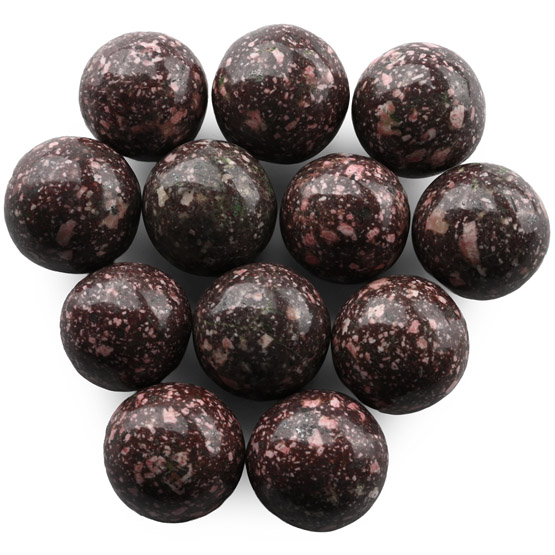
Polished Imperial Porphyry Gaming Piece Set
Roman, 4th-6th century A.D. or laterSold for (Inc. bp): £1,690
A group of large twelve hand cut and hand polished globular gaming pieces. 273 grams total, 25 mm each
Acquired in the 1990s from the Bath Antiques Centre, Somerset, UK. From the private collection of a Somerset gentleman. -
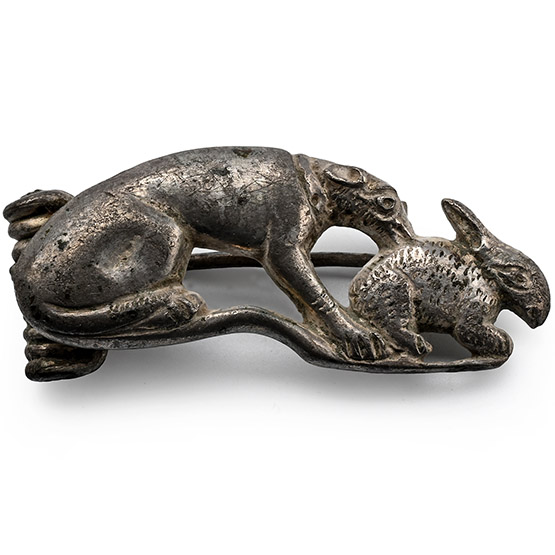
Roman Silver Hare and Hound Brooch
Circa 2nd century A.D.Estimate: £1,200 - 1,700 (+bp*)
Opening Bid: £600
Modelled in the half-round, image of a hare attacked by a hound on a baseline; pin-lugs, pin and catch to reverse. 10.2 grams, 42 mm
Ex 'S' collection, London, UK, 1970s-1990s. -
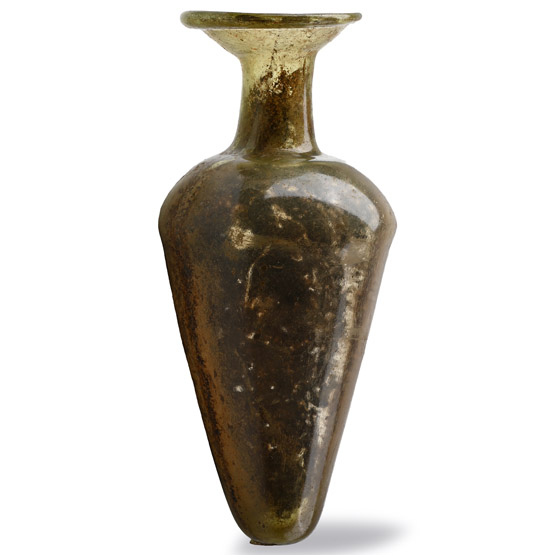
Roman Glass Flask
1st-2nd century A.D.Sold for (Inc. bp): £211
Conical body with rounded shoulder and tubular neck with wide everted rim. 74 grams, 17.1 cm
Ex Abelita family collection, 1980s-2000s.
