
Loading, please wait...
LOT 0653
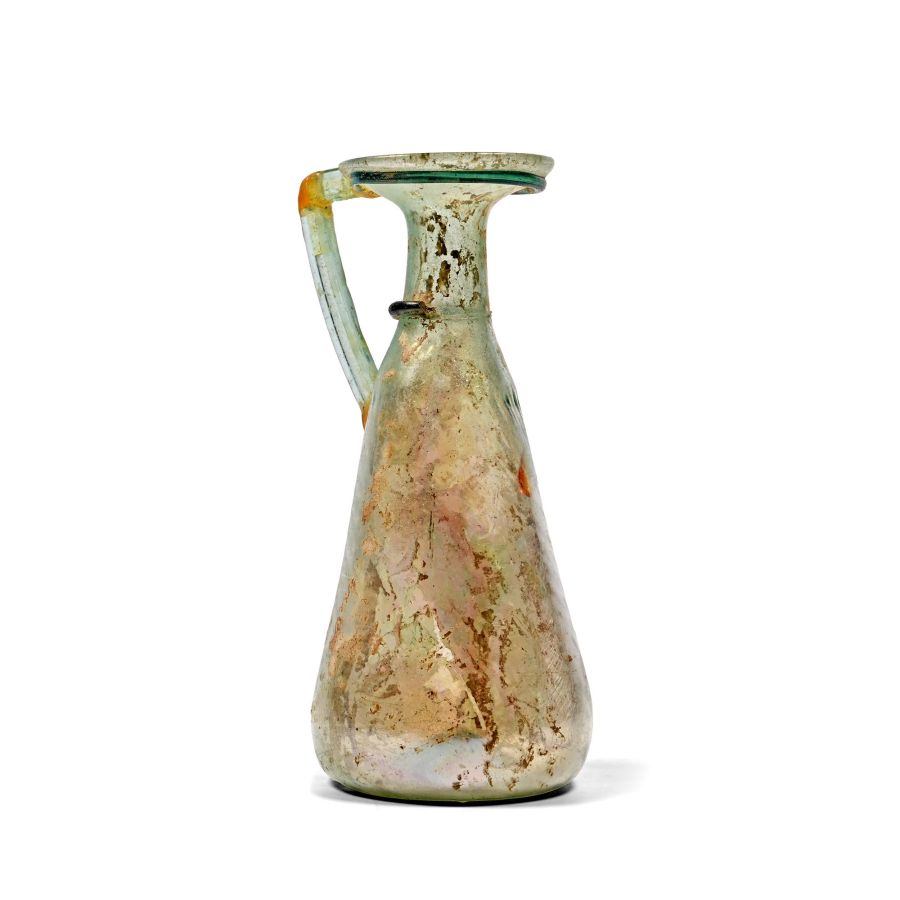
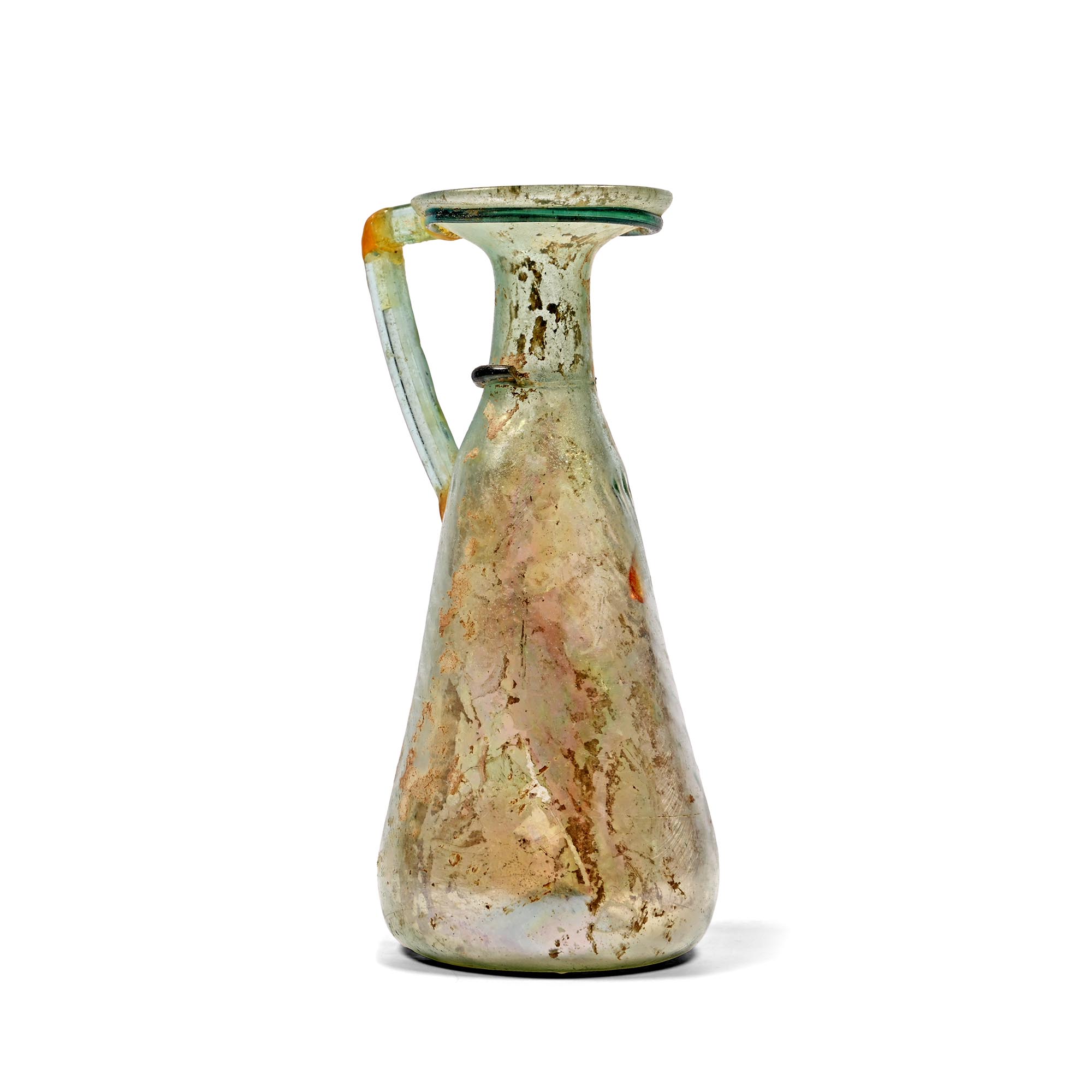
Roman Aqua Glass Jug
1ST-4TH CENTURY A.D.
5 1/2 in. (57 grams, 14 cm high).
With rounded conical body, upward sloping everted rim with sloping internal face; applied trail to upper and lower neck, angular handle; iridescent surfaces; repaired.
ProvenanceAcquired early 1990s.
Ex private American collection; thence by descent.
Private collection since 1998.
Cf. The Corning Museum of Glass, accession number 6.1.4, for a broadly comparable jug.
CONDITIONTimeLine Auctions follows a vetting process to ensure the authenticity and legality of all items, reinforcing our commitment to integrity and responsible trading. Each antiquity, antique, and coin lot undergoes thorough examination by a vetting committee of at least ten external specialists, professional trade association members, scientists, and archaeologists: Our Vetting Process
AUCTIONS:
TimeLine is a leading auction house specialising in antiquities, ancient art, collectables, natural history, coins, medals, and books. Our auctions offer museums, collectors, historians, and enthusiasts the opportunity to acquire unique and historically significant pieces.
-
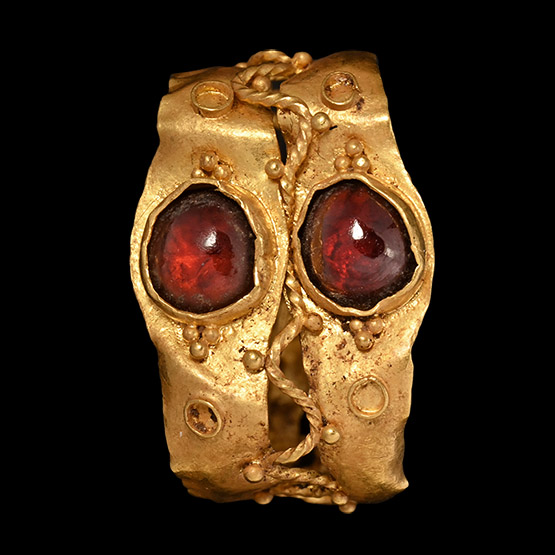
Roman Gold Ring with Garnets
2nd-3rd century A.D.Estimate: £800 - 1,000 (‡+bp*)
Opening Bid: £400
Comprising two parallel hoops connected with angled filigree struts with a granule to each node, annulets to the shoulders, irregular circular cells each set with a cabochon garnet; hoop cracked at underside. 1.38 grams, 17.03 mm overall, 14.85 mm internal diameter (approximate size British G 1/2, USA 3 1/2, Europe 5.55, Japan 5)
Acquired in the 1992. Private collection, Switzerland, thence by descent. Private collection, since the late 1990s. -
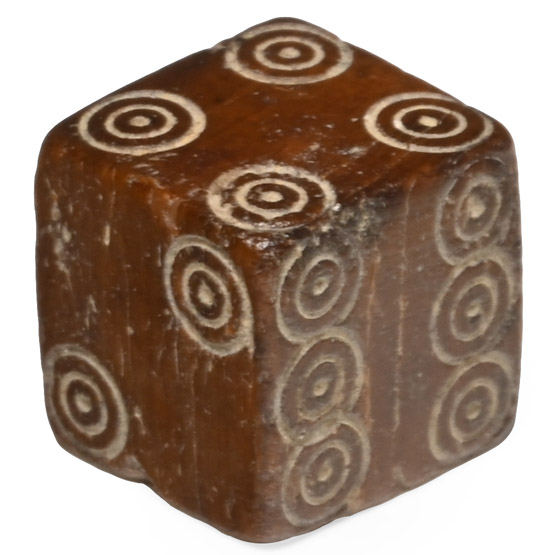
Roman Bone Gaming Dice
1st-4th century A.D.Sold for (Inc. bp): £130
Cuboid type with ring-and-dot markings disposed 1:2, 3:4, 5:6. 0.78 grams, 7 mm
From the private collection of Colin Narbeth, UK, 1990ss, with collection reference no.83. -
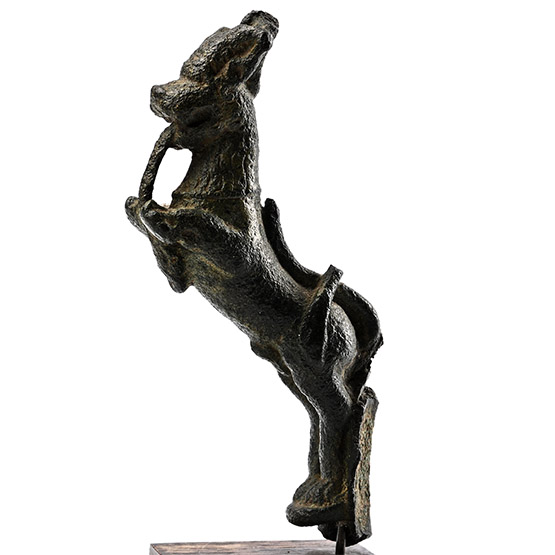
Roman Bronze Prancing Lion Statuette
1st-3rd century A.D.Sold for (Inc. bp): £715
Modelled in the round with the tail laid along the spine, collar to the neck and crest between the pricked ears; tongue protruding to form a loop against the chest, possibly from a handle; mounted on a display stand. 226 grams total, 13 cm including stand
Acquired from Bath Antiques Centre, 1990s; and inspected and verified by Robert Knox of the British Museum. From the private collection of a Somerset gentleman.
