
Loading, please wait...
LOT 0893
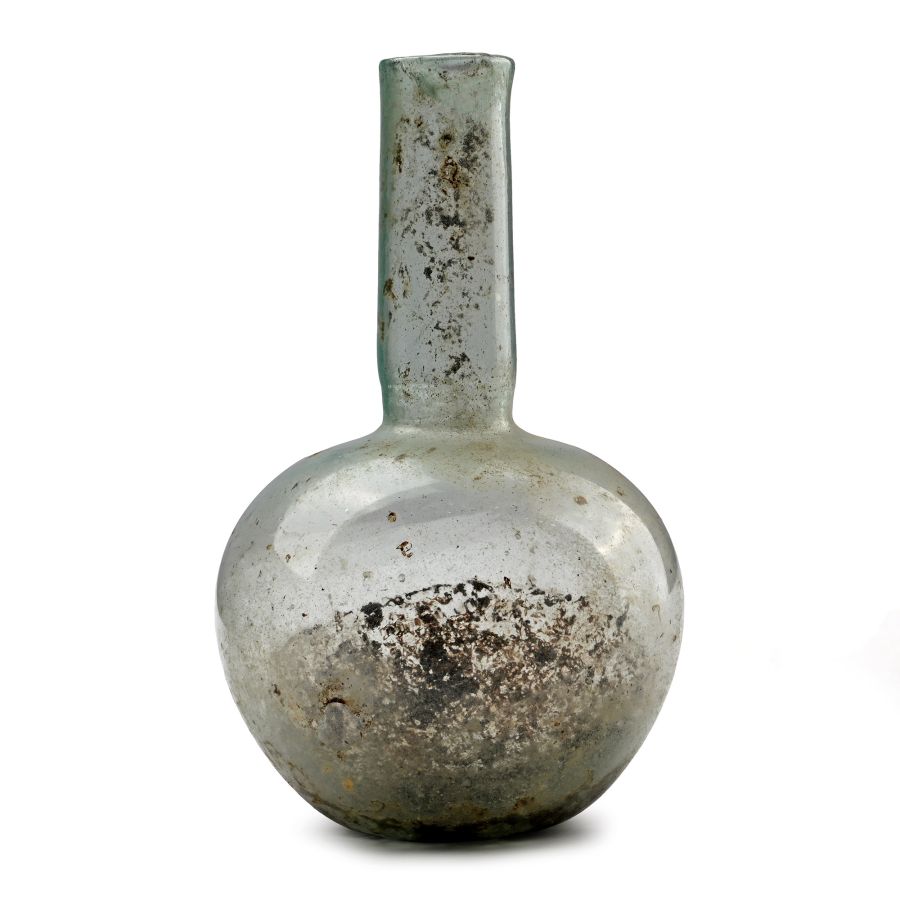
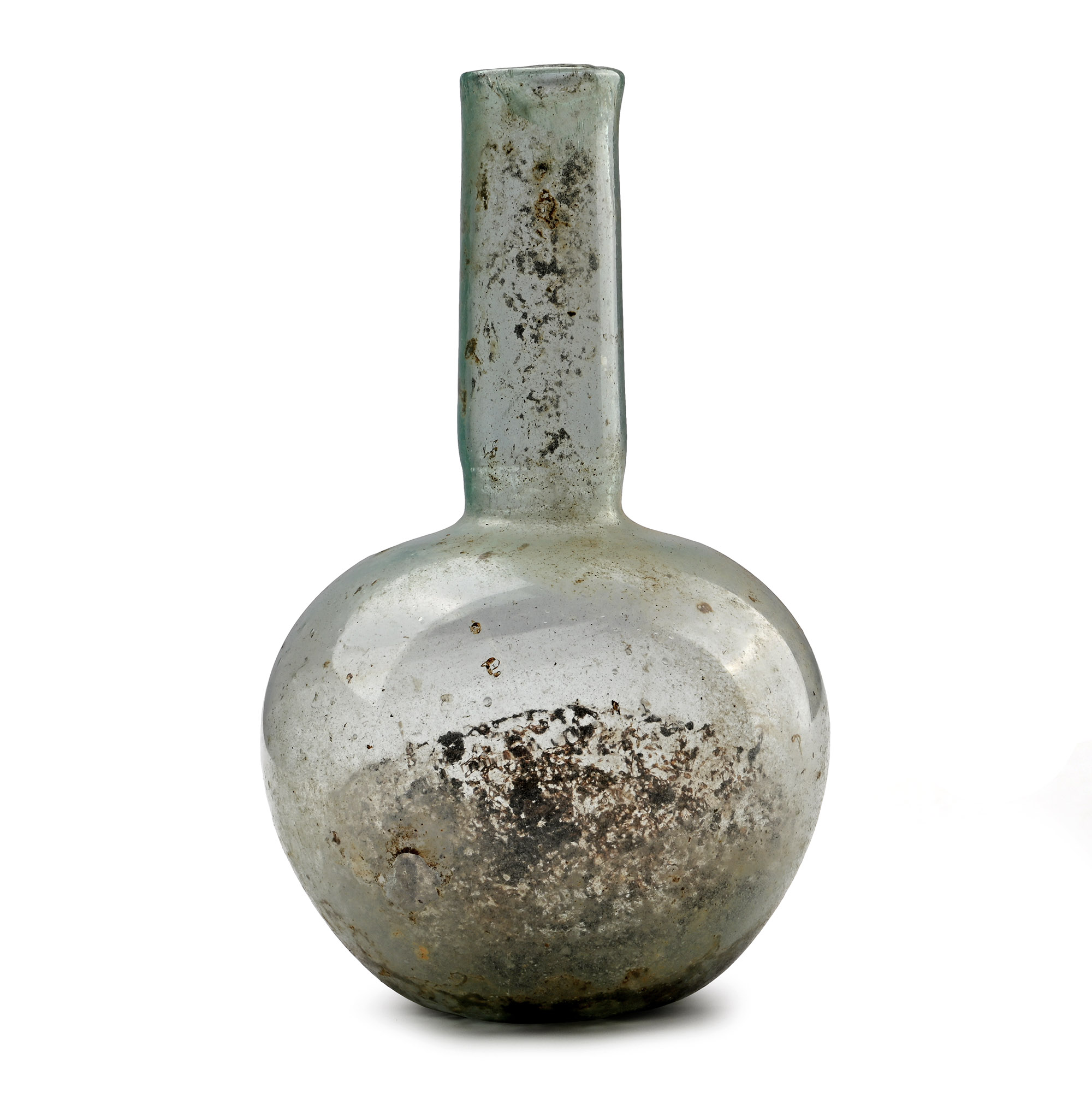
Roman Aqua Glass Flask
1ST-2ND CENTURY A.D.
5 3/4 in. (91 grams, 14.5 cm high).
With spherical body, tall tubular neck with square rim; pontil base.
ProvenanceEx Abelita family collection, 1980s-2000s.
LiteratureCf. Whitehouse, D., Roman Glass in the Corning Museum of Glass, vol.1, New York, 1997, item 268, for type.
CONDITIONTimeLine Auctions follows a vetting process to ensure the authenticity and legality of all items, reinforcing our commitment to integrity and responsible trading. Each antiquity, antique, and coin lot undergoes thorough examination by a vetting committee of at least ten external specialists, professional trade association members, scientists, and archaeologists: Our Vetting Process
AUCTIONS:
TimeLine is a leading auction house specialising in antiquities, ancient art, collectables, natural history, coins, medals, and books. Our auctions offer museums, collectors, historians, and enthusiasts the opportunity to acquire unique and historically significant pieces.
LOT 0893
Roman Aqua Glass Flask
Estimate £180 - 240€210 - 280 (for guidance only)$240 - 320 (for guidance only)
-
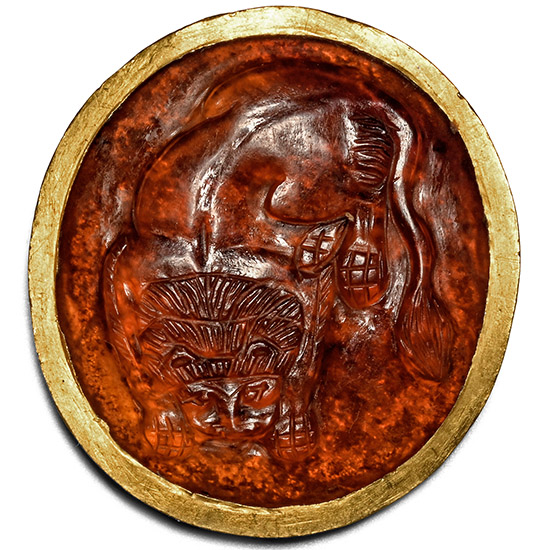
Roman Carnelian Cameo of a Crouching Lion in Gold Mount
Eastern Roman, 3rd-4th century A.D.Sold for (Inc. bp): £4,680
Discoid cell with flange rim, inset convex gemstone with reserved image of a lion resting with his head on his forepaws. 2.72 grams, 25 mm
Private English collection, formed between the late 1970s and early 1990s. Private collection, London, UK. This lot has been checked against the Interpol Database of stolen works of art and is accompanied by search certificate number no.13100-248677. -
.jpg)
Roman Carnelian Gemstone with Minerva in Iron Bezel
Circa 2nd century A.D.Sold for (Inc. bp): £520
Ferrous bezel with inset intaglio of Minerva standing with spear and shield, one hand extended with patera. 3.5 grams, 23 mm
Ex gentleman's specialist collection, 1990-2015. -
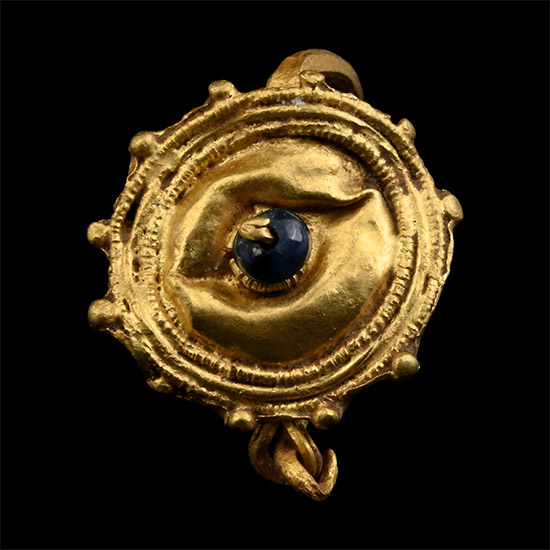
Roman Gold Earring
1st-4th century A.D.Sold for (Inc. bp): £312
Discoid plaque with beaded wire border, radiating granules to the rim, glass bead centre. 2.53 grams, 20 mm
Ex German art market, 2000s. Acquired from an EU collector living in London. From the collection of a Surrey, UK, gentleman.
