
Loading, please wait...
LOT 0143
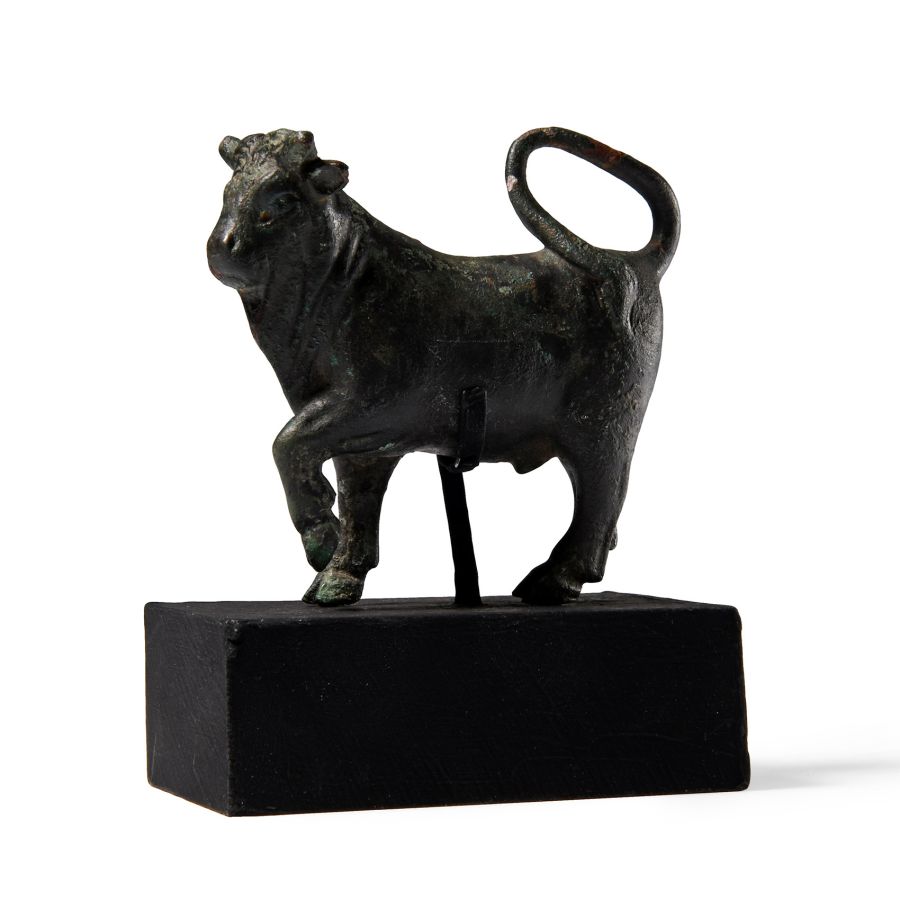
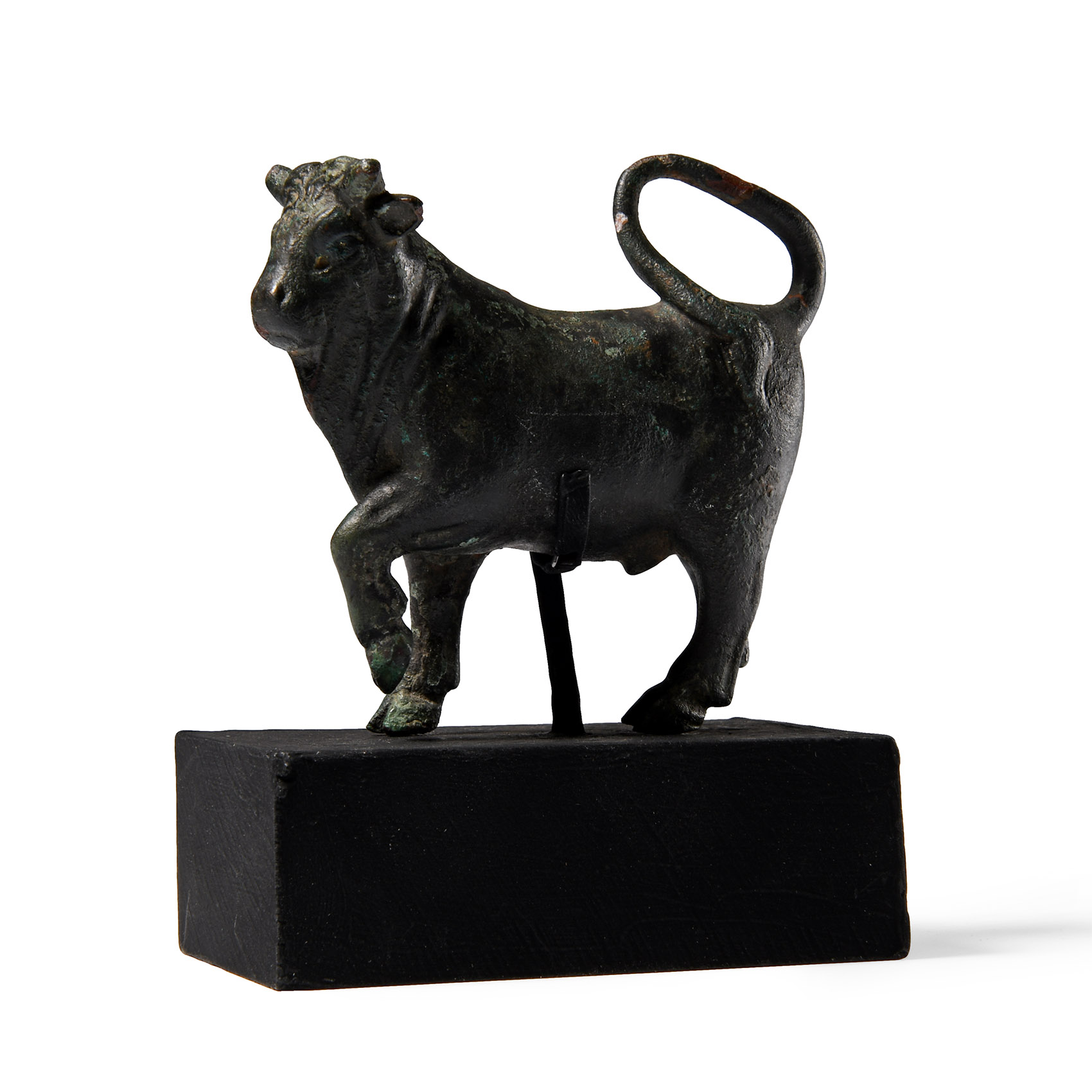
Roman Apis Bull Statuette
CIRCA 2ND CENTURY A.D.
2 3/4 in. (3 5/8 in.) (106 grams, 72 mm wide (207 grams total, 91 mm high including stand)).
Standing with its left foreleg raised, the head held high and turned slightly left with a full, fleshy dewlap cascading to the brisket; the tail looping over the rump, with its end adhering to the left flank; wide-open eyes and flaring nostrils; accompanied by a custom-made display stand. [No Reserve]
ProvenanceAcquired from Charles Ede Ltd., London, UK, in 2004.
From the collection of a South West London, UK, collector.
Cf. similar statuette in the Leo Mildenberg collection in Kozloff, A.P., Animals in Ancient Art, from the Leo Mildenberg Collection, Mainz, 1981, no.62.
FootnotesAfter the Roman annexation of Egypt, Egyptian cults such as that of the Apis bull were syncretised, becoming part of a distinctively Egyptian form of Roman polytheism. Representations of prancing Apis bulls, turned either left or right, have been found throughout the Roman empire. Various parallels can be found in the Cincinnati Art Museum (inv.1956.13), in Walters Art Gallery (inv.54.1565) and in the British Museum.
CONDITIONTimeLine Auctions follows a vetting process to ensure the authenticity and legality of all items, reinforcing our commitment to integrity and responsible trading. Each antiquity, antique, and coin lot undergoes thorough examination by a vetting committee of at least ten external specialists, professional trade association members, scientists, and archaeologists: Our Vetting Process
AUCTIONS:
TimeLine is a leading auction house specialising in antiquities, ancient art, collectables, natural history, coins, medals, and books. Our auctions offer museums, collectors, historians, and enthusiasts the opportunity to acquire unique and historically significant pieces.
-
.jpg)
Eastern Roman Gemstone with Ibex
2nd-3rd century A.D.Estimate: £150 - 200 (+bp*)
Opening Bid: £75
Lapis lazuli gemstone with intaglio pair of standing ibexes. 1.08 grams, 16.24 mm
Found Southern England. Acquired on the UK art market in the 1980s. From an East Anglian private collection. -
.jpg)
Roman Carnelian Composite Goddess Gemstone
Circa 2nd century A.D.Estimate: £500 - 700 (+bp*)
Opening Bid: £250
With a goddess with the attributes of Victory, Fortuna, Ceres and Iustitia standing wearing a crested helmet and holding a spear; supplied with a museum-quality impression. 1.11 grams, 17 mm
From the collection of a Swiss gentleman formed in Europe from 1970-1980s; thence by descent from the family in London. -
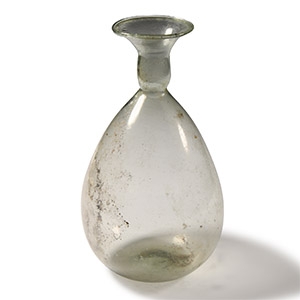
Roman Green Glass Bottle
2nd-4th century A.D.Sold for (Inc. bp): £975
With large piriform body and dimpled base; funicular, waisted neck and rolled rim. 85 grams, 19 cm high
Acquired in the 1970s, thence by descent 2012. Private UK collection, Cambridge, UK. Property of an East Sussex, UK, gentleman.
