
Loading, please wait...
LOT 0758
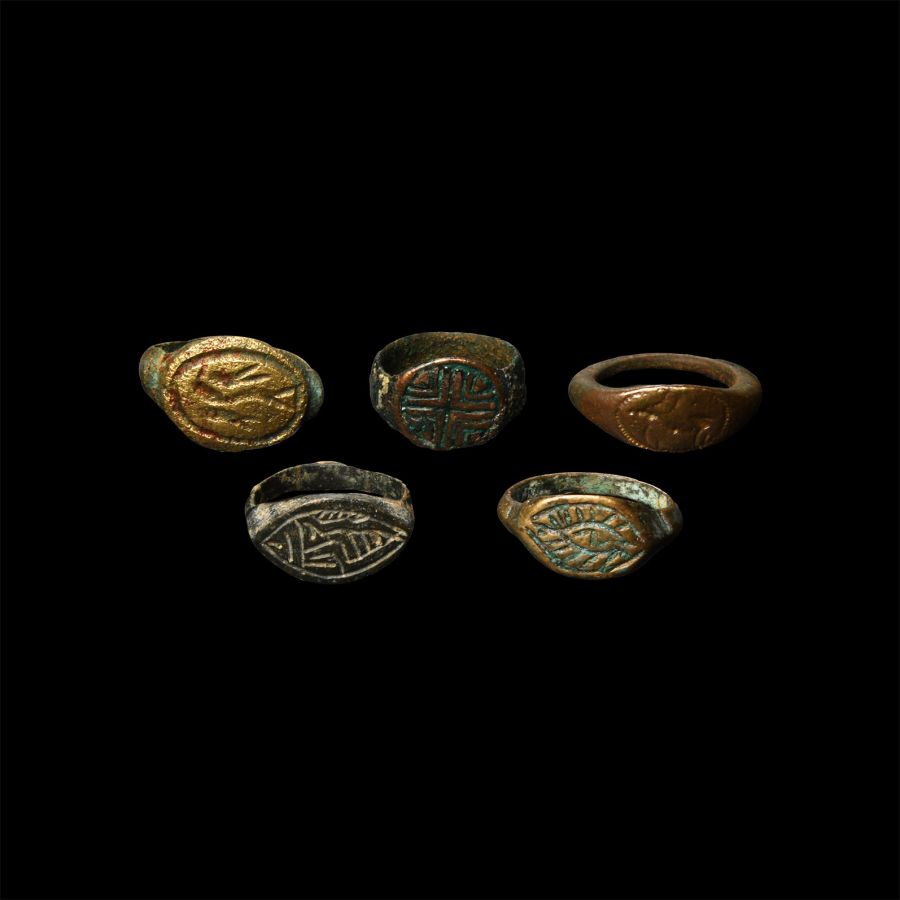
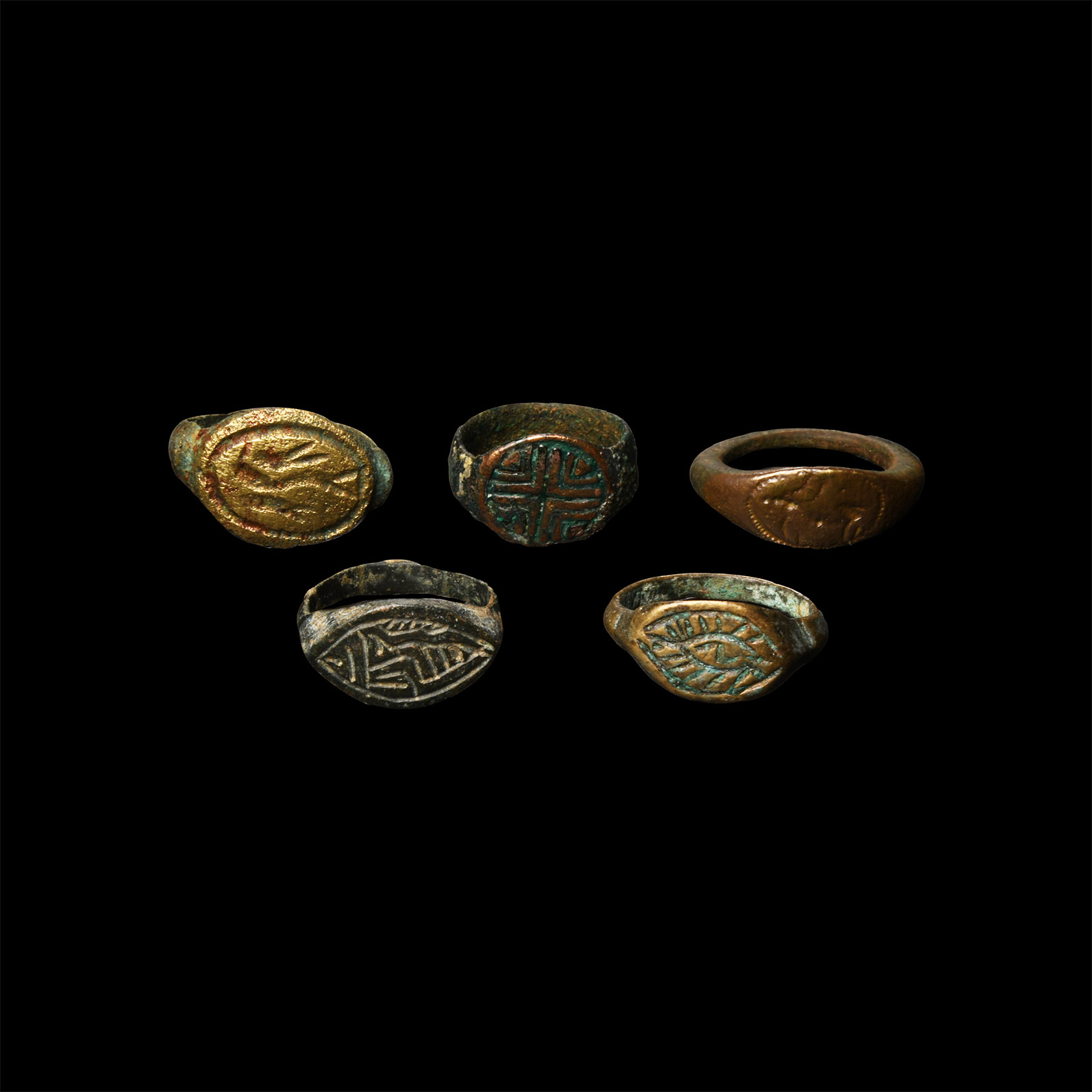
Roman and Other Ring Collection
EARLY 1ST MILLENNIUM A.D. AND LATER
3/4 - 1 in. (25 grams total, 20-25 mm).
A mixed group of copper-alloy finger rings of various types, each bearing an incuse design to the bezel: a stylised bird; a cross; a stylised fish; a geometric motif and possible horse and rider. [5, No Reserve]
ProvenanceEarly 1990s London collection.
Acquired on the UK art market.
From a private collection, Lancashire, UK.
TimeLine Auctions follows a vetting process to ensure the authenticity and legality of all items, reinforcing our commitment to integrity and responsible trading. Each antiquity, antique, and coin lot undergoes thorough examination by a vetting committee of at least ten external specialists, professional trade association members, scientists, and archaeologists: Our Vetting Process
AUCTIONS:
TimeLine is a leading auction house specialising in antiquities, ancient art, collectables, natural history, coins, medals, and books. Our auctions offer museums, collectors, historians, and enthusiasts the opportunity to acquire unique and historically significant pieces.
-
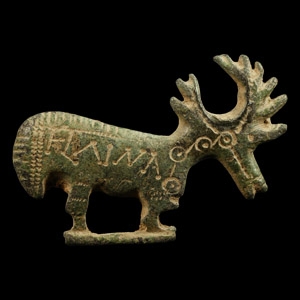
Roman Deer Brooch for Flaina
2nd century A.D.Sold for (Inc. bp): £845
A copper-alloy zoomorphic plate brooch, in the shape of a deer with two legs, a short tail and a complete antler, characterised by a series of transverse grooves, the body of the animal with the inscription 'FLAINA' in Latin letters; pin lugs and remains of ferrous pin to the reverse. 11.5 grams, 41 mm
Acquire in the 1990s. Ex Cambridgeshire, UK, collection.
Roman fibulae came in a variety of shapes and embellishments. In the Roman Empire, the fibula was both functional and decorative, as men and women wore it to fasten their aprons and cloaks. A similar function was performed by pins intended to hold heavy garments such as cloaks. This type of fibulae were probably produced in Pannonia, from where they were exported around the Empire. Another centre of production of deer fIbulae was probably Roman Britannia. -
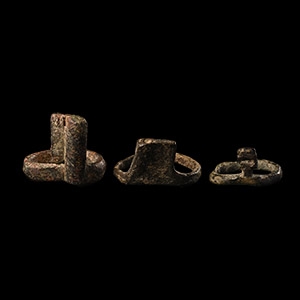
Roman Key Ring Group
1st-4th century A.D.Sold for (Inc. bp): £20
A trio of bronze key rings with rectangular bits, including an openwork example. 13.9 grams total, 19-23 mm
Acquired in the 1970s. Important European collection. -
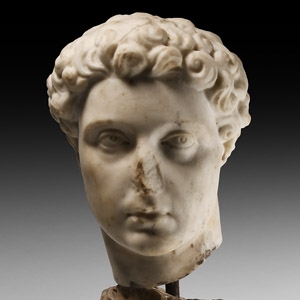
Roman Marble Head on Corinthian Capital Section
2nd-3rd century A.D. or laterSold for (Inc. bp): £3,900
A 2nd-3rd century A.D. Roman marble Corinthian capital fragment carved with acanthus leaves; together with a 16th-17th century A.D. reworked male head modelled in the round with naturalistic detailing. 16.2 kg total, 44 cm high including stand
Acquired on the UK art market. English private collection. This lot has been checked against the Interpol Database of stolen works of art and is accompanied by search certificate no.11623-199751.
