
Loading, please wait...
LOT 0713
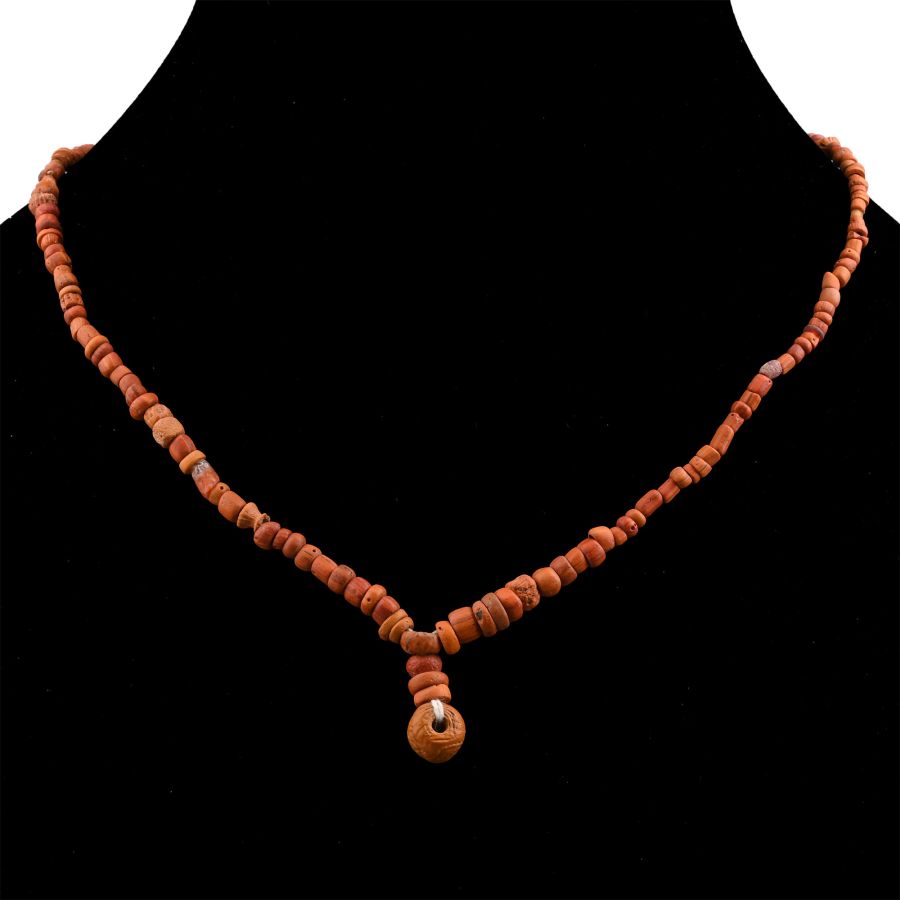
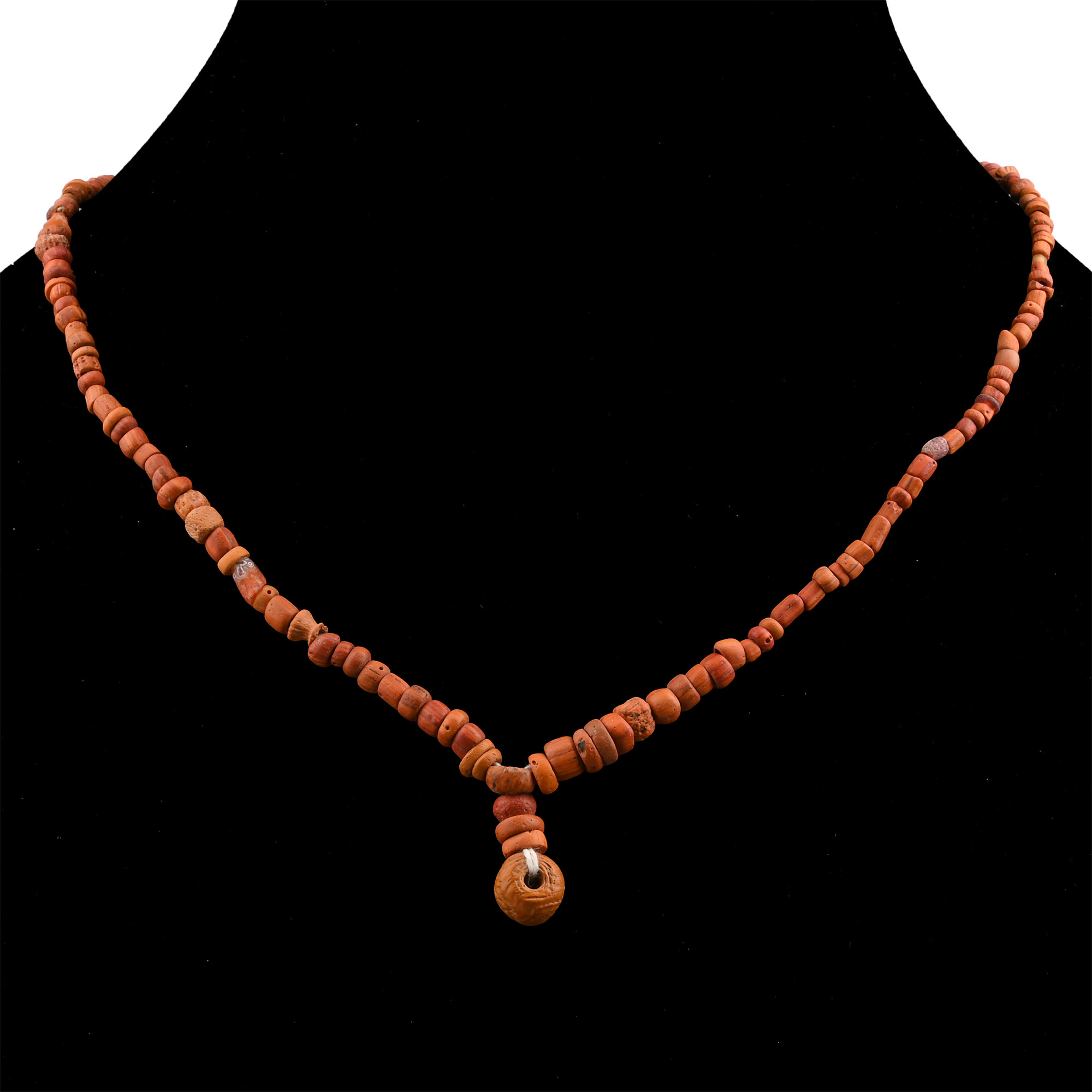
Roman and Other Red Glass Bead Necklace String
1ST-4TH CENTURY A.D. AND LATER
15 3/8 in. (10.79 grams, 39 cm).
Mixed group of gently graduating beads, large oblate bead as a central feature; restrung. [No Reserve]
ProvenanceFrom London, UK, gallery collection, 1990s.
CONDITIONTimeLine Auctions follows a vetting process to ensure the authenticity and legality of all items, reinforcing our commitment to integrity and responsible trading. Each antiquity, antique, and coin lot undergoes thorough examination by a vetting committee of at least ten external specialists, professional trade association members, scientists, and archaeologists: Our Vetting Process
AUCTIONS:
TimeLine is a leading auction house specialising in antiquities, ancient art, collectables, natural history, coins, medals, and books. Our auctions offer museums, collectors, historians, and enthusiasts the opportunity to acquire unique and historically significant pieces.
-
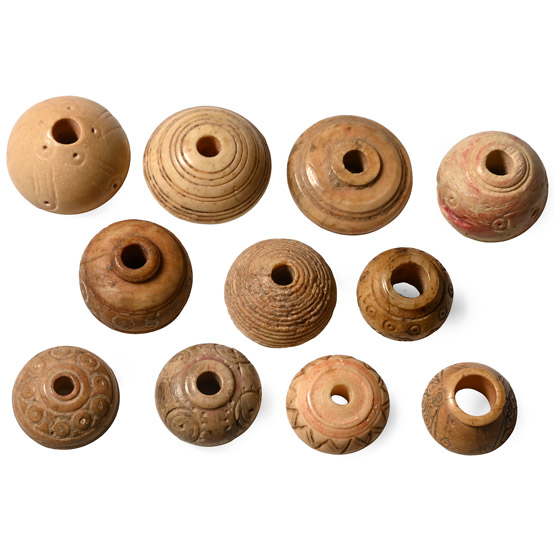
Roman Bone Spindle Whorl Collection
1st-4th century A.D.Sold for (Inc. bp): £182
Including plano-convex, ribbed and other types, some with ring-and-dot detailing. 45 grams total, 16-23 mm
From the collection of a Kent gentleman, formed from the 1990s. -
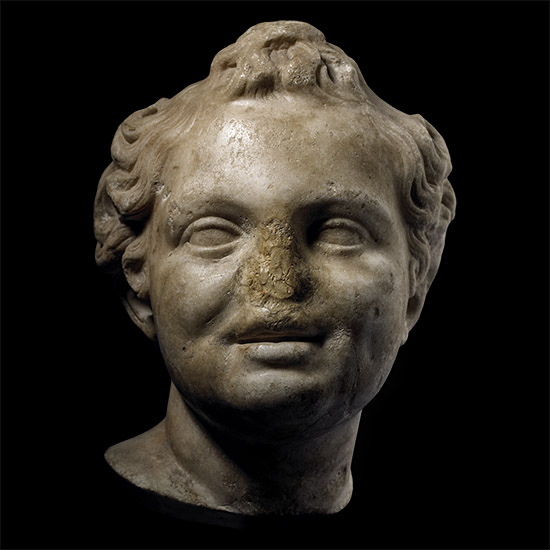
Roman Marble Head of Youthful Eros, the Greek God of Love
2nd-3rd century A.D.Sold for (Inc. bp): £11,700
Carved in the round as a bust of a child with youthful face, wide cheeks, slightly opened mouth with full lips, almond-shaped eyes, chipped nose; curly hair combed on the top of the head; mounted on a custom-made display stand. 9.95 kg total, 34 cm including stand
Collection of Mr and Mrs A., in their private mansion near the Champs-Élysées; thence by descent. Acquired on the French art market, 2024. Private collection, England. This lot has been checked against the Interpol Database of stolen works of art and is accompanied by search certificate number no.13109-249674.
The finely sculpted head represents a young child, probably intended as Eros (Cupid). Such depictions were produced in numerous variations to illustrate the stages of childhood and the capacity of children to undertake meaningful or symbolic actions. The softly modelled features and gentle expression recall the celebrated work of Boethos', The Boy Strangling the Goose, as well as the widespread images of Eros and the Erotes found throughout Graeco-Roman sculpture and painting. In Graeco-Roman art, representations of children occupied an important and evolving role. Initially, youthful figures were portrayed as miniature adults, but from the 4th century BC onwards - particularly during the Hellenistic and Roman periods - artists began to study children’s anatomy more closely, reproducing their characteristic proportions and expressions with naturalistic sensitivity. The figure of Eros, the constant companion of Aphrodite, became the quintessential model of the child in ancient art, identifiable by his traditional attributes of wings and bow. As evidenced by numerous statuettes and wall paintings unearthed at Pompeii, scenes of childhood were among the most popular subjects for adorning the gardens and interiors of wealthy Roman villas. These figures appear in lively and varied activities - playing, working, performing, or interacting with animals such as birds, hares, and dolphins - celebrating both the charm and vitality of early life within an idealised artistic vision. -
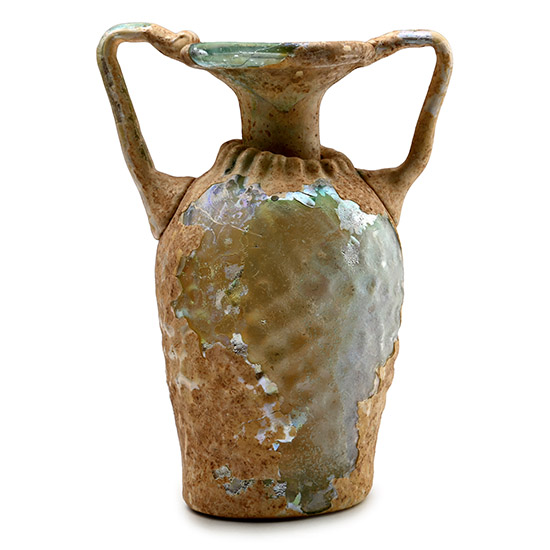
Roman Glass Two-Handled Jar
Circa 1st-4th century A.D.Estimate: £400 - 600 (+bp*)
Opening Bid: £200
With mould-blown tubular body decorated with raised ribs to the shoulder and impressed honeycomb effect to the sidewall, pontil base; milky patination and iridescent surface. 58 grams, 11cm
From a London, UK, collection of glass, 1970-2000s.
