
Loading, please wait...
LOT 0565
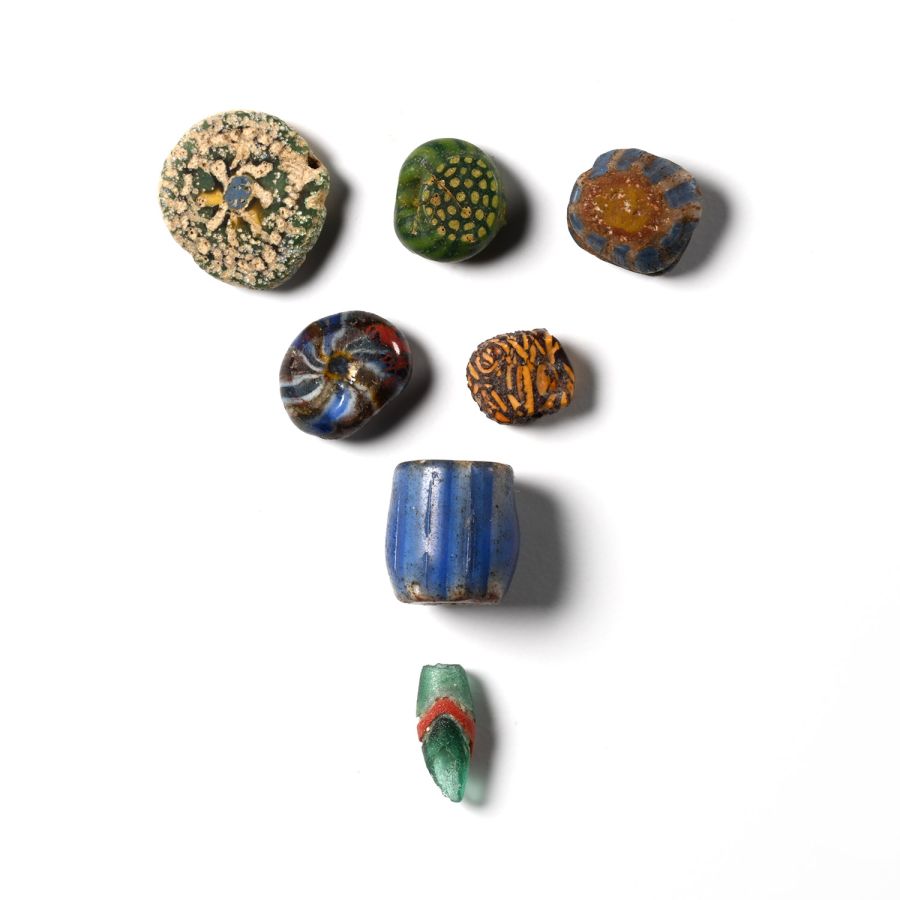
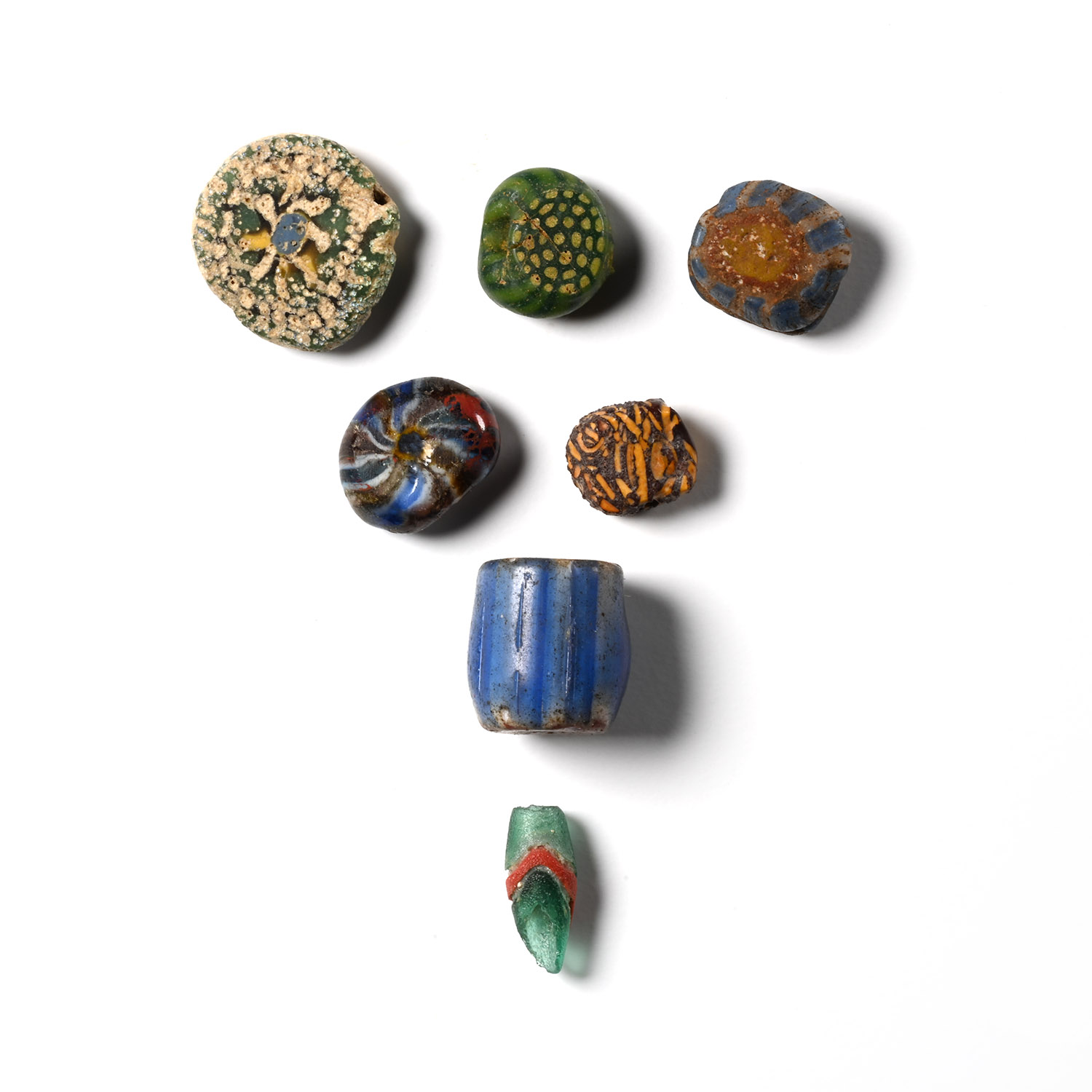
Roman and Other Mosaic Glass Bead Collection
1ST CENTURY A.D. AND LATER
3/8 - 1/2 in. (4.08 grams total, 7-12 mm).
Comprising millefiori glass bead elements and other types. [7, No Reserve]
ProvenanceUK gallery, early 2000s.
CONDITIONTimeLine Auctions follows a vetting process to ensure the authenticity and legality of all items, reinforcing our commitment to integrity and responsible trading. Each antiquity, antique, and coin lot undergoes thorough examination by a vetting committee of at least ten external specialists, professional trade association members, scientists, and archaeologists: Our Vetting Process
AUCTIONS:
TimeLine is a leading auction house specialising in antiquities, ancient art, collectables, natural history, coins, medals, and books. Our auctions offer museums, collectors, historians, and enthusiasts the opportunity to acquire unique and historically significant pieces.
-
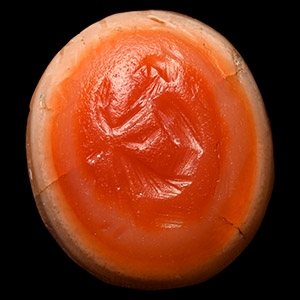
Roman Inscribed Orange Sardonyx Gemstone with Philosopher Seated Under a Tree
1st century A.D.Estimate: £600 - 800 (+bp*)
Opening Bid: £333
The oval stone engraved with an old man (a philosopher?) seated on a stone, wearing a low cap, half naked and with the cloak covering his leg; his right hand resting beside him, and his left hand raised in the act of speaking; a tree behind, inscription in Greek letters 'ψίω' (= eat). 1.01 grams, 13 mm
Acquired in the late 1980s-early 1990s. Important North West London collection.
A particularly recognisable representation in Graeco-Roman art was that of a male character, with a bald head and a slightly pointed beard, seated in profile on a simple seat or on a rock. It represents the philosopher, who often has his hand raised in the gesture of speaking or holds a volume in his hands, characterised according to the rules of cynicism, by the bare torso and the cloak that covers his legs. The inscription refers to the imperative to 'feed' on knowledge. -
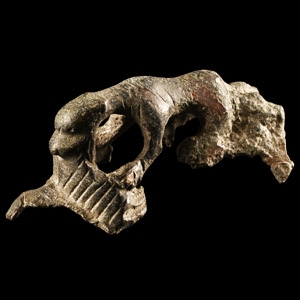
Roman Bronze Attacking Panther Attachment
1st-4th century A.D.Estimate: £200 - 300 (+bp*)
Opening Bid: £111
Modelled in the round with naturalistic detailing to the head and face, attacking another animal, possibly a handle attachment. 19.3 grams, 48 mm
‘The Ancient Menagerie Collection’ formerly the property of a Cambridgeshire lady, collected since the 1990s and acquired from auctions and dealers throughout Europe and the USA, now ex London collection. -
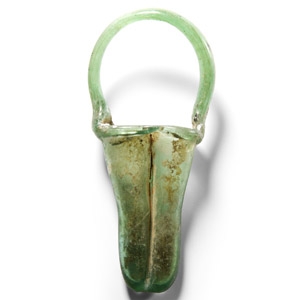
Roman Glass Double Unguentarium with Handle
1st-2nd century A.D.Estimate: £300 - 400 (+bp*)
Opening Bid: £150
A green double unguentarium with rolled rim to each tube, large applied D-shaped handle. 88 grams, 16.5 cm
Acquired 1980-2015. Ex Abelita family collection.
