
Loading, please wait...
LOT 0643
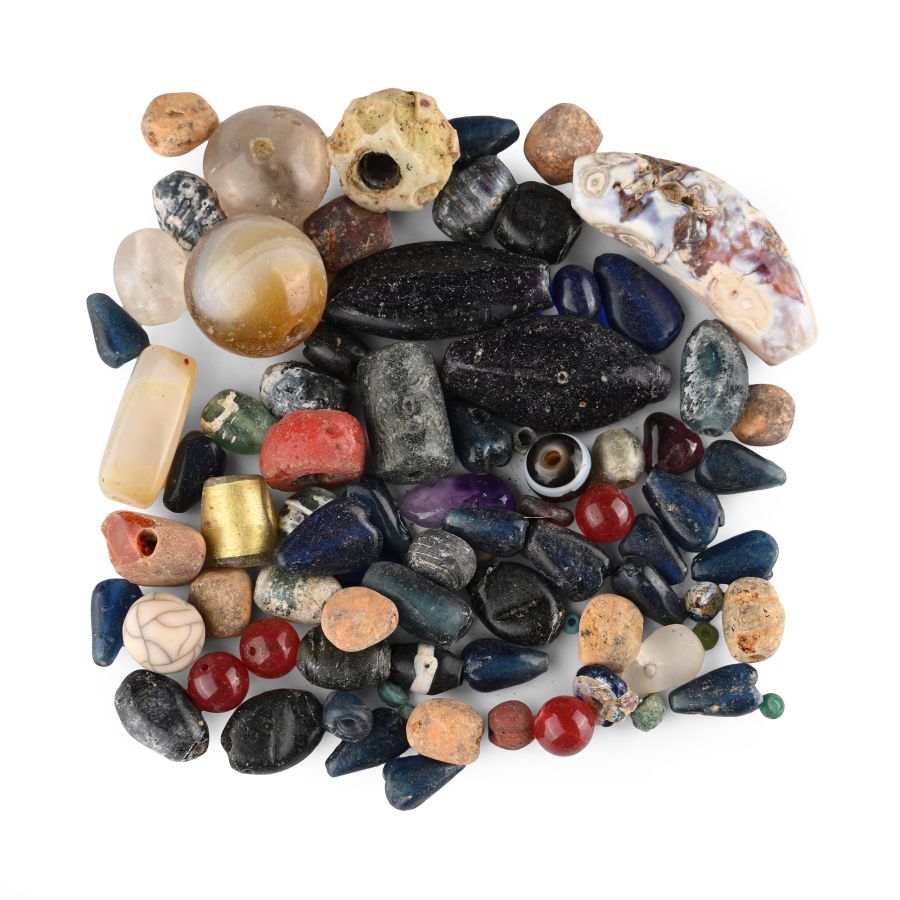
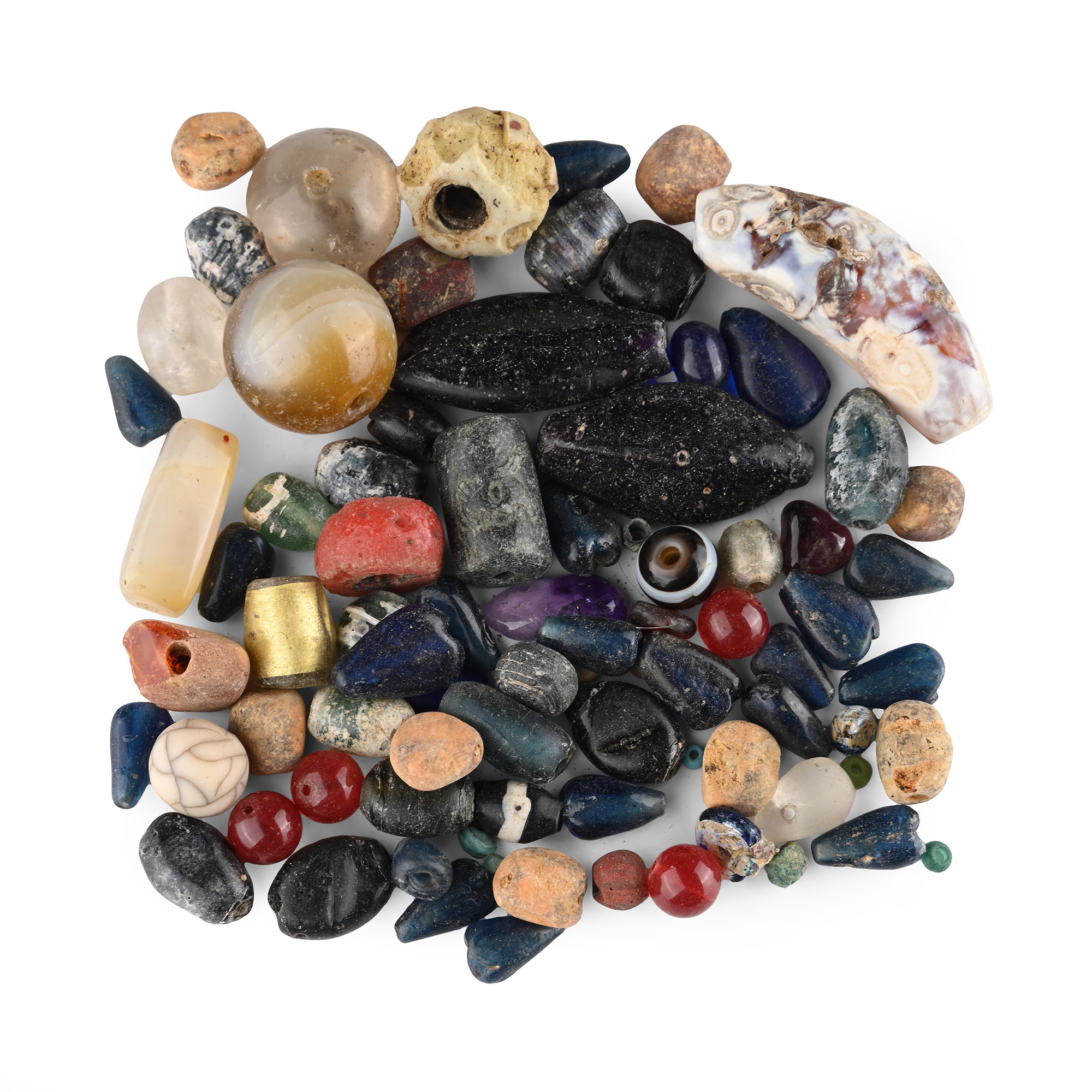
Roman and Other Mixed Stone and Glass Bead Collection
1ST-4TH CENTURY A.D. AND LATER
1/8 - 1 5/8 in. (106 grams total, 2-42 mm).
Comprising variously sized beads in various forms, including spherical, teardrop-shaped, oblate and one large elbow bead. [83, No Reserve]
ProvenanceUK gallery, early 2000s.
CONDITIONTimeLine Auctions follows a vetting process to ensure the authenticity and legality of all items, reinforcing our commitment to integrity and responsible trading. Each antiquity, antique, and coin lot undergoes thorough examination by a vetting committee of at least ten external specialists, professional trade association members, scientists, and archaeologists: Our Vetting Process
AUCTIONS:
TimeLine is a leading auction house specialising in antiquities, ancient art, collectables, natural history, coins, medals, and books. Our auctions offer museums, collectors, historians, and enthusiasts the opportunity to acquire unique and historically significant pieces.
-
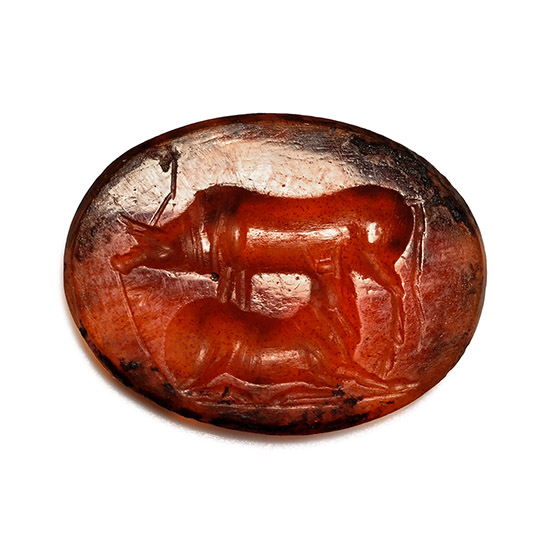
Roman Carnelian Gemstone with Two Cows
1st-2nd century A.D.Sold for (Inc. bp): £910
Ellipsoid type with intaglio of a reclining cow with its head turned to the right, facing, another one standing behind in profile; supplied with a museum-quality impression. 0.35 grams, 13 mm
Private English collection, formed between the late 1970s and early 1990s. Private collection, London, UK. -
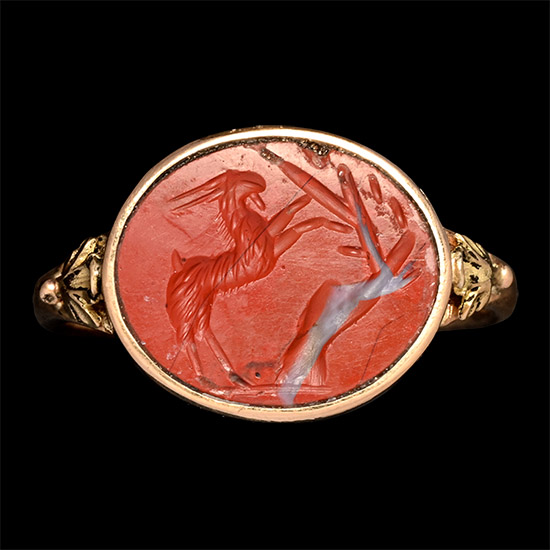
Roman Jasper Gemstone of a Grazing Goat in Gold Ring
2nd-3rd century A.D.Sold for (Inc. bp): £910
Intaglio of a bearded goat standing on its hind legs against a tree on which it browses; large fruits hanging from two of the boughs; from a third bough to the right of the tree hangs what may be a dead hare, or possibly another fruit; set into a later gold ring; supplied with a museum-quality impression. 4.10 grams, 20.70 mm overall, 17.90 x 14.56 mm internal diameter (approximate size British L, USA 5 3/4, Europe 11.24, Japan 10)
Private collection, Europe. Acquired on the English art market.
A single transparent vein in the jasper running from top left to bottom right has been utilised by the engraver to emphasise the trunk of the tree. -
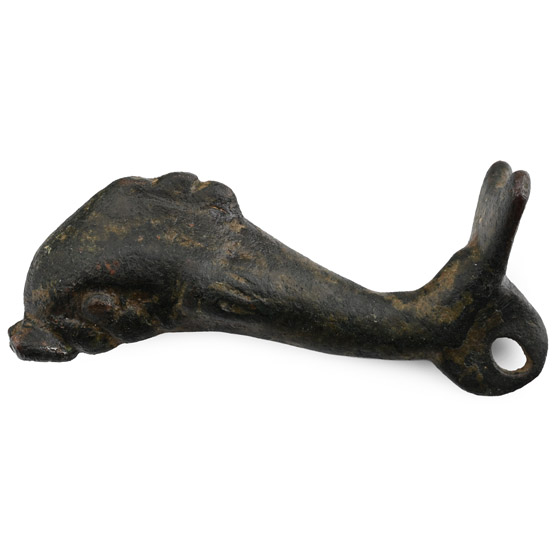
Roman Bronze Dolphin Mount
Circa 3rd century A.D.Sold for (Inc. bp): £117
Modelled in the round with gently curved profile, pierced flange beneath the tail; loop at mouth broken. 60.6 grams, 65 mm
Ex German art market, 2000s. Acquired from an EU collector living in London. From the collection of a Surrey, UK, gentleman.
