
Loading, please wait...
LOT 0609
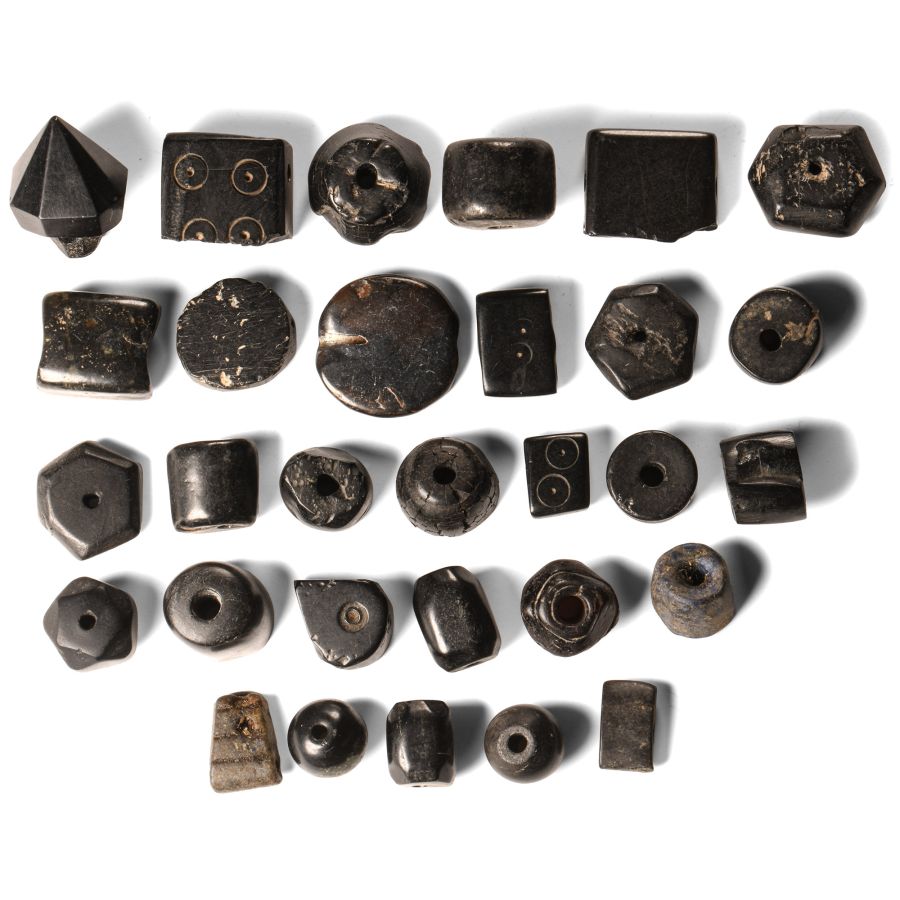
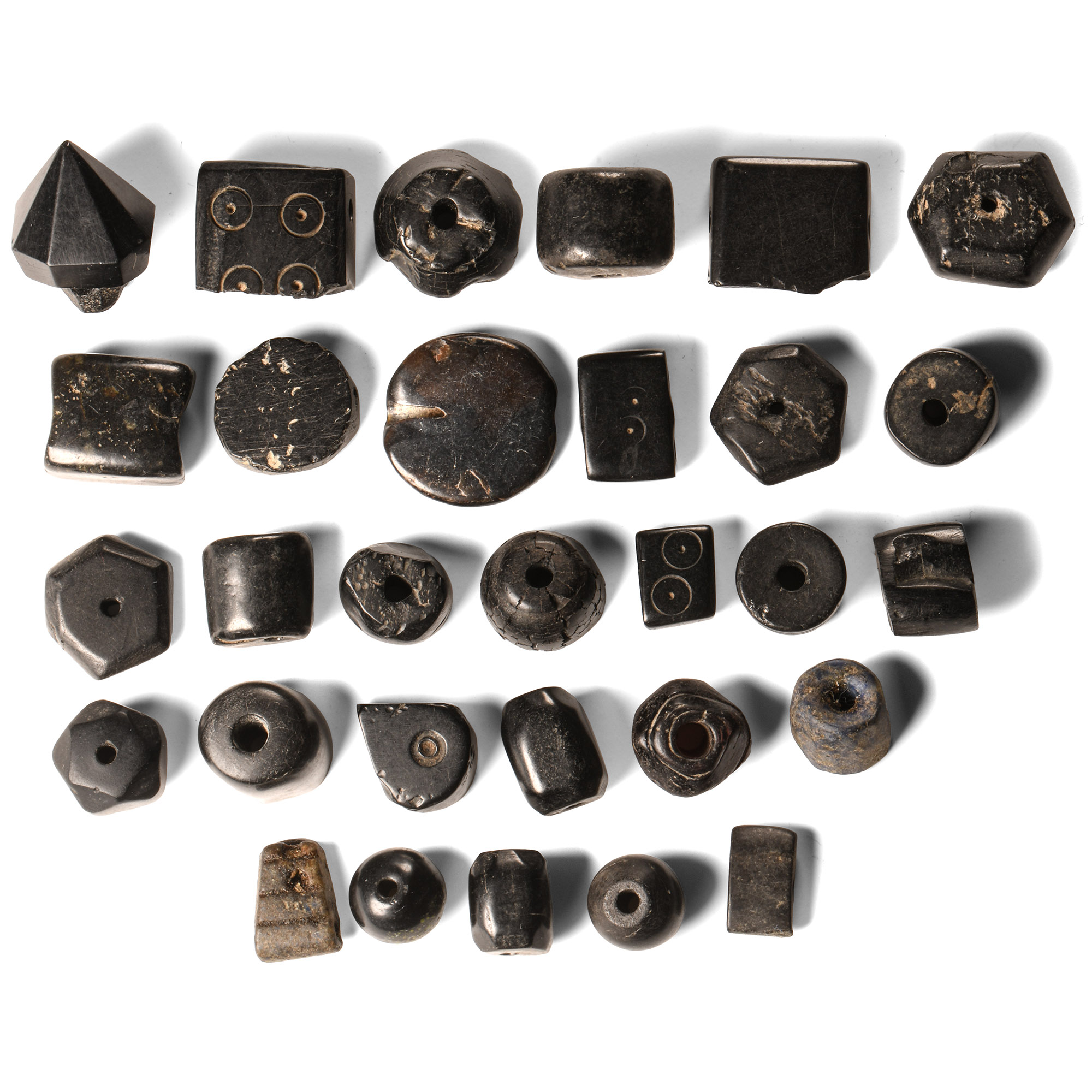
Roman and Other Jet and Glass Bead Group
LATE 1ST MILLENNIUM B.C. AND LATER
3/8 - 5/8 in. (29.3 grams total, 9-15 mm).
Mainly comprising polished beads of various sizes and shapes, including facetted, barrel-shaped and cuboid types, together with examples with ring-and-dot motifs. [30]
ProvenanceUK gallery, early 2000s.
CONDITIONTimeLine Auctions follows a vetting process to ensure the authenticity and legality of all items, reinforcing our commitment to integrity and responsible trading. Each antiquity, antique, and coin lot undergoes thorough examination by a vetting committee of at least ten external specialists, professional trade association members, scientists, and archaeologists: Our Vetting Process
AUCTIONS:
TimeLine is a leading auction house specialising in antiquities, ancient art, collectables, natural history, coins, medals, and books. Our auctions offer museums, collectors, historians, and enthusiasts the opportunity to acquire unique and historically significant pieces.
-
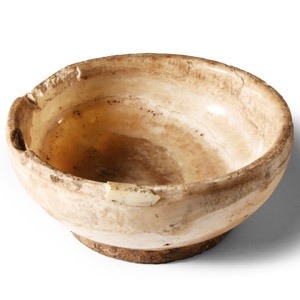
Roman Alabaster Bowl
1st-3rd century A.D.Estimate: £300 - 400 (‡+bp*)
Opening Bid: £150
With convex sidewall and copper-alloy facing to the foot; chipped. 263 grams, 98 mm
Acquired early 1990s. Ex private American collection; thence by descent. Private collection since 1998. -
.jpg)
Roman Celestial Intaglio Gemstone
Circa 2nd-3rd century A.D.Sold for (Inc. bp): £520
With crescent moon among three starbursts; supplied with a museum-quality impression. 0.96 grams, 14 mm
From the collection of a Swiss gentleman formed in Europe from 1970-1980s; thence by descent from the family in London. -
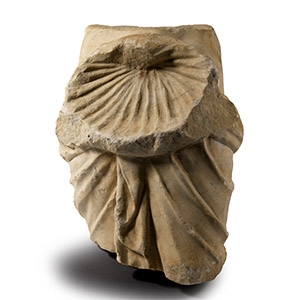
Roman Marble Fragment of Venus Rising from the Water
Circa 1st century A.D.Sold for (Inc. bp): £2,665
Statue fragment comprising the hips, buttocks and draped stola with a scallop-shell at the waist. 11.5 kg, 28.5 cm
Ex Paris collection. French gallery, Paris, 1990-2000s. This lot has been checked against the Interpol Database of stolen works of art and is accompanied by search certificate no.11956-20935.
