
Loading, please wait...
LOT 0174
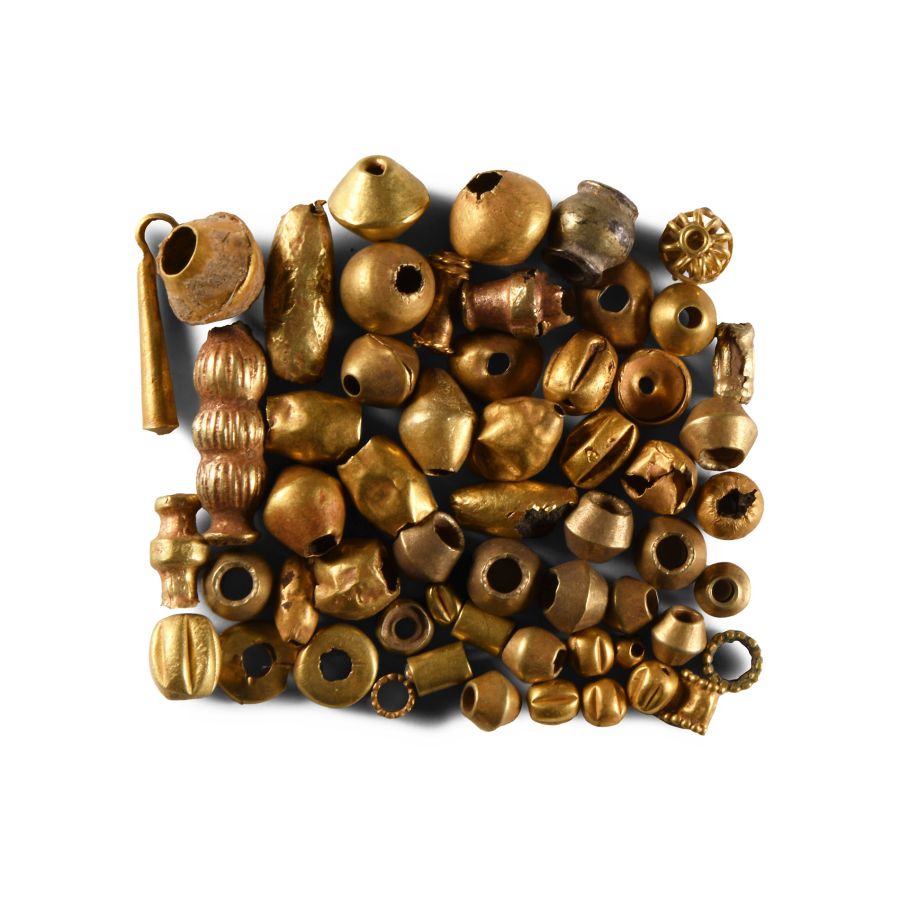
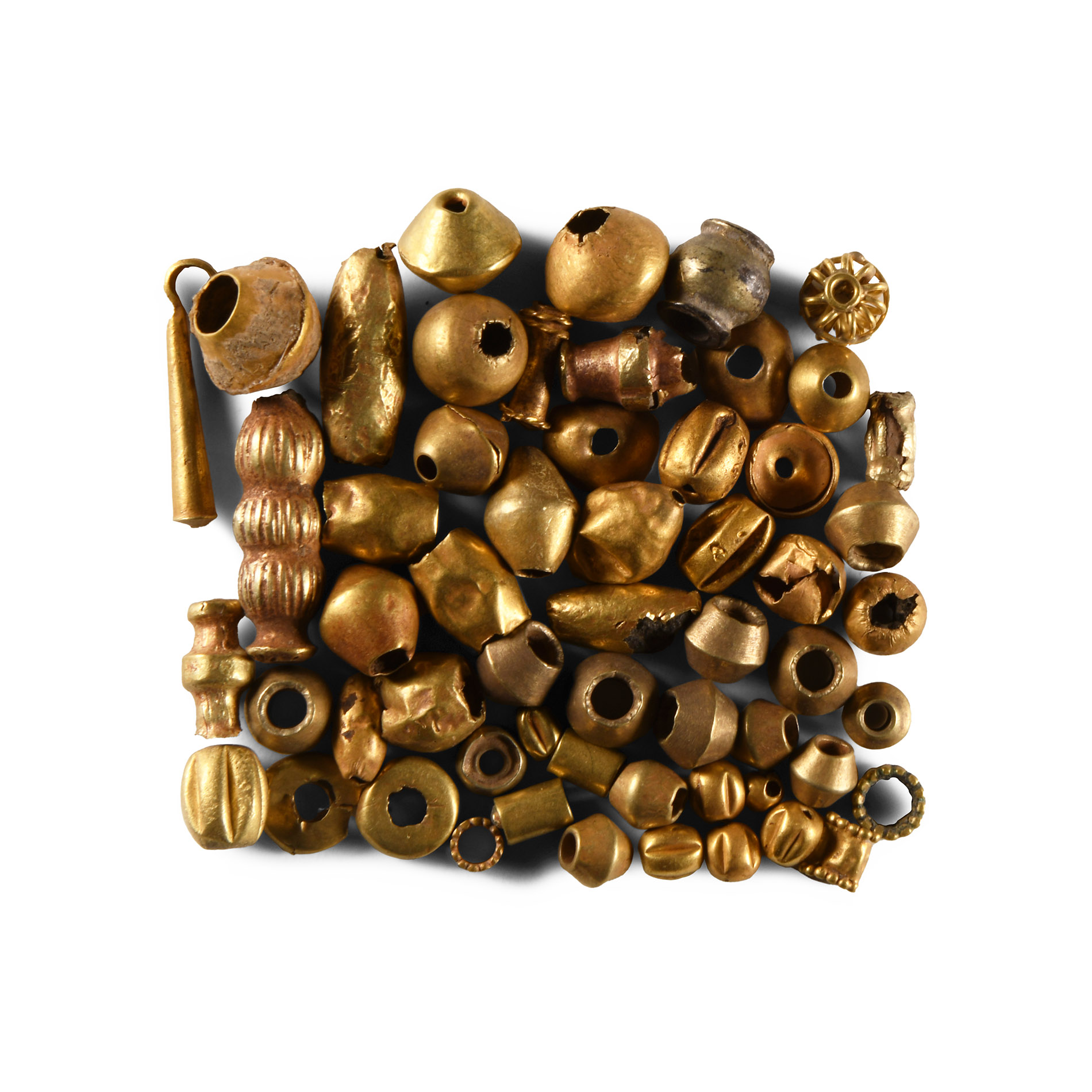
Roman and Other Gold Necklace Bead Collection
1ST MILLENNIUM B.C. AND LATER
1/8 - 5/8 in. (19.31 grams total, 3-17 mm).
Composed mainly of sheet-gold beads of various types, including biconical, ribbed, doughnut-shaped, filigree and openwork examples, together with other forms, some possibly from India. [55]
ProvenanceUK gallery, early 2000s.
CONDITIONTimeLine Auctions follows a vetting process to ensure the authenticity and legality of all items, reinforcing our commitment to integrity and responsible trading. Each antiquity, antique, and coin lot undergoes thorough examination by a vetting committee of at least ten external specialists, professional trade association members, scientists, and archaeologists: Our Vetting Process
AUCTIONS:
TimeLine is a leading auction house specialising in antiquities, ancient art, collectables, natural history, coins, medals, and books. Our auctions offer museums, collectors, historians, and enthusiasts the opportunity to acquire unique and historically significant pieces.
-
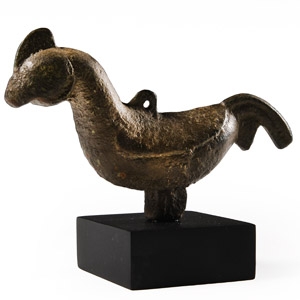
Roman Bronze Cockerel Tintinnabulum Pendant
1st-4th century A.D.Estimate: £200 - 300 (+bp*)
Opening Bid: £111
Modelled with stylised detailing formed in the round with suspension loop for attachment to a tintinnabulum. 114 grams, 83 mm
‘The Ancient Menagerie Collection’ formerly the property of a Cambridgeshire lady, collected since the 1990s and acquired from auctions and dealers throughout Europe and the USA, now ex London collection. -
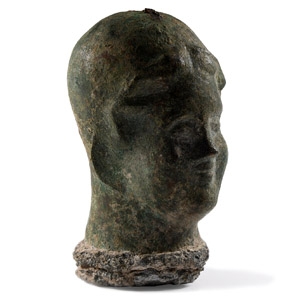
Large Eastern Roman Bronze Bust-Shaped Steelyard Weight
Circa 3rd-4th century A.D. or laterEstimate: £800 - 1,000 (+bp*)
Opening Bid: £400
Modelled in the round as a facing female with head turned slightly right, with semi-naturalistic facial detailing and dressed hair; lead-filled. 4.2 kg, 13.5 cm high
Acquired 1990s-early 2000s. East Anglian private collection.
Steelyard weights in the form of human or deities faces were not uncommon in the Roman period (see SWYOR-DA4426, OXON-4391B5, HAMP-BD4D67 and NARC-7A7B81 on the PAS). These were generally filled with lead and had iron or copper suspension loops projecting from the top of the head. -
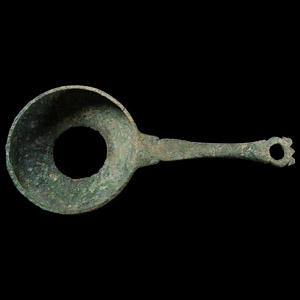
Graeco-Roman Bronze Patera with Duck-Head Handle
3rd century B.C.-3rd century A.D.Estimate: £400 - 600 (‡+bp*)
Opening Bid: £200
The bowl with a convex outer face and notched lip, decoratively waisted handle with addorsed duck heads to the apex of the suspension loop; base of bowl absent. 314 grams, 30 cm
Acquired in Europe before 1995.
