
Loading, please wait...
LOT 0640
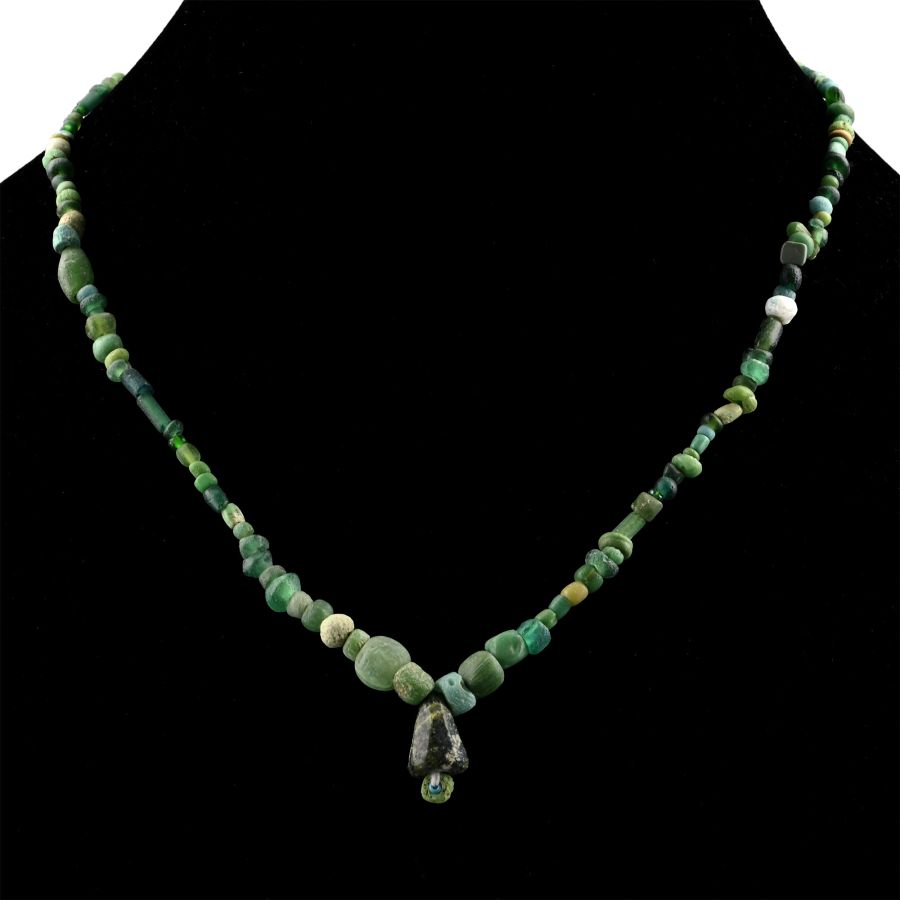
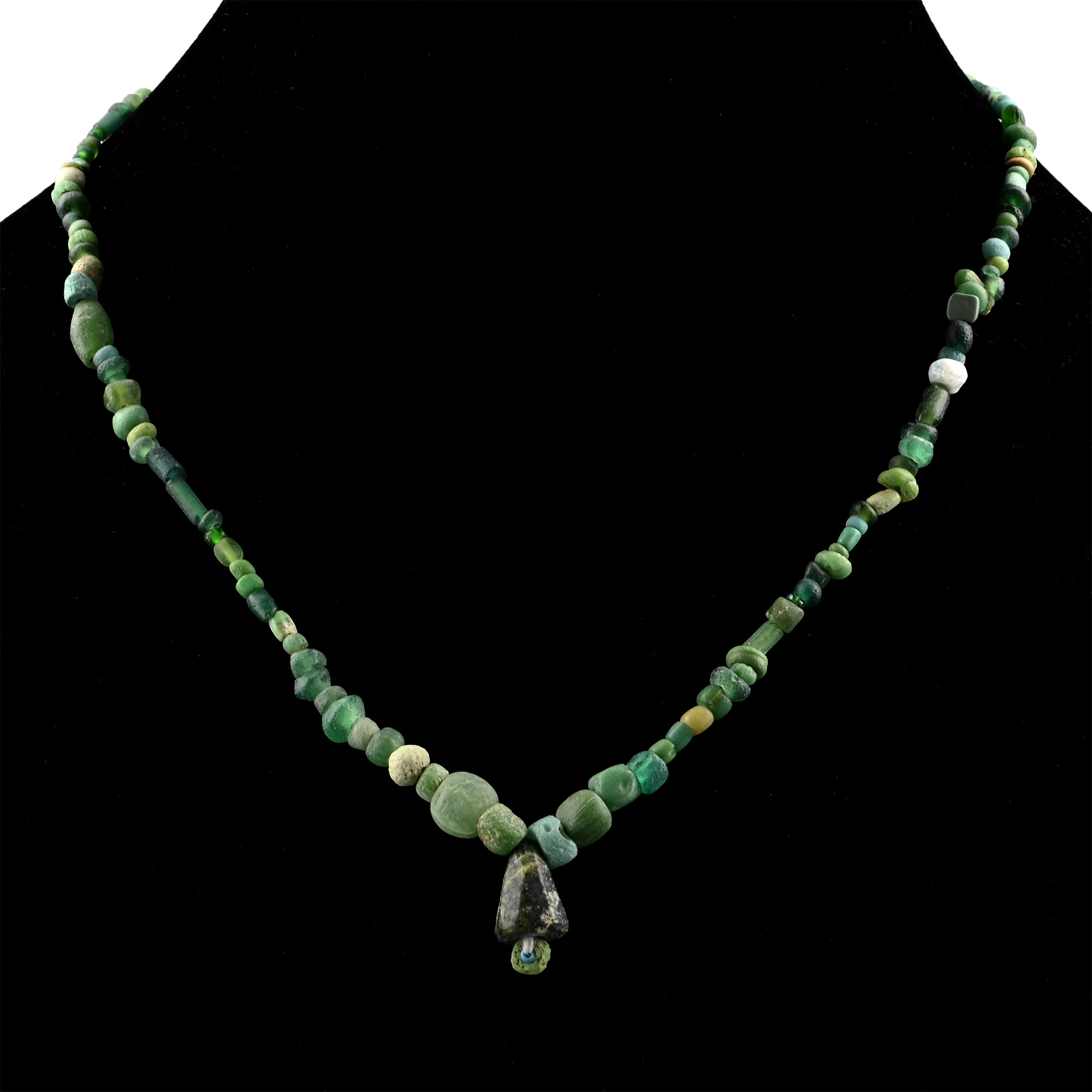
Roman and Other Glass Bead Necklace String
1ST-4TH CENTURY A.D. AND LATER
16 1/8 in. (14.3 grams, 41 cm).
A short designer necklace with mixed group of graduated beads in matching colours, central feature a conical stone bead; restrung. [No Reserve]
ProvenanceFrom London, UK, gallery collection, 1990s.
CONDITIONTimeLine Auctions follows a vetting process to ensure the authenticity and legality of all items, reinforcing our commitment to integrity and responsible trading. Each antiquity, antique, and coin lot undergoes thorough examination by a vetting committee of at least ten external specialists, professional trade association members, scientists, and archaeologists: Our Vetting Process
AUCTIONS:
TimeLine is a leading auction house specialising in antiquities, ancient art, collectables, natural history, coins, medals, and books. Our auctions offer museums, collectors, historians, and enthusiasts the opportunity to acquire unique and historically significant pieces.
-
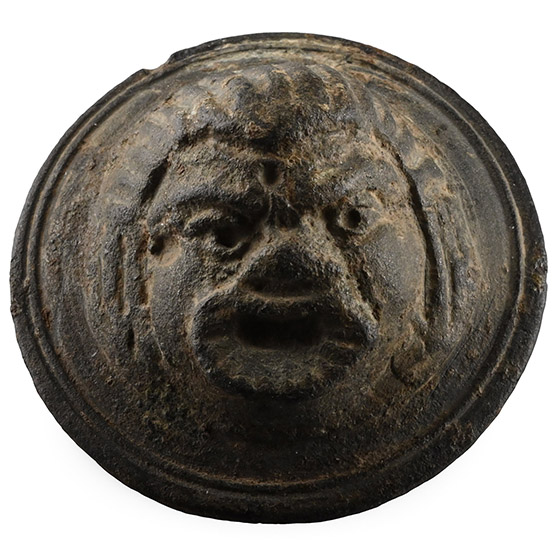
Roman Bronze Applique of Actor's Mask
2nd century A.D.Sold for (Inc. bp): £211
Discoid with flange rim, central high-relief actor's mask with D-shaped mouth. 38.8 grams, 38 mm
Acquired in the 1992. Private collection, Switzerland, thence by descent. Private collection, since the late 1990s. -
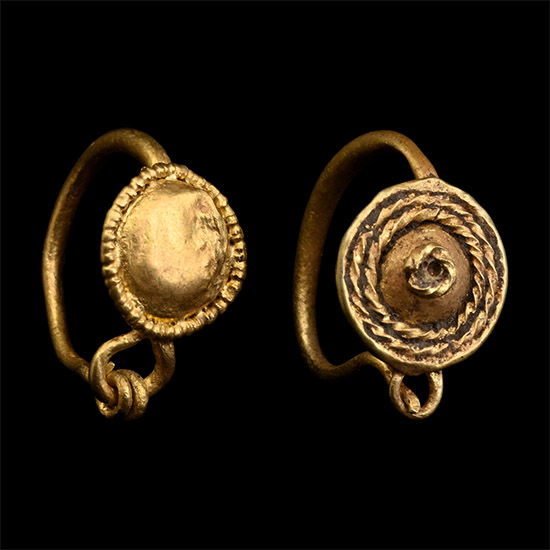
Roman Gold Earring Pair
1st-4th century A.D.Sold for (Inc. bp): £328
Each a hoop and disc plaque, one with filigree wreath to the border. 2.80 grams total, 16 mm each
Ex German art market, 2000s. Acquired from an EU collector living in London. From the collection of a Surrey, UK, gentleman. -
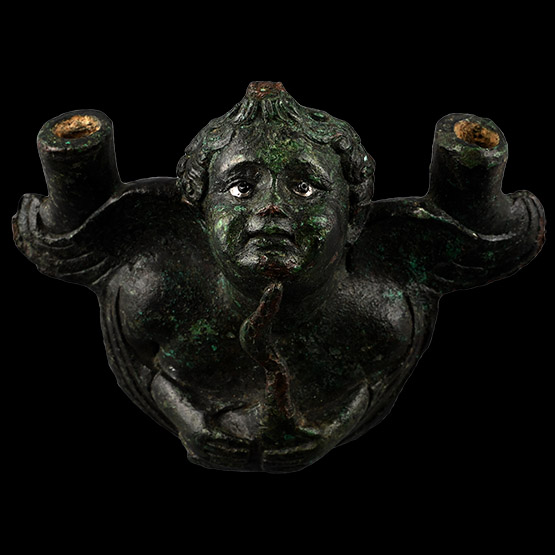
Roman Bronze Eros Cradling Goose Applique
Late 1st-early 2nd century A.D.Estimate: £2,000 - 3,000 (+bp*)
Opening Bid: £1,000
Formed as the bust of Eros looking upwards, with stub wings to his shoulders, holding a goose to his chest; conical socket above each wing; eyes with silver inserts; old collector's label '1994 51.75' to the reverse; mounted on a custom-made stand; likely a socket base. 515 grams total, 11.9 cm wide (740 grams total, 14 cm high including stand)
with Sotheby's, London, 23 May 1988, no.234. Ex Joel L. Malter & Co., Encino, California, USA, Auction XLV, 28 May 1991, no.902. Ex Bruce A. Kamerling collection. Acquired from Royal Athena Galleries, New York, 26 June 1994. The Haggin Museum, Stockton, California. Property deaccessioned from the Haggin Museum, Stockton, California, USA. Bonhams, Antiquities, 23 May 2012, no.121. This lot has been checked against the Interpol Database of stolen works of art and is accompanied by search certificate number no.13126-247737.
