
Loading, please wait...
LOT 0856
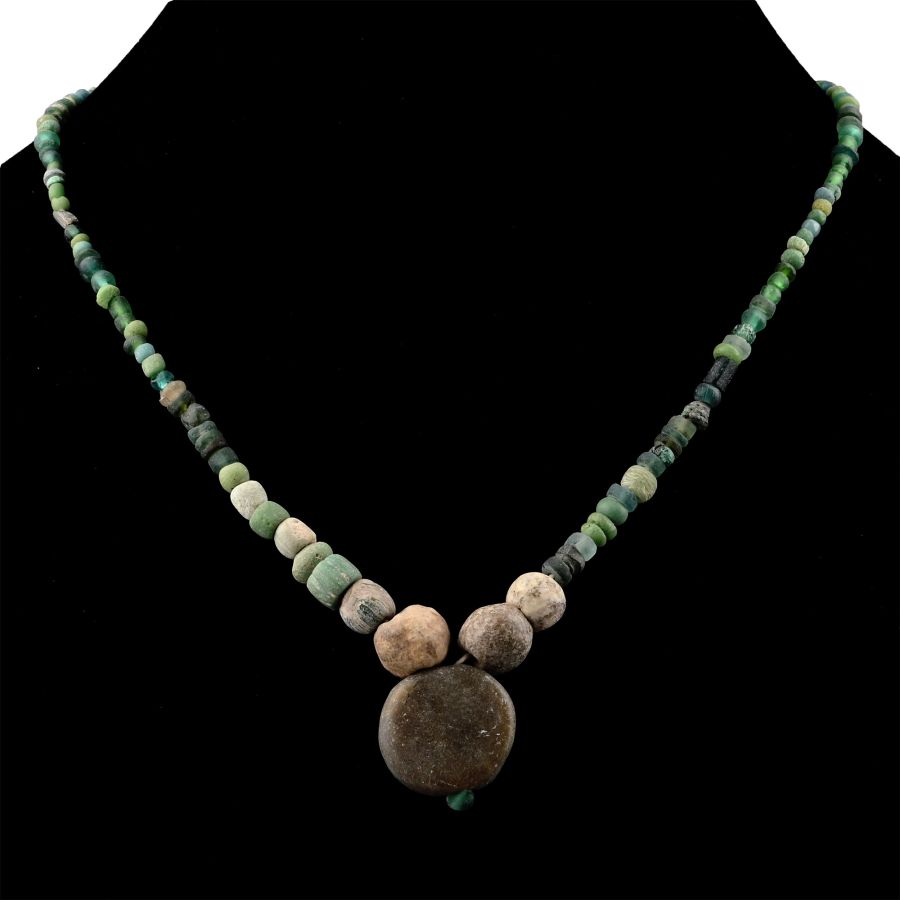
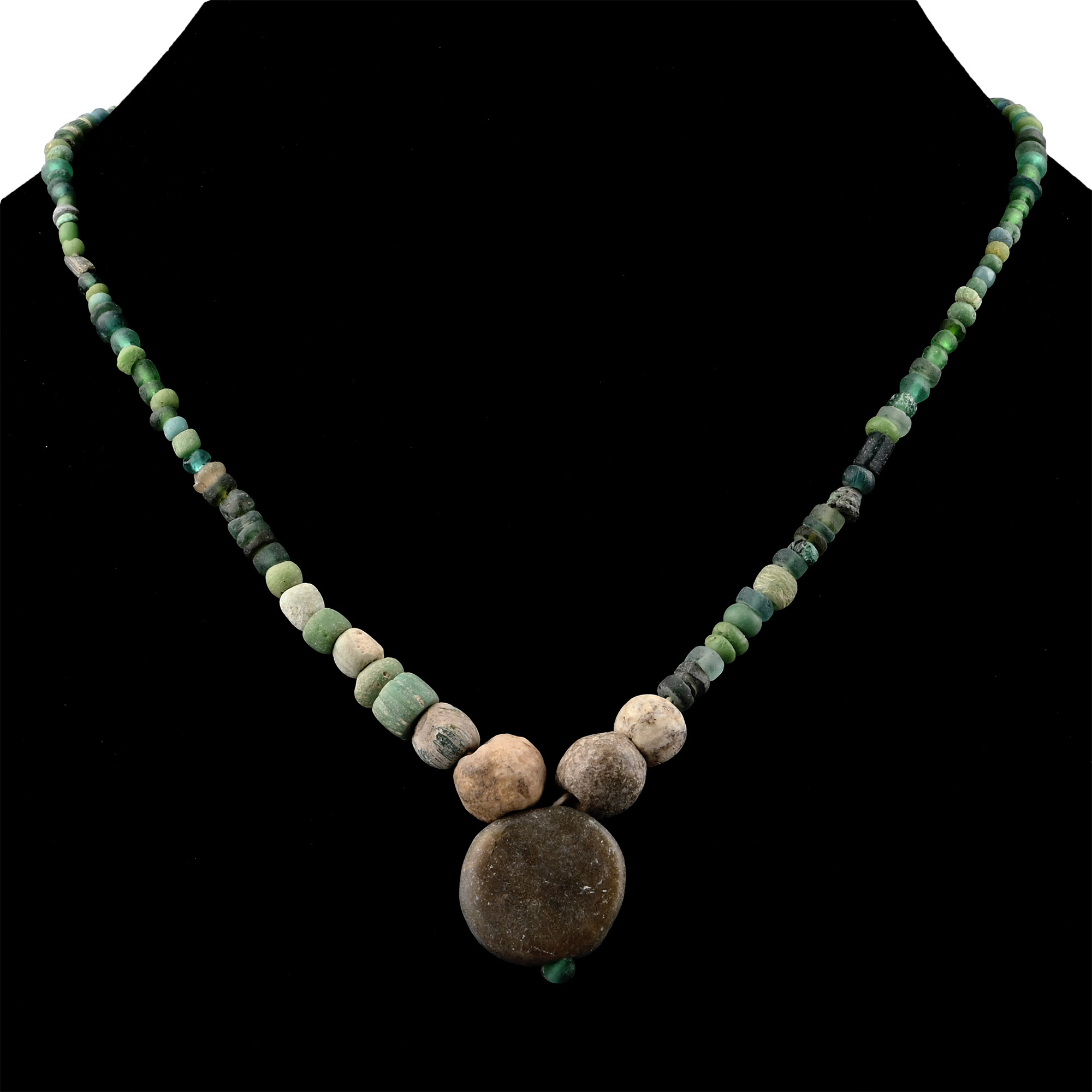
Roman and Other Glass and Stone Bead Necklace String
1ST-4TH CENTURY A.D. AND LATER
14 7/8 in. (25.89 grams, 37.8 cm).
Composed of graduated spherical and oblate beads with a large tabular feature bead; restrung. [No Reserve]
ProvenanceFrom London, UK, gallery collection, 1990s.
CONDITIONTimeLine Auctions follows a vetting process to ensure the authenticity and legality of all items, reinforcing our commitment to integrity and responsible trading. Each antiquity, antique, and coin lot undergoes thorough examination by a vetting committee of at least ten external specialists, professional trade association members, scientists, and archaeologists: Our Vetting Process
AUCTIONS:
TimeLine is a leading auction house specialising in antiquities, ancient art, collectables, natural history, coins, medals, and books. Our auctions offer museums, collectors, historians, and enthusiasts the opportunity to acquire unique and historically significant pieces.
-
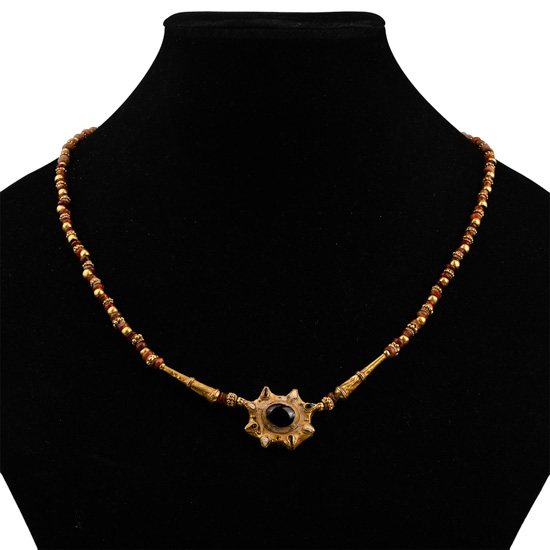
Greek Gold and Carnelian Necklace with Garnet-Set Pendant
5th-4th century B.C.Estimate: £3,000 - 4,000 (+bp*)
Opening Bid: £1,500
A restrung necklace comprising carinated carnelian beads interspersed with sheet-gold beads of plain and granulated types, two tapering round-section beads with collars and domed finials, a central gold polygonal pendant with eight concave sides, polished oval garnet cabochon at the centre, granulated collar around base, raised tear-shaped cell to each corner also with granulated border, alternately set with enamel and garnet cabochons, a single applied bead between each; modern hook-and-eye clasp. 39.16 grams, 53 cm
Acquired in the mid-1980s to early 1990s. Private collection, London, UK. This lot has been checked against the Interpol Database of stolen works of art and is accompanied by search certificate number no.13124-246808. -
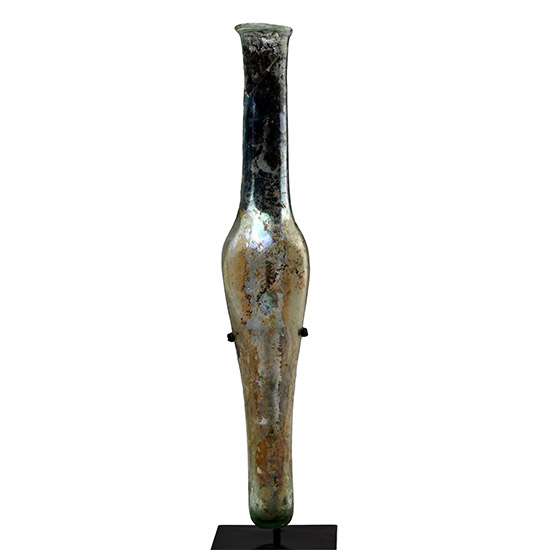
Roman Tall Glass Flask
2nd-3rd century A.D.Sold for (Inc. bp): £338
Iridescent square-section vessel with dimpled sides, tall neck and everted rim; mounted on a custom-made stand. 33 grams, 20.5 cm
From a London, UK, collection of glass, 1970-2000s. -
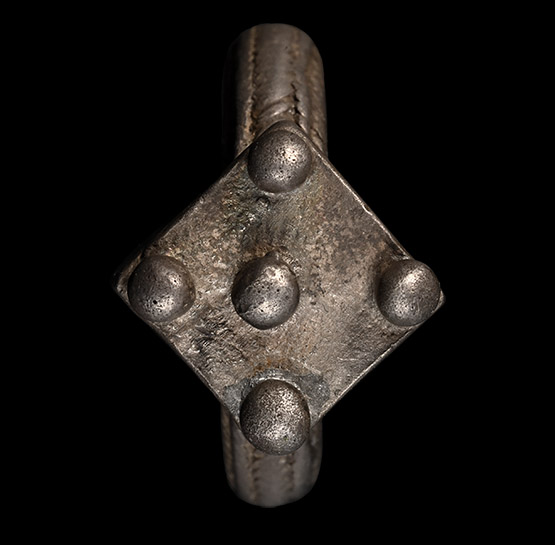
Roman Heavy Silver Ring with Square Plaque
2nd-3rd century A.D.Estimate: £450 - 650 (‡+bp*)
Opening Bid: £225
Comprising a braided median band to the hoop flanked by tiered neighbours, square bezel with granule to each corner and one to centre. 11.38 grams, 30.42 mm overall, 19.07 mm internal diameter (approximate size British R, USA 8 1/2, Europe 18 3/4, Japan 18)
Ex European private collection. Private European collection, acquired in 2001.
