
Loading, please wait...
LOT 0752
Roman and Other Gemstone Collection
2ND CENTURY A.D. AND LATER
3/8 - 5/8 in. (4.46 grams total, 10-17 mm).
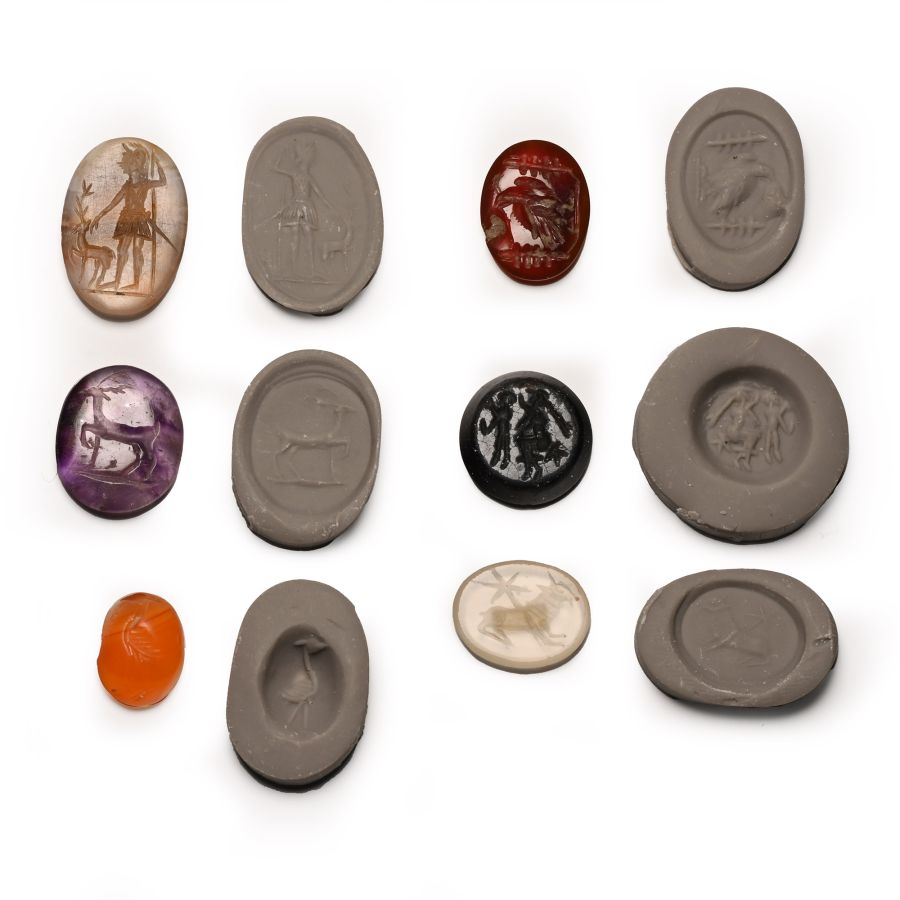
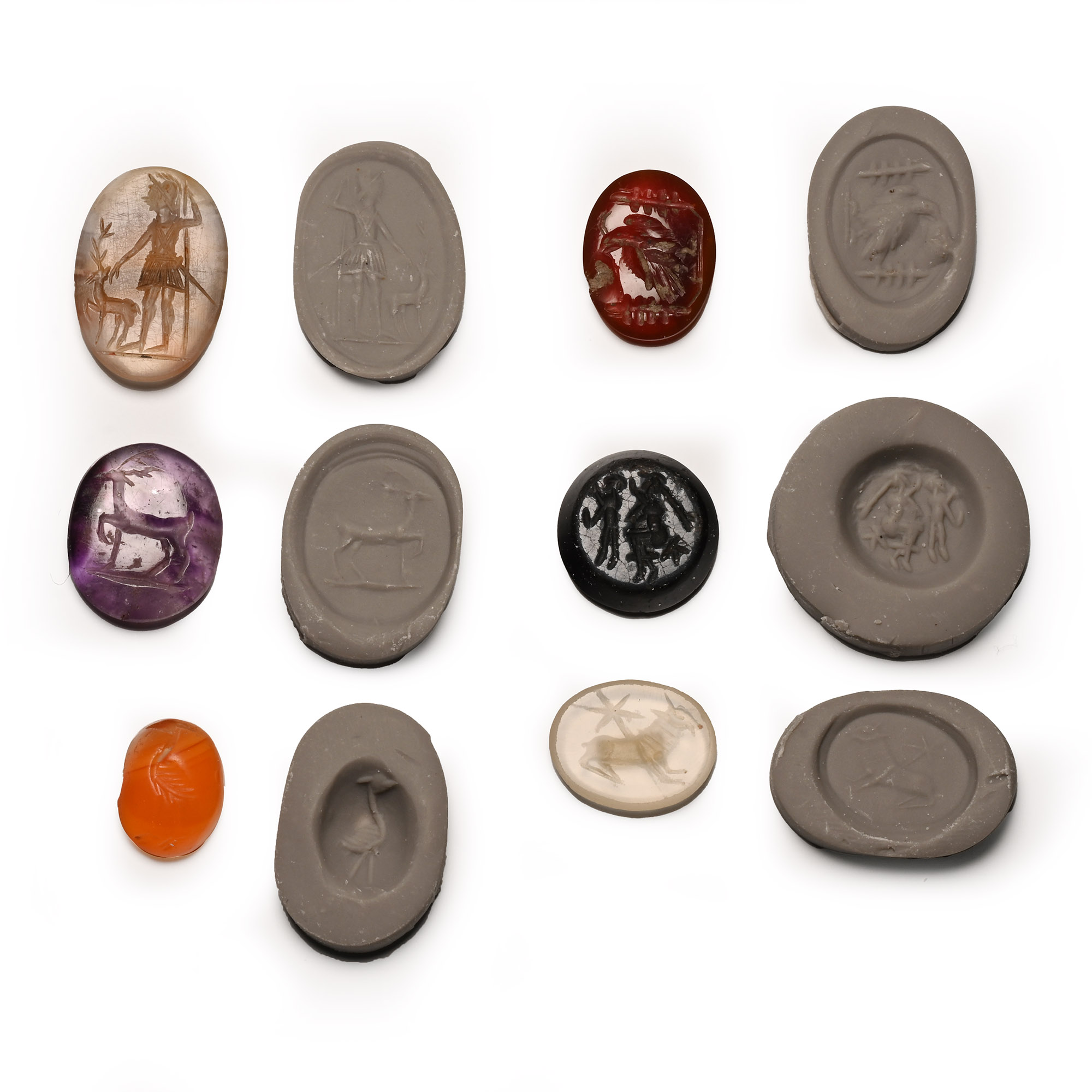
Comprising mainly lentoid and plano-convex seals in carnelian, amethyst, and other materials with engraved intaglios including a stag, two human figures, huntsman with deer and other topics; each supplied with a museum-quality impression. [6, No Reserve]
ProvenanceFrom the collection of a London antiquarian, formed since the 1980s.
This lot is accompanied by an illustrated lot declaration signed by the Head of the Antiquities Department, Dr Raffaele D’Amato.
TimeLine Auctions follows a vetting process to ensure the authenticity and legality of all items, reinforcing our commitment to integrity and responsible trading. Each antiquity, antique, and coin lot undergoes thorough examination by a vetting committee of at least ten external specialists, professional trade association members, scientists, and archaeologists: Our Vetting Process
AUCTIONS:
TimeLine is a leading auction house specialising in antiquities, ancient art, collectables, natural history, coins, medals, and books. Our auctions offer museums, collectors, historians, and enthusiasts the opportunity to acquire unique and historically significant pieces.
-
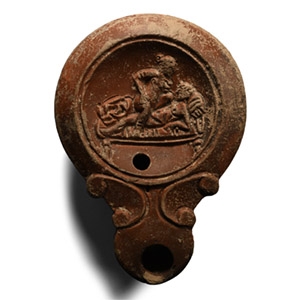
Roman Terracotta Erotic Oil Lamp
1st-2nd century A.D.Sold for (Inc. bp): £1,170
With broad shoulder and volute scrolls above the nozzle, discus with low-relief erotic scene. 79.4 grams, 11.2 cm
Ex Madame Suzanne Gozlan by descent. Madame Suzanne Gozlan (1921-2022), Doctor in History and Archaeology, professor at the Ecole Normale d'Instituteurs de Chartres and lecturer at the University of Paris 4 Sorbonne. This lot is accompanied by an illustrated lot declaration signed by the Head of the Antiquities Department, Dr Raffaele D’Amato. -
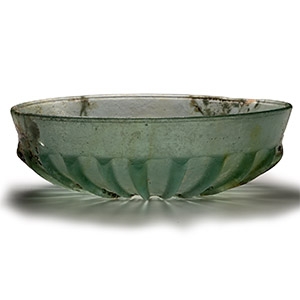
Roman Glass Ribbed Vessel
Eastern Mediterranean, 1st century B.C.-1st century A.D.Sold for (Inc. bp): £572
Flat, thick-walled bowl, mould-made with 22 large ribs to the outer face below the rim extending to the middle of the base; reassembled from fragments. 140 grams, 11.1 cm wide
Ex Martin Wunsch, New York 1980s-1990s. Accompanied by a copy of an Art Loss Register certificate no.S00098335. This lot is accompanied by an illustrated lot declaration signed by the Head of the Antiquities Department, Dr Raffaele D’Amato. -
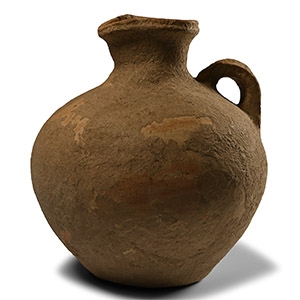
Roman Terracotta Trefoil Mouth Jug
1st-4th century A.D.Sold for (Inc. bp): £78
Bulbous body with narrow flat base, broad shoulder, short neck, pinched mouth with stepped rim, ribbed strap handle to rear. 300 grams, 11.2 cm
From a London, UK, gentleman's collection of ancient pottery and artefacts, 1990s. This lot is accompanied by an illustrated lot declaration signed by the Head of the Antiquities Department, Dr Raffaele D’Amato.
