
Loading, please wait...
LOT 0859
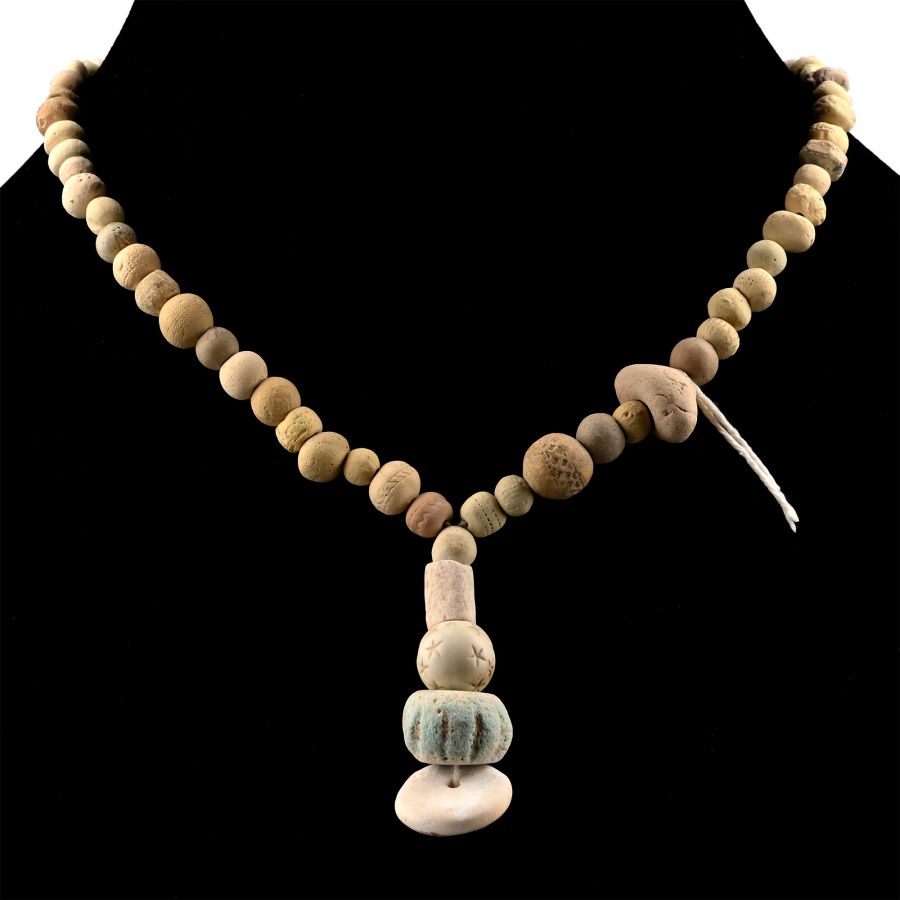
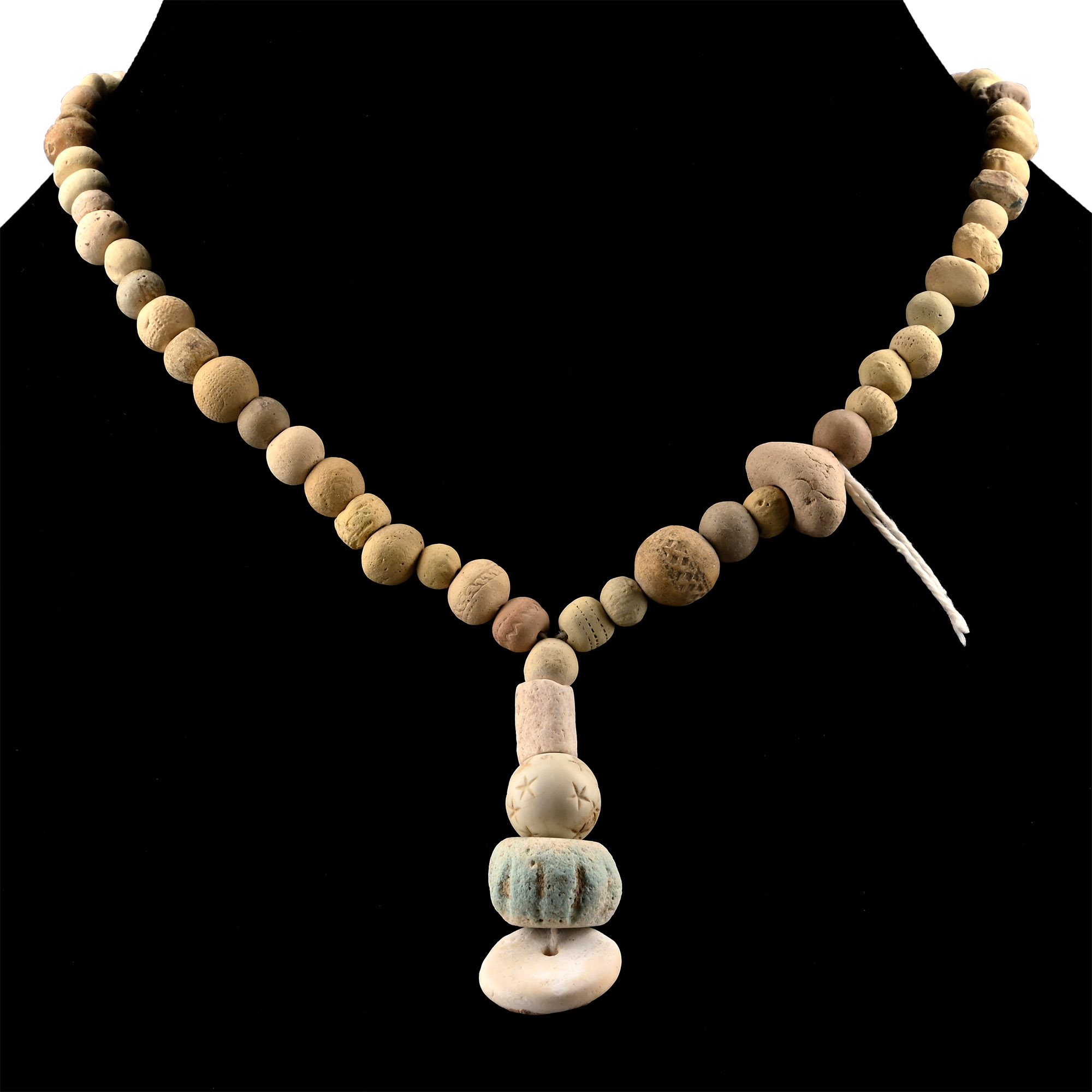
Roman and Other Ceramic Bead Necklace String
1ST-4TH CENTURY A.D. AND LATER
12 3/4 in. (21.42 grams, 32.6 cm).
Composed of graduated spherical and oblate beads, the central feature with a spherical stone bead with incised star motifs, a large discoid bead and a melon bead; restrung. [No Reserve]
ProvenanceFrom London, UK, gallery collection, 1990s.
CONDITIONTimeLine Auctions follows a vetting process to ensure the authenticity and legality of all items, reinforcing our commitment to integrity and responsible trading. Each antiquity, antique, and coin lot undergoes thorough examination by a vetting committee of at least ten external specialists, professional trade association members, scientists, and archaeologists: Our Vetting Process
AUCTIONS:
TimeLine is a leading auction house specialising in antiquities, ancient art, collectables, natural history, coins, medals, and books. Our auctions offer museums, collectors, historians, and enthusiasts the opportunity to acquire unique and historically significant pieces.
-
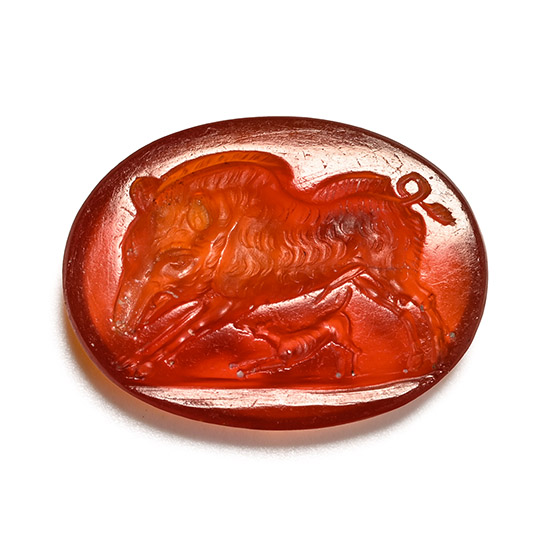
Roman Carnelian Gemstone of a Wild Boar and Dog
1st century B.C.-1st century A.D.Sold for (Inc. bp): £10,400
Ellipsoid in plan with incuse hunting scene depicting a large boar running on a baseline with a hunting dog attacking from beneath; supplied with a museum-quality impression. 0.79 grams, 16 mm
Private English collection, formed between the late 1970s and early 1990s. Private collection, London, UK. This lot has been checked against the Interpol Database of stolen works of art and is accompanied by search certificate number no.13099-248694. -
.jpg)
Roman White and Orange Glass Ring with Amber Inlay
2nd-3rd century A.D.Sold for (Inc. bp): £234
Round section hoop, oval bezel set with amber. 1.30 grams, 21.04 mm overall, 13.89 x 14.39 mm internal diameter (approximate size British F, USA 2 3/4, Europe 3.67, Japan 3)
With J.Bagot Ancient Art, Barcelona, Spain. The Nico F.Bijnsdorp Collection (NFB 282), acquired from the above, 4 June 2013. Acquired on the English art market. -
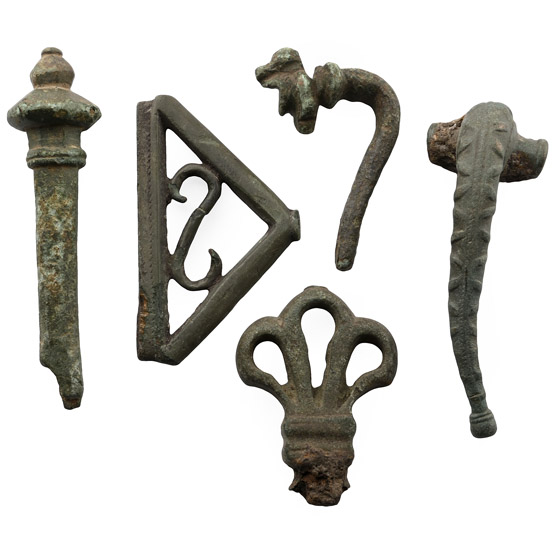
Roman Bronze Artefact Collection
1st-4th century A.D.Sold for (Inc. bp): £26
Including bow brooch, key handle and other items. 145 grams total, 41-75 mm
Found Norfolk, UK.
