
Loading, please wait...
LOT 0909
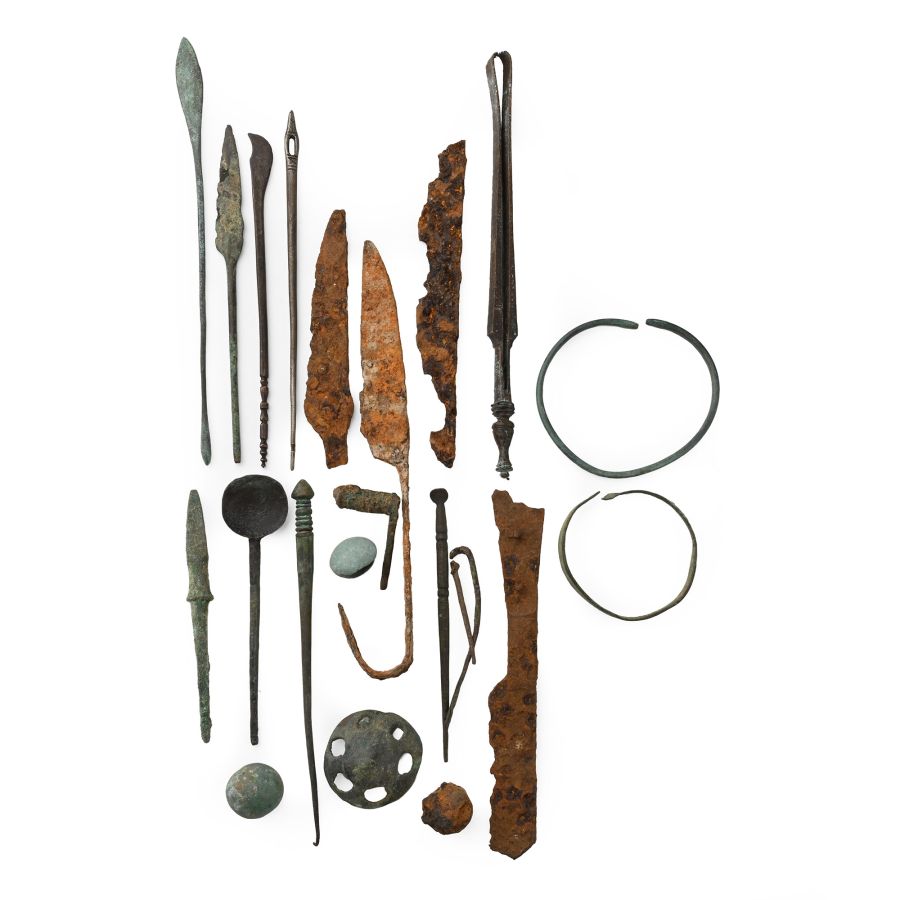
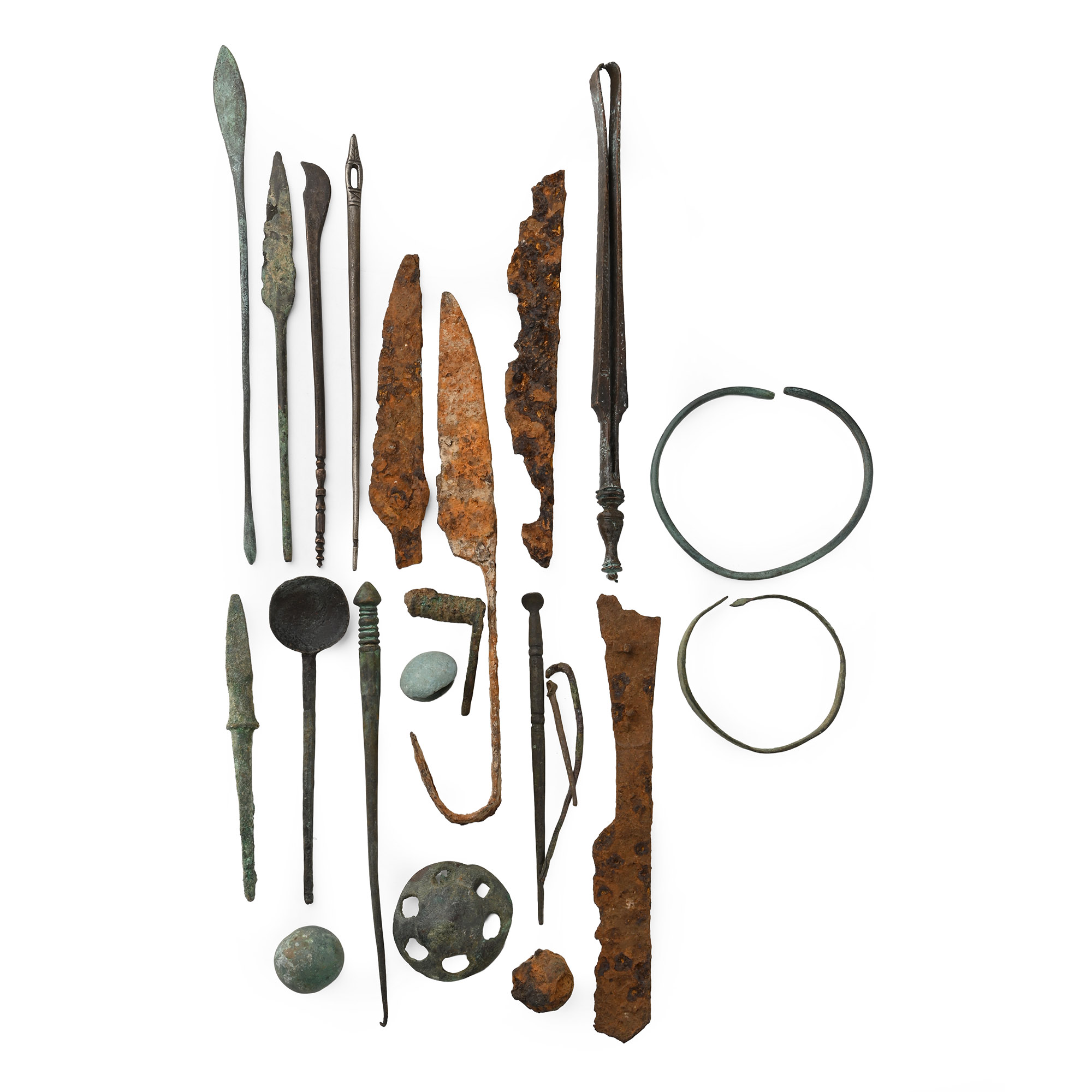
Roman and Other Bronze and Iron Artefact Group
1ST-4TH CENTURY A.D. AND LATER
5/8 - 5 3/4 in. (184 grams total, 1.6-14.6 cm).
Including: bracelet with clubbed ends; single-edged knife blades; dress pins; brooch chord; and other items. [22]
ProvenanceFrom a London, UK, collection 2000s.
This lot is accompanied by an illustrated lot declaration signed by the Head of the Antiquities Department, Dr Raffaele D'Amato.
TimeLine Auctions follows a vetting process to ensure the authenticity and legality of all items, reinforcing our commitment to integrity and responsible trading. Each antiquity, antique, and coin lot undergoes thorough examination by a vetting committee of at least ten external specialists, professional trade association members, scientists, and archaeologists: Our Vetting Process
AUCTIONS:
TimeLine is a leading auction house specialising in antiquities, ancient art, collectables, natural history, coins, medals, and books. Our auctions offer museums, collectors, historians, and enthusiasts the opportunity to acquire unique and historically significant pieces.
-
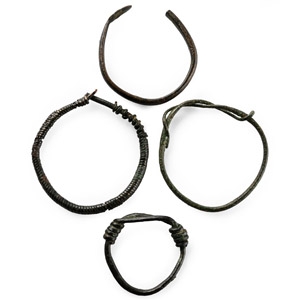
Roman Bronze Bracelet Group
1st-4th century A.D.Sold for (Inc. bp): £72
Comprising two annular bracelets with coiled section, one with the ends wound about the shank, and a penannular bracelet with snake-head terminal. 19.1 grams total, 29-44 mm
Ex German art market, 2000s. Acquired from an EU collector living in London. From the collection of a Surrey, UK, gentleman. This lot is accompanied by an illustrated lot declaration signed by the Head of the Antiquities Department, Dr Raffaele D'Amato. -
.jpg)
Roman Silver Statuette of Cybele
1st-2nd century A.D.Sold for (Inc. bp): £585
Modelled in the round wearing a floor-length palla draped over her head and over her robe, with staff (broken) in her left hand and patera in her right; thick dorsal loop. 14.01 grams, 34 mm
Acquired in the late 1980s-early 1990s. Private collection, London, UK. This lot is accompanied by an illustrated lot declaration signed by the Head of the Antiquities Department, Dr Raffaele D'Amato. -
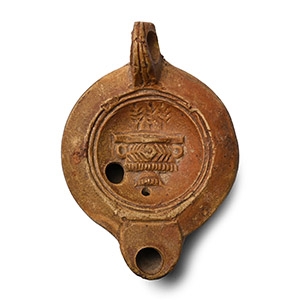
Roman Terracotta Oil Lamp with Amphora
2nd century A.D.Sold for (Inc. bp): £338
Squat in profile with small loop handle and D-shaped nozzle, discus with low-relief vessel and foliage; maker's mark to underside 'MNOVIVST'. 56 grams, 97 mm
From the private collection of a Canadian gentleman living in Essex, UK, formed since the 1920s-circa 1990. Property of an Essex lady until the late 1990s; thence by descent. From the private collection of an Essex gentleman since the late 1990s. This lot is accompanied by an illustrated lot declaration signed by the Head of the Antiquities Department, Dr Raffaele D'Amato.
The lamp belongs to the Bussière type, form D I 3, from a period between the Late Flavian era to the second half of the second century A.D. Like the types of this category, the ring handle shows two grooves on the upper part and the filling hole is in the lower part.
