
Loading, please wait...
LOT 0823
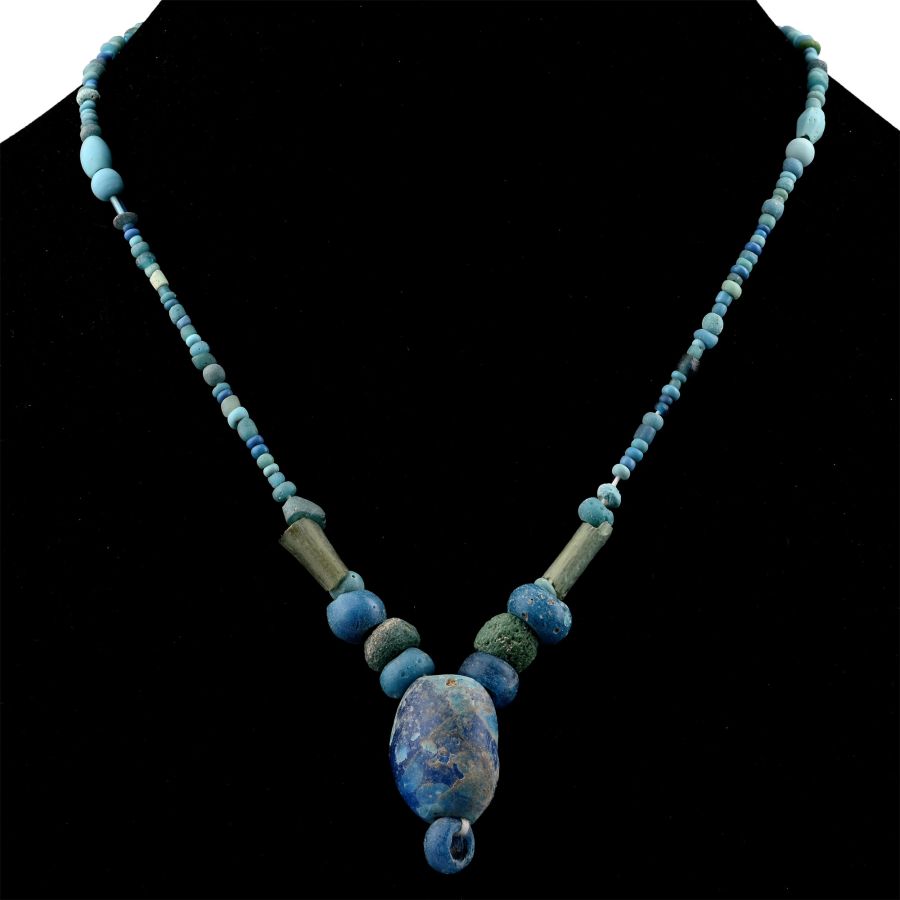
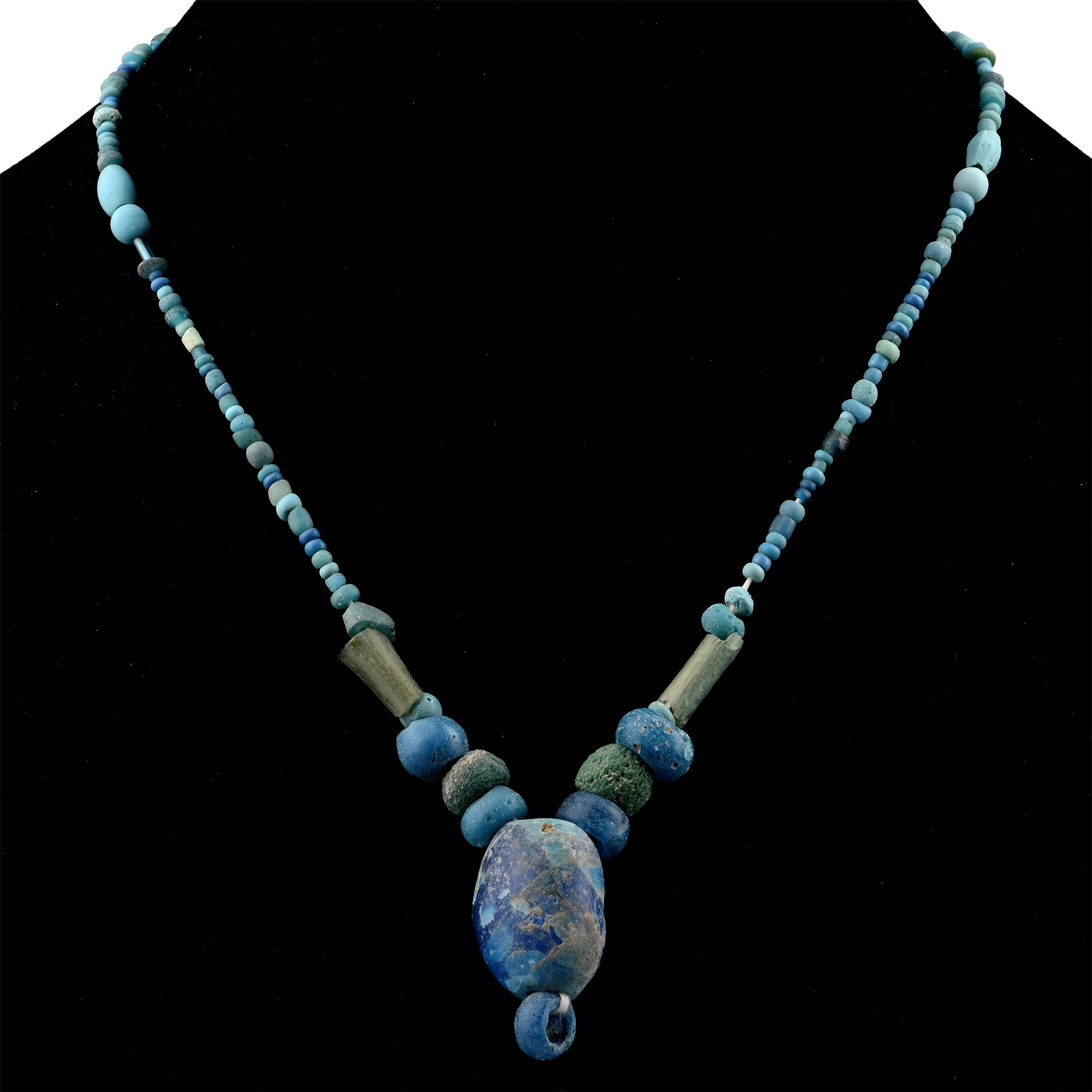
Roman and Other Blue and Green Glass Bead Necklace String
1ST-4TH CENTURY A.D. AND LATER
17 1/2 in. (27.72 grams, 44.5 cm).
Composed mainly of oblate and annular beads, the central feature composed of larger beads with a large ovoid bead; restrung. [No Reserve]
ProvenanceFrom London, UK, gallery collection, 1990s.
CONDITIONTimeLine Auctions follows a vetting process to ensure the authenticity and legality of all items, reinforcing our commitment to integrity and responsible trading. Each antiquity, antique, and coin lot undergoes thorough examination by a vetting committee of at least ten external specialists, professional trade association members, scientists, and archaeologists: Our Vetting Process
AUCTIONS:
TimeLine is a leading auction house specialising in antiquities, ancient art, collectables, natural history, coins, medals, and books. Our auctions offer museums, collectors, historians, and enthusiasts the opportunity to acquire unique and historically significant pieces.
LOT 0823
Roman and Other Blue and Green Glass Bead Necklace String
Sold for (Inc. bp): £169
-
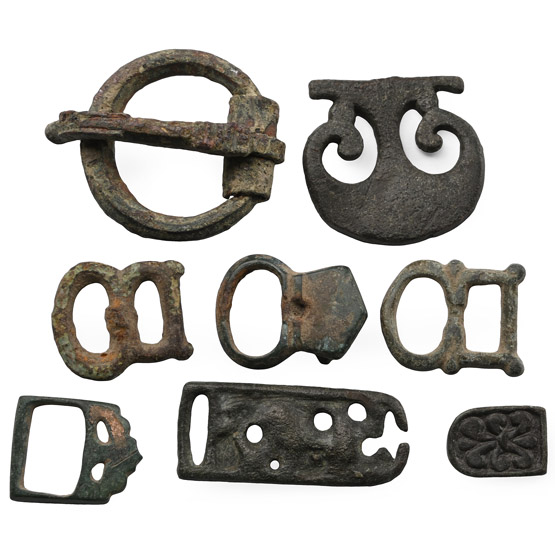
Roman to Medieval Bronze Artefact Collection
4th-16th century A.D.Sold for (Inc. bp): £59
Including a La Tène Style mount, openwork starp end with advancing lion, appliqué with lobed fleur-de-lys and other items. 69 grams total, 17-42 mm
Ex German art market, 2000s. Acquired from an EU collector living in London. From the collection of a Surrey, UK, gentleman. -
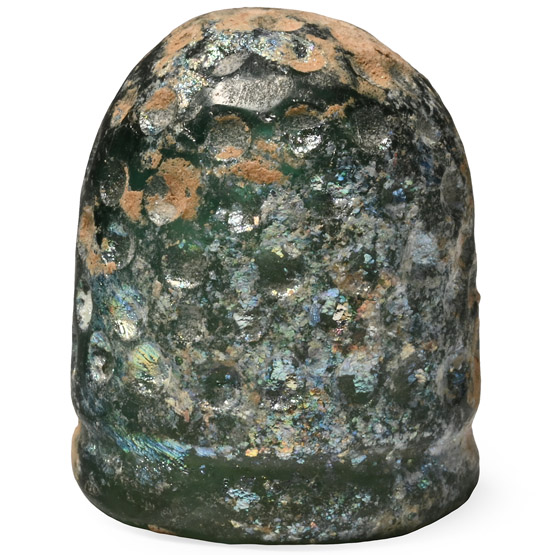
Roman Glass Thimble
1st-4th century A.D.Estimate: £250 - 350 (+bp*)
Opening Bid: £130
Narrow tubular thimble-type object with domed end and impressed dimples, remains of iridescence. 9.26 grams, 23 mm
From an important collection of a London gentleman, UK, 1990s. -
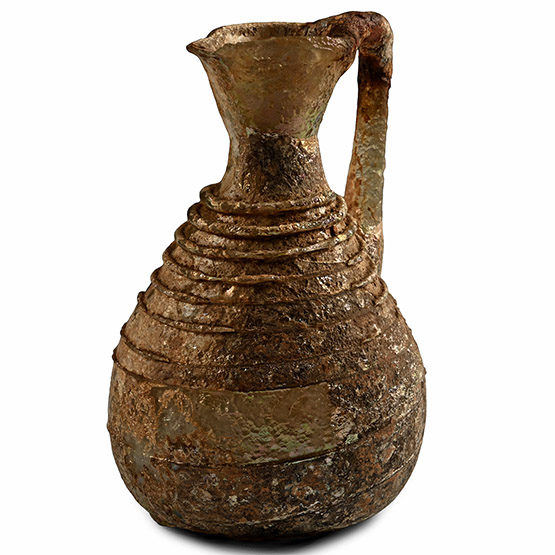
Roman Glass Jug with Trails
4th-5th century A.D.Estimate: £400 - 600 (‡+bp*)
Opening Bid: £222
A small pale yellow collared globular jug with short neck, angular ribbon handle with two narrow prominent ribs, folded upper attachment to the cylindrical neck, several horizontal lines on the globular body, trefoil mouth. 32 grams, 74 mm
with H.A.C., Basel, prior 1999.
These globular jugs were typical of the Eastern Mediterranean in the late Roman period. The body was often decorated with ornamental threads. The jugs were often used in a manner similar to pilgrim flasks, to collect oil and water from early Christian sanctuaries.
