
Loading, please wait...
LOT 0756
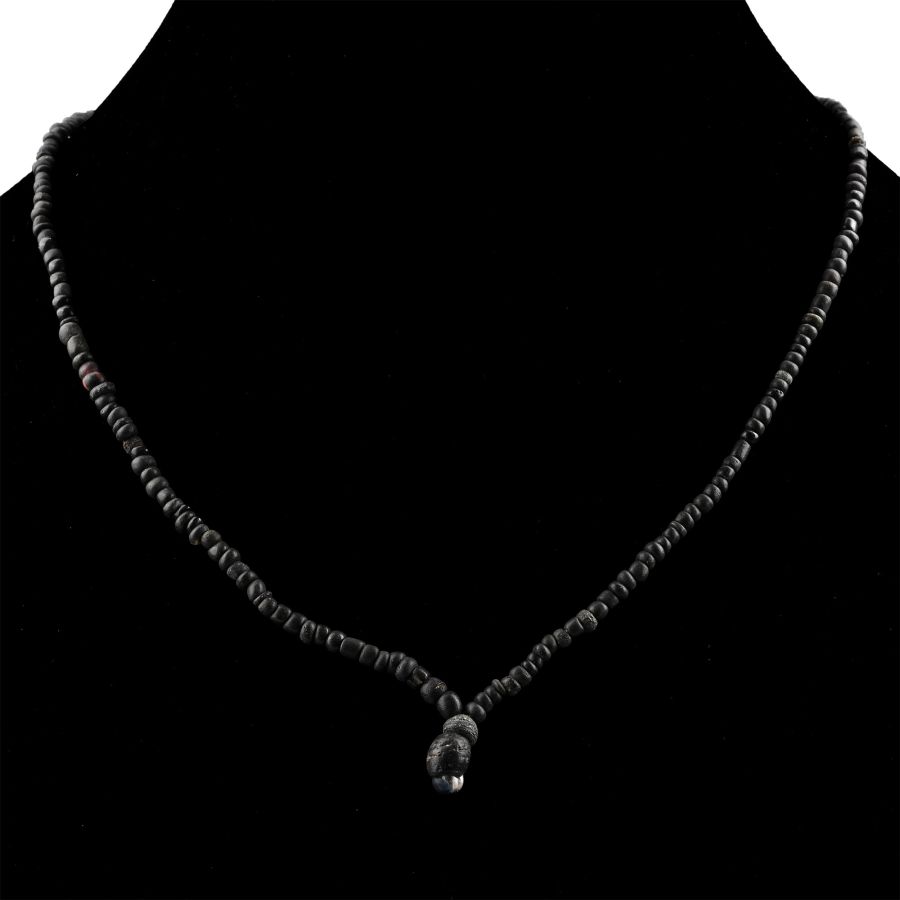
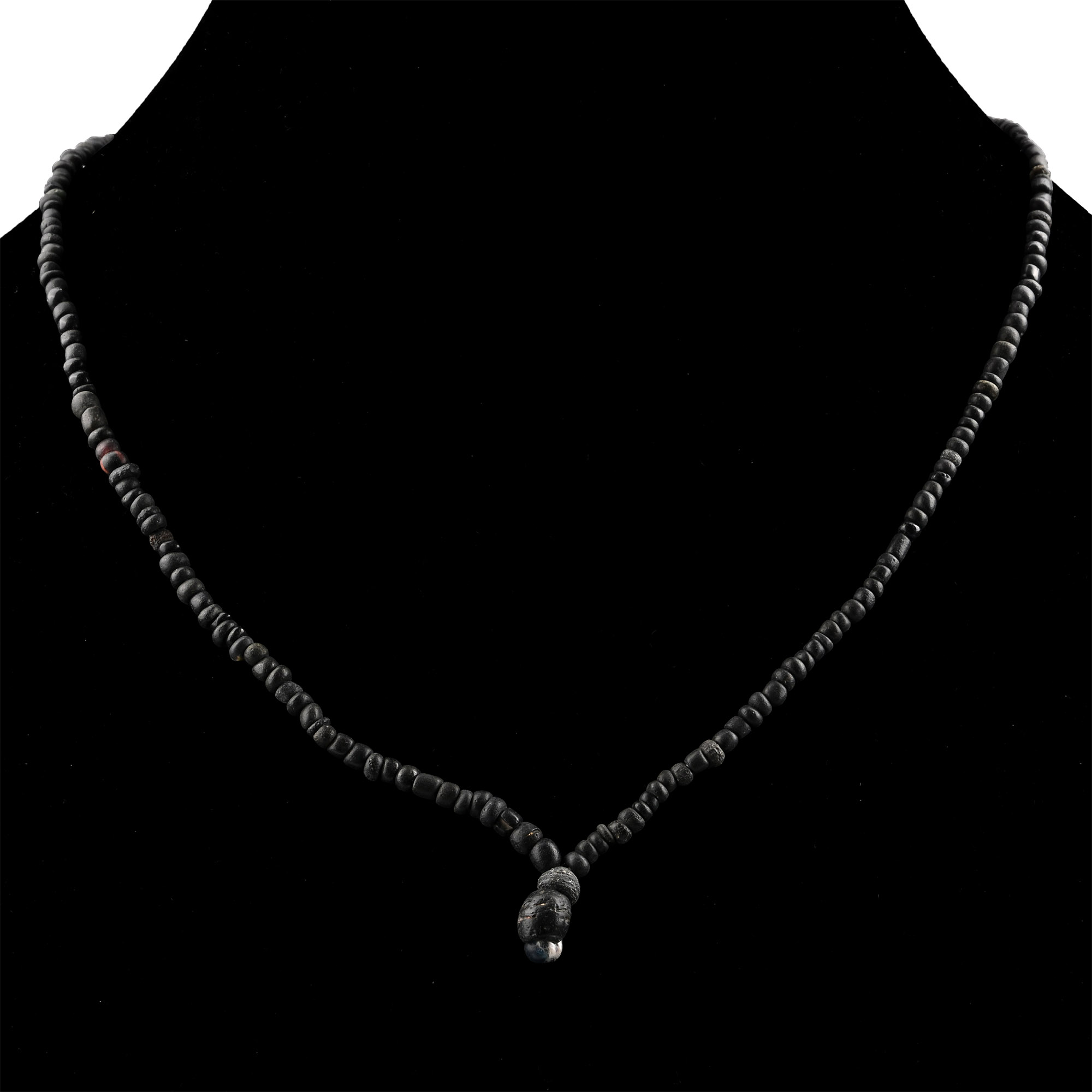
Roman and Other Black Glass Bead Necklace String
1ST-4TH CENTURY A.D. AND LATER
18 1/8 in. (7.58 grams, 46 cm).
Composed mainly of oblate beads with larger beads as a central feature; restrung. [No Reserve]
ProvenanceFrom London, UK, gallery collection, 1990s.
CONDITIONTimeLine Auctions follows a vetting process to ensure the authenticity and legality of all items, reinforcing our commitment to integrity and responsible trading. Each antiquity, antique, and coin lot undergoes thorough examination by a vetting committee of at least ten external specialists, professional trade association members, scientists, and archaeologists: Our Vetting Process
AUCTIONS:
TimeLine is a leading auction house specialising in antiquities, ancient art, collectables, natural history, coins, medals, and books. Our auctions offer museums, collectors, historians, and enthusiasts the opportunity to acquire unique and historically significant pieces.
-
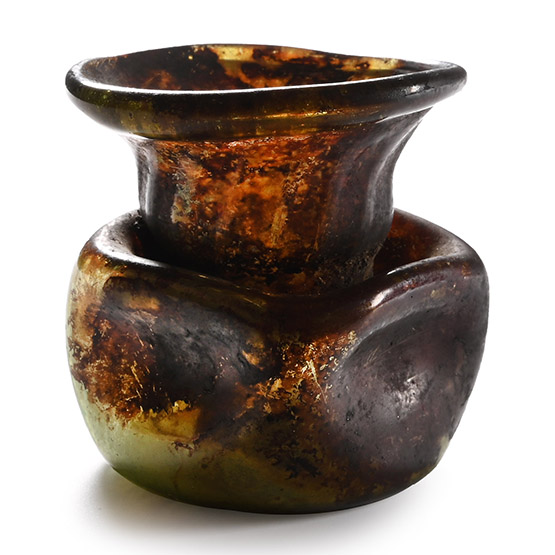
Roman Square Green Glass Flask
6th-7th century A.D.Estimate: £150 - 200 (+bp*)
Opening Bid: £81
With dimple to the underside, squat square body and wide everted rim. 34.7 grams, 49 mm
From an important London collection of glass, 1990s.
The object is certainly Late Roman in shape, although similar typologies did also exist in early Islamic glasswork. The bottle was probably blown into a flat mould to produce the ribs, then expanded and tooled to form the body. -
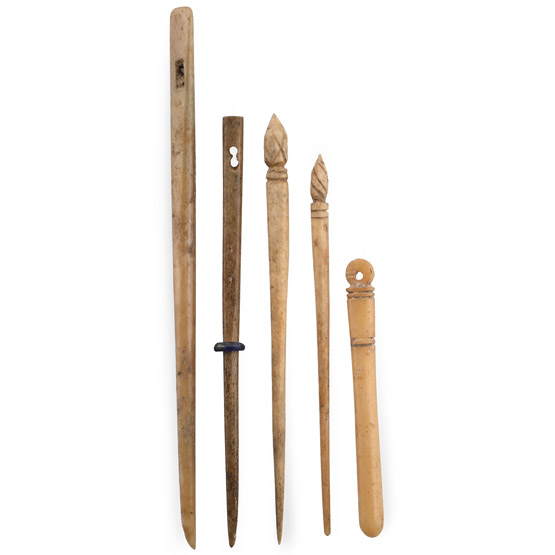
Roman Bone Pin Collection
1st-4th century A.D.Sold for (Inc. bp): £169
Each with hipped and tapering shank; balustered and other finials; one with blue glass collar to the shank. 18 grams total, 7.3-14.4 cm
Ex German art market, 2000s. Acquired from an EU collector living in London. From the collection of a Surrey, UK, gentleman. -
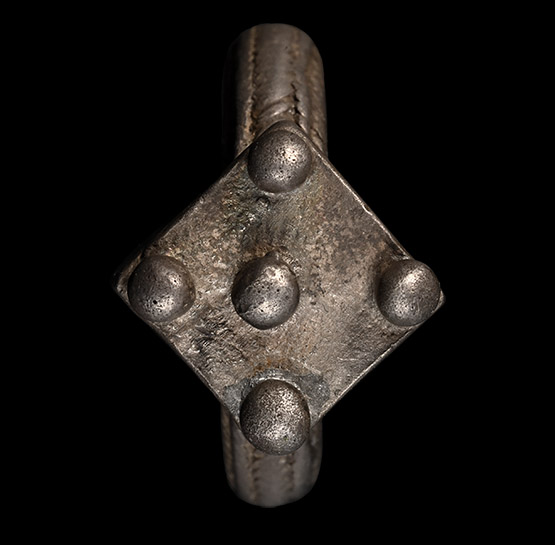
Roman Heavy Silver Ring with Square Plaque
2nd-3rd century A.D.Estimate: £450 - 650 (‡+bp*)
Opening Bid: £225
Comprising a braided median band to the hoop flanked by tiered neighbours, square bezel with granule to each corner and one to centre. 11.38 grams, 30.42 mm overall, 19.07 mm internal diameter (approximate size British R, USA 8 1/2, Europe 18 3/4, Japan 18)
Ex European private collection. Private European collection, acquired in 2001.
