Loading, please wait...
Details
LOT 0599
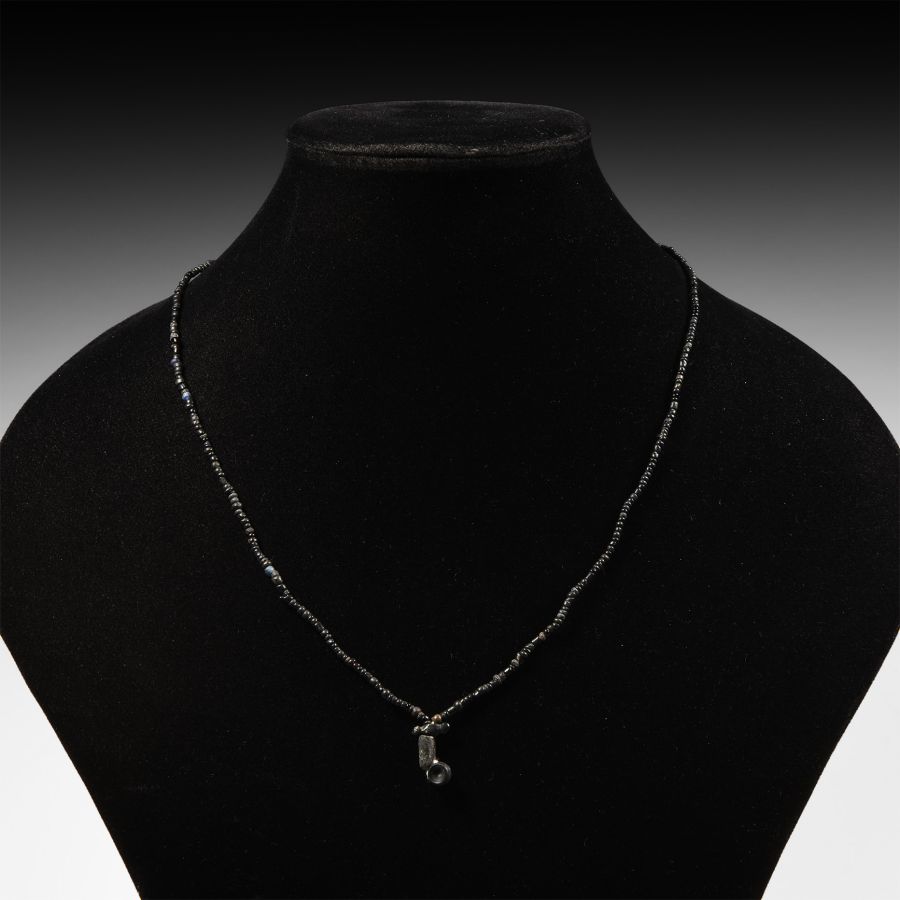
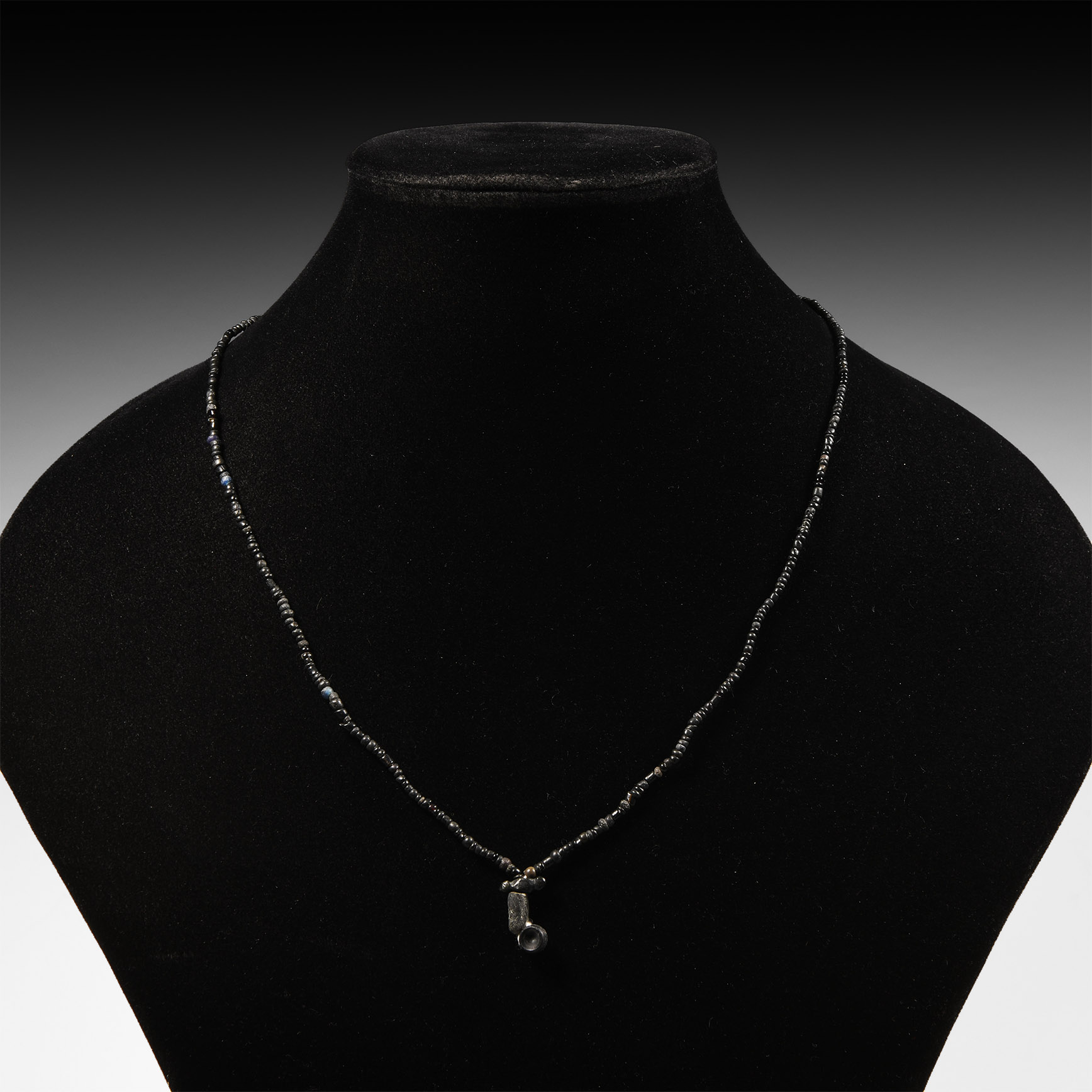
Roman and Other Bead Necklace
1ST CENTURY A.D. AND LATER
32 1/4 in. (5.02 grams, 82 cm long).
A restrung necklace composed mainly of 'black' stone and glass beads of various types and sizes, with a trio of larger pendant beads. [No Reserve]
Provenance
Acquired 1980-2015.
Ex Abelita family collection.
VETTING:
TimeLine Auctions follows a vetting process to ensure the authenticity and legality of all items, reinforcing our commitment to integrity and responsible trading. Each antiquity, antique, and coin lot undergoes thorough examination by a vetting committee of at least ten external specialists, professional trade association members, scientists, and archaeologists: Our Vetting Process
AUCTIONS:
TimeLine is a leading auction house specialising in antiquities, ancient art, collectables, natural history, coins, medals, and books. Our auctions offer museums, collectors, historians, and enthusiasts the opportunity to acquire unique and historically significant pieces.
RELATED LOTS
-
Roman Plate Brooch Collection
1st-4th century A.D.Sold for (Inc. bp): £338
A group of four bronze plate brooches: a horse walking left on a corded groundline, pin lug, pin and catchplate to reverse; a lioness in a stalking posture standing on a groundline, with incised face and mane detailing; pin lug to reverse; a hare bounding right with two recessed panels to the body also in the form of hares, pin lug, pin and catchplate to reverse; whorl brooch with central ring-and-dot ornament with four arms radiating outwards, each with a beast-head terminal, pin lug and catchplate to reverse. 41.3 grams total, 21-36 mm
Acquired before 2000. From the collection of a European gentleman living in the UK. -
Colossal Roman Head of Diana
1st-2nd century A.D.Estimate: £15,000 - 20,000 (+bp*)
Opening Bid: £7,500
A colossal architectural limestone head of the goddess Diana (Greek Artemis) with elegant features, sensual lips and deep eyes; detailed treatment of the hairstyle in transverse braids across the brow, laurel wreath with two rows of leaves resting above the forehead; mounted on a custom-made display stand. 72 cm high including stand
Ex private Belgian collection. with Madame Andree Mace collection. English private collection. Accompanied by an academic report by Prof. Neritan Ceka. This lot has been checked against the Interpol Database of stolen works of art and is accompanied by search certificate no.11625-199748.
The upper part of the head, cut horizontally, creates a semi-circular surface, on which the rest of the hair, or an architectonic capital, may have been mounted. A T-shaped indentation on that surface served to secure that attachment. The back of the head, cut perpendicularly, proves that the head was made to repose on an architectural surface. The fragmentary preservation of the neck does not allow a clear determination, whether we are dealing with the head of a caryatid, i.e. the head of a sculpture in the function of a pilaster, or whether the colossal head was an architectural stone corbel, i.e. an architectural element that was placed for the support of the sima of a building of great size. -
Roman Military Diploma Fragments
2nd century A.D.Sold for (Inc. bp): £208
A pair of bifacial bronze military diploma fragments bearing Latin text: fragment A, side 1: 'CAEL[IBES] / DVM [TAXAT]'; side 2: 'NI[- - -] MAX'; fragment B, side 1: 'RNESE / CVS'; side 2: 'AL[- - - / - - -] LL'. 7.13 grams total, 21-32 mm
Acquired before 2000. From the collection of a European gentleman living in the UK.
Stylistically, the diploma seems connected with the empire of Hadrian, based in style used in letters M and A. The text of the extrinsecus can be partially reconstructed in the sentences ANTO{NI}NUS AVGVSTVS PONTIFEX {MAX}IMUS... AVT SIQUI {CAEL}IBES ESSENT CUM IIS QUAS POSTEA DUXISSENT {DUM}TAXAT SINGULI SINGULAS (...if they were in celibate then, to the maximum limit of only one (wife) for each...). The diploma gives 'HONESTA MISSIO' (honourable discharge) and Roman citizenship to the veterans of an unknown unit, also granting them permission to marry. The text of the internal side (intus) should report the dating, and the names of the soldiers and witnesses.