
Loading, please wait...
LOT 0766
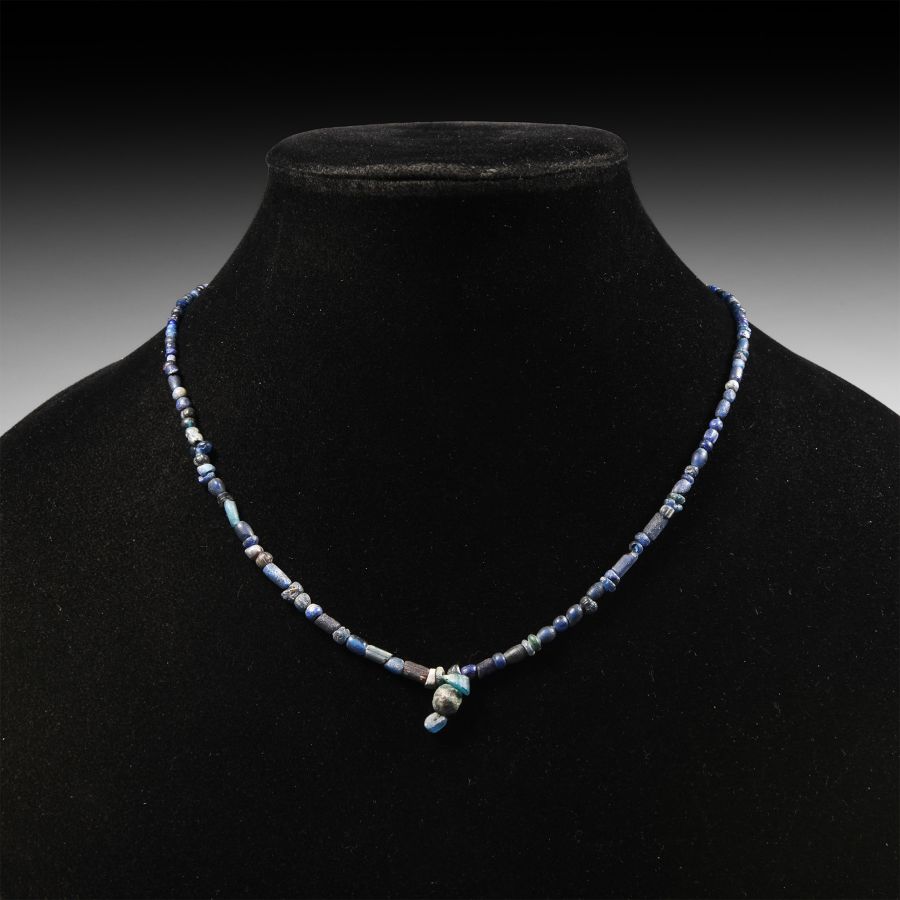
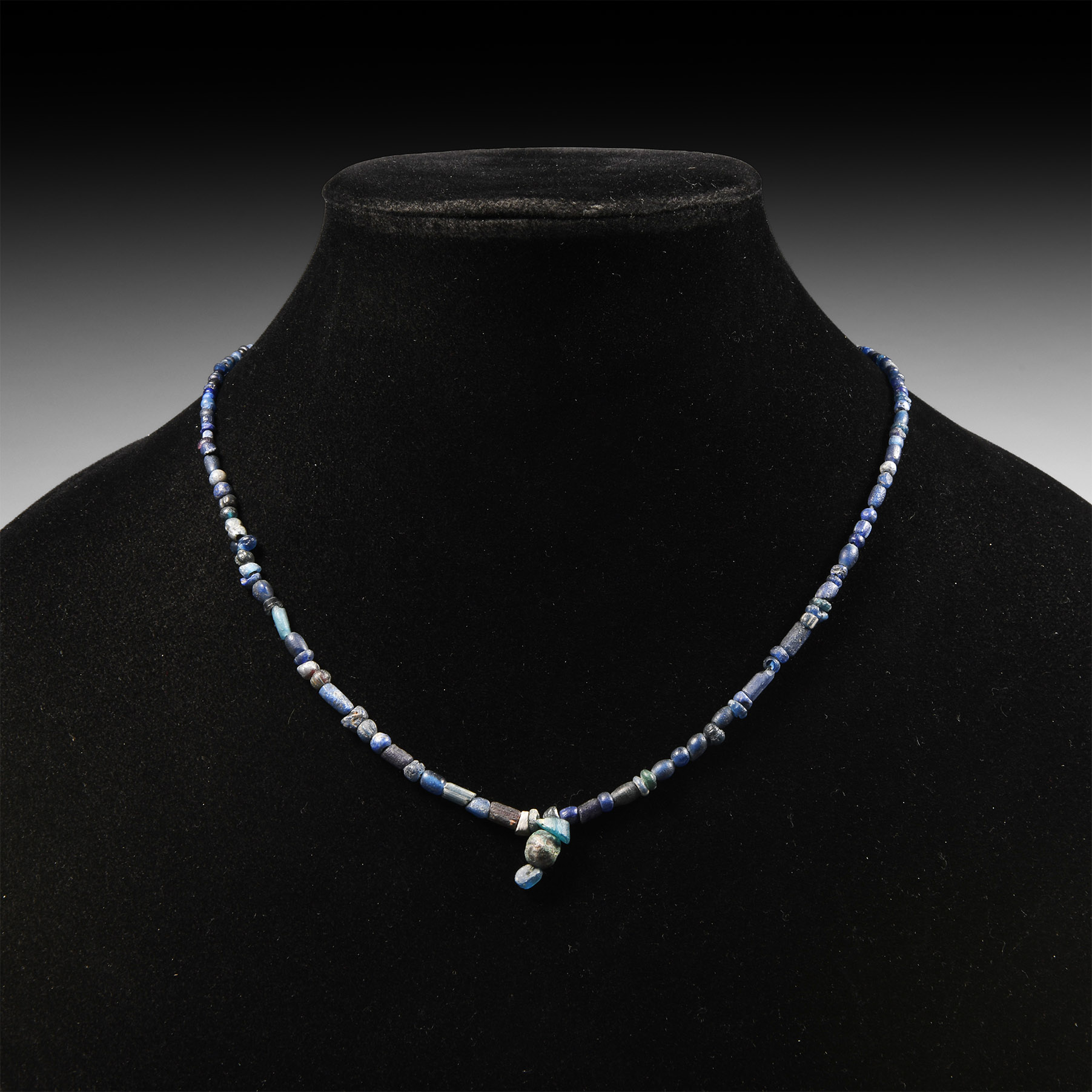
Roman and Other Bead Necklace
1ST CENTURY A.D. AND LATER
32 3/4 in. (1.38 grams, 83 cm long).
A restrung necklace composed mainly of graduated blue glass beads of various shades, dates and types. [No Reserve]
ProvenanceAcquired 1980-2015.
Ex Abelita family collection.
TimeLine Auctions follows a vetting process to ensure the authenticity and legality of all items, reinforcing our commitment to integrity and responsible trading. Each antiquity, antique, and coin lot undergoes thorough examination by a vetting committee of at least ten external specialists, professional trade association members, scientists, and archaeologists: Our Vetting Process
AUCTIONS:
TimeLine is a leading auction house specialising in antiquities, ancient art, collectables, natural history, coins, medals, and books. Our auctions offer museums, collectors, historians, and enthusiasts the opportunity to acquire unique and historically significant pieces.
-
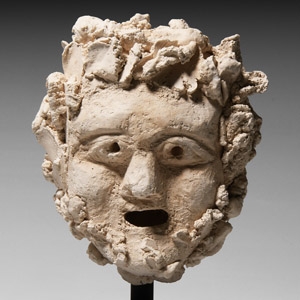
Roman Stucco Head of a Bearded Man
Provincial, 2nd-3rd century A.D.Sold for (Inc. bp): £195
A stucco head from a cornice modelled in the half-round as a mature male with full beard and short, tufted head of hair; mounted on a custom-made display stand. 623 grams total, 12.8 cm (16.5 cm high including stand)
Fair condition.
Acquired 1970s-1996. Property of a North American collector. London collection, 2016. -
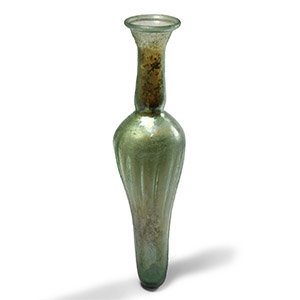
Large Roman Ribbed Glass Wine Vessel
1st-3rd century A.D.Estimate: £1,800 - 2,400 (+bp*)
Opening Bid: £1,000
A large aqua glass vessel of fusiform shape, raised vertical ribs to the upper body, cylindrical neck with flared top, rolled rim; iridescent surfaces. 235 grams, 31 cm
French collection, 1960s-early 2000s. From an important Paris gallery, France. -
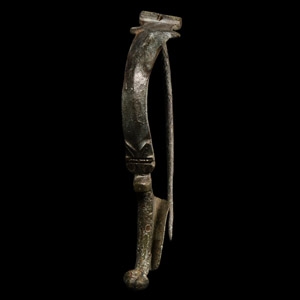
Large Roman Aucissa Bow Brooch with Wolf's Face
1st-2nd century A.D.Sold for (Inc. bp): £91
A large bronze Aucissa variant type bow brooch with annulet decoration to the head, narrow half-round cross-section bow; the lower bow and foot forming a stylised wolf's face with pellet eyes and curved muzzle; hinged pin and catch to the reverse. 36 grams, 94 mm
German art market before 2000. With a European gentleman living in the UK. Property of a Surrey gentleman.
The fibula belongs to the series C of the Buchem classification of variant Aucissa fibulae. According to Kovrig, these military fibulae were produced in specific centres like Siscia (Sisak) in Pannonia and distributed throughout the Empire because of the mobility of the army.
