
Loading, please wait...
LOT 0765
Roman and Other Artefact Group
CIRCA 2ND-3RD CENTURY A.D. AND LATER
1/2 in. (4.37 grams total, 14 mm each).
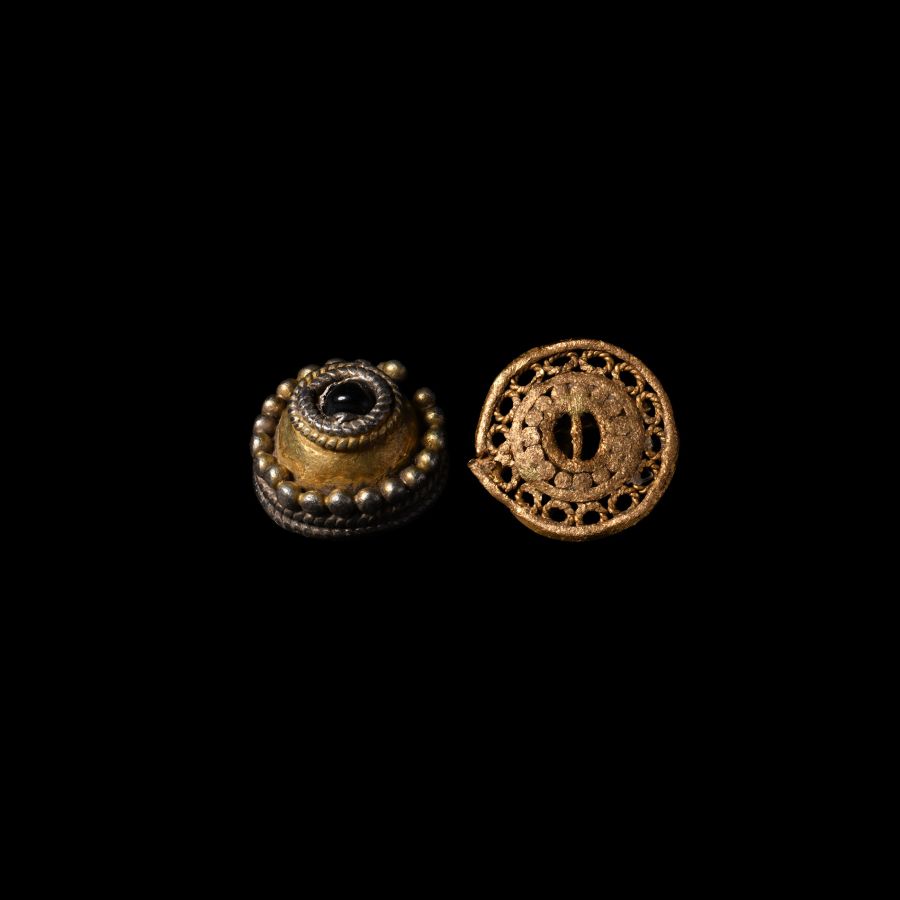
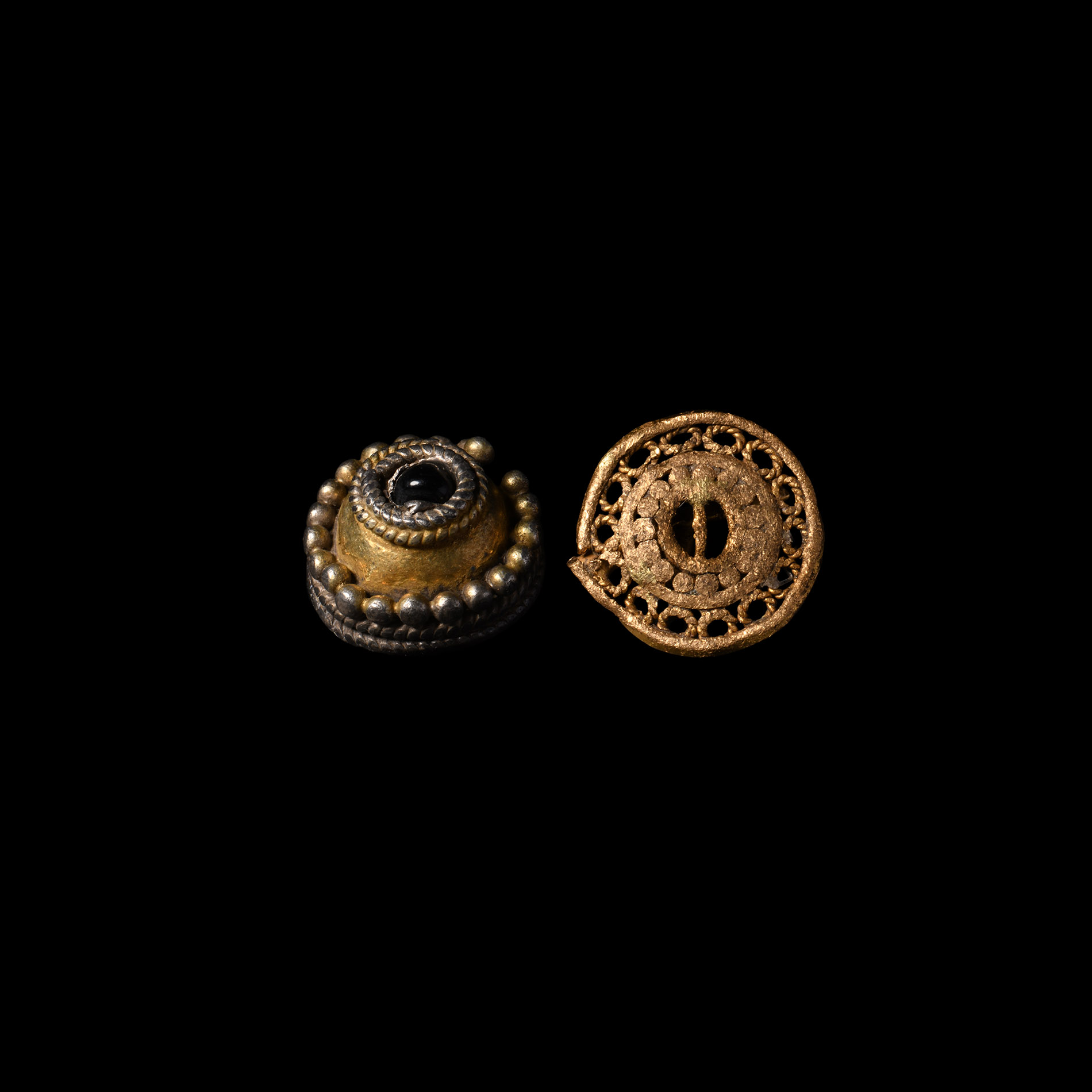
A pair of decorative artefacts comprising: a gold flat-section openwork disc with filigree annulets and pellets; a domed silver-gilt 'stud' with striptwist borders and pellet granules, set with a possible garnet stone at the apex. [2, No Reserve]
ProvenanceEssex gallery, early 2000s.
CONDITIONTimeLine Auctions follows a vetting process to ensure the authenticity and legality of all items, reinforcing our commitment to integrity and responsible trading. Each antiquity, antique, and coin lot undergoes thorough examination by a vetting committee of at least ten external specialists, professional trade association members, scientists, and archaeologists: Our Vetting Process
AUCTIONS:
TimeLine is a leading auction house specialising in antiquities, ancient art, collectables, natural history, coins, medals, and books. Our auctions offer museums, collectors, historians, and enthusiasts the opportunity to acquire unique and historically significant pieces.
-
Roman Tile Fragment Group with Military Stamps
1st-4th century A.D.Sold for (Inc. bp): £59
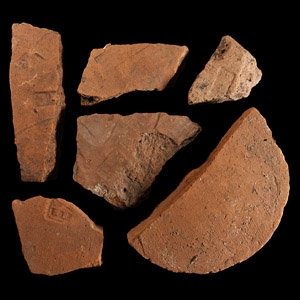
A group of six ceramic tile fragments, each bearing a stamp. 3.3 kg total, 10.5-22.2 cm
Previously in a private collection since the 1990s. Property of a Sussex, UK, teacher. -
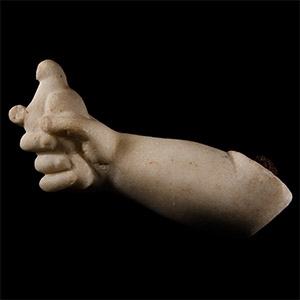
Roman Marble Hand Holding Bird
1st-2nd century A.D. or laterSold for (Inc. bp): £845
A white marble right forearm and hand, modelled in the round gripping a bird; simple detailing to the bird's head and to the folds of the skin on the palm of the hand and the nail beds; remains of iron rod inserted into the limb. 531 grams, 17 cm
New York art market, 1992. -
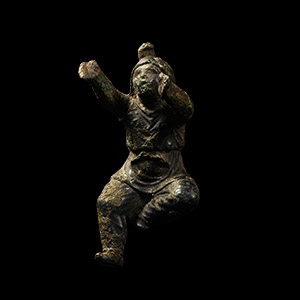
Roman Figure of a Boy in Oriental Dress
1st-2nd century A.D.Estimate: £1,000 - 1,400 (‡+bp*)
Opening Bid: £500
A bronze figure of a child sitting with one leg extended and the other bent beneath the body, arms raised in supplication; loose fitting trousers and knee-length tunic gathered at the waist, boots on the feet and a separate pointed hood on the head; Scythian or similar costume. 14.6 grams, 61 mm
Private Swiss collection, acquired 2001.
