
Loading, please wait...
LOT 0719
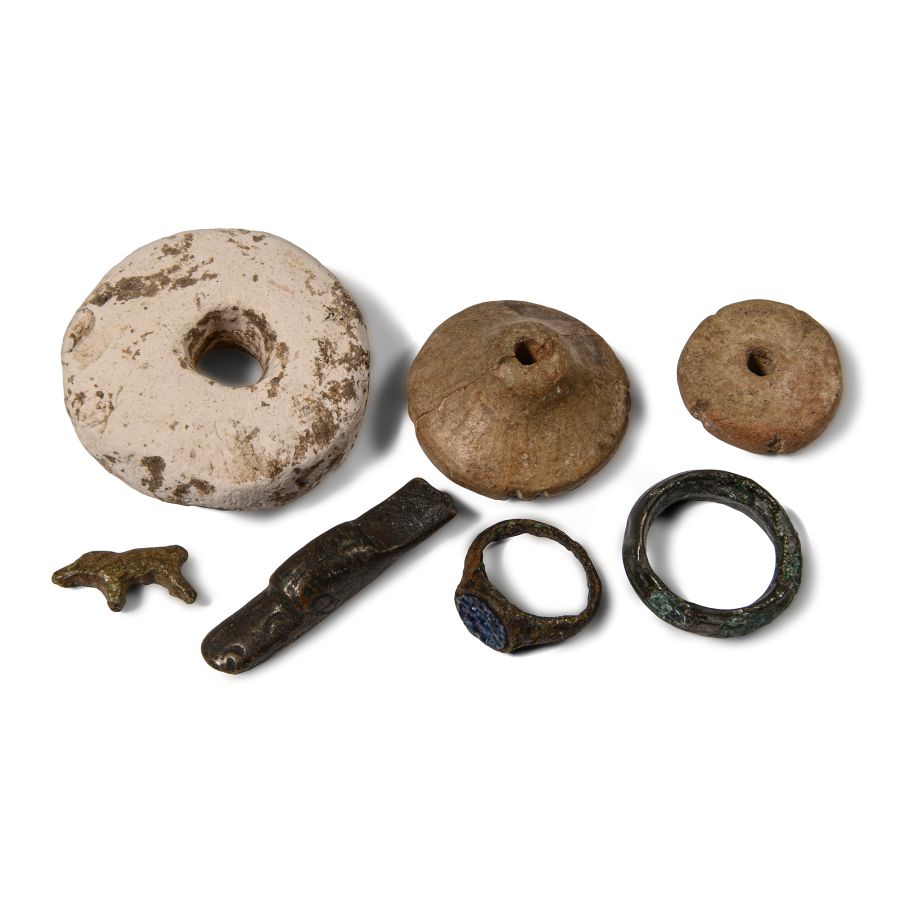
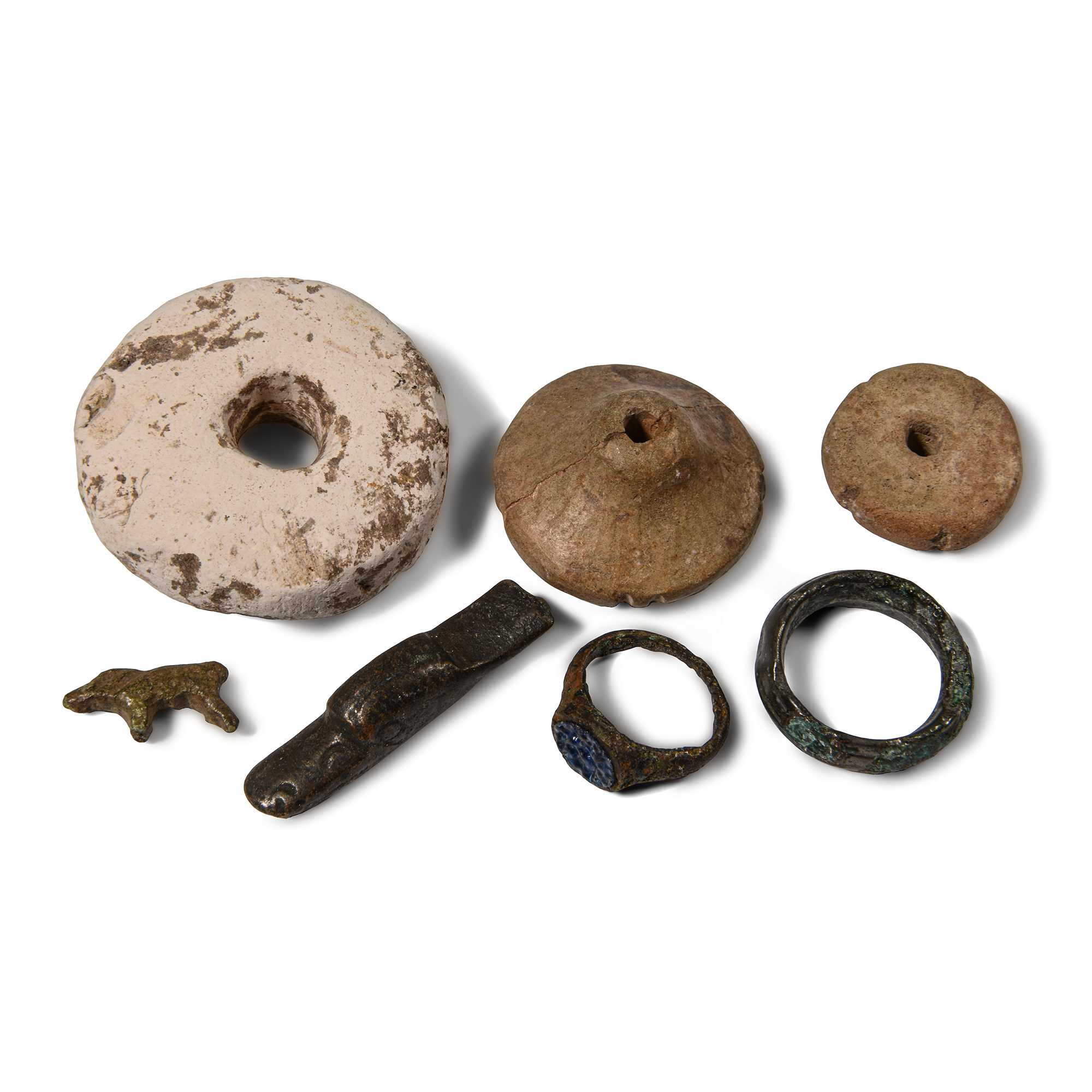
Roman and Other Artefact Collection
1ST CENTURY A.D. AND LATER
3/4 - 1 3/4 in. (91 grams total, 20-45 mm).
Comprising: a small bronze animal figure; three ceramic spindle whorls/weights; tinned ring with keeled hoop; a bronze swan-head finial; and a bronze ring with blue glass intaglio. [7, No Reserve]
ProvenanceProperty of a UK gentleman, acquired in the 1970s.
Property of an East Sussex, UK, gentleman.
TimeLine Auctions follows a vetting process to ensure the authenticity and legality of all items, reinforcing our commitment to integrity and responsible trading. Each antiquity, antique, and coin lot undergoes thorough examination by a vetting committee of at least ten external specialists, professional trade association members, scientists, and archaeologists: Our Vetting Process
AUCTIONS:
TimeLine is a leading auction house specialising in antiquities, ancient art, collectables, natural history, coins, medals, and books. Our auctions offer museums, collectors, historians, and enthusiasts the opportunity to acquire unique and historically significant pieces.
-
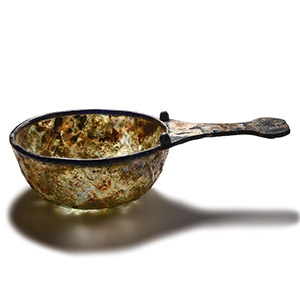
Roman Iridescent Pale Blue Glass Trulla
3rd-4th century A.D. or laterSold for (Inc. bp): £650
With an aqua-coloured hemispherical bowl and dark blue glass rim and handle with raised knops to the neck, the bowl with moulded lozengiform 'net' motif with kick-up to base surrounded by a moulded rosette; iridescent surfaces; handle repaired. 88 grams, 19 cm
Acquired early 1990s. Ex private American collection; thence by descent. Private collection since 1998. -
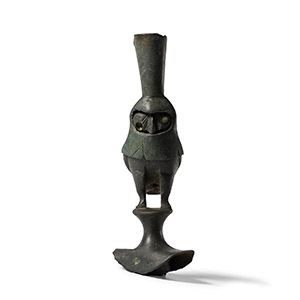
Romano-British Bronze Owl Candlestick
1st-2nd century A.D.Sold for (Inc. bp): £1,040
Comprising a stylised owl figurine standing on a flared base, with incised feather detailing to the wings, legs and body, recessed eyes to accept glass inserts (one absent); fitted with a separately modelled cowl or hood with incised detail to the breast, topped with a conical finial to accept a candle. 70 grams, 10.5 cm
Acquired in the 1980s. From the Belgian collection of Mr D.S. of Flemu. Property of a North London, UK, gentleman.
The owl was the symbol of the Goddess Minerva in Roman tradition. Her name is linked etymologically to the English word 'mind' and she was considered to be the source of human intellect, patron of wisdom, crafts and sciences. The base of the figurine has been bent laterally as if to mount it on a post or rail. -
.jpg)
Roman Glass Amphoriskos
1st century A.D.Estimate: £400 - 600 (+bp*)
Opening Bid: £200
Comprising a Sidonian mould-blown glass vessel with ovoid body, cylindrical neck, everted rim and twin applied handles; decorated with a medial band of swirl motifs between fluting; iridescent surfaces; rim chipped. 17.6 grams, 73 mm
French collection, 1990s-early 2000s. Acquired at a Paris auction. From an important Paris gallery, France. Ex private Parisian collection.
