
Loading, please wait...
LOT 0719
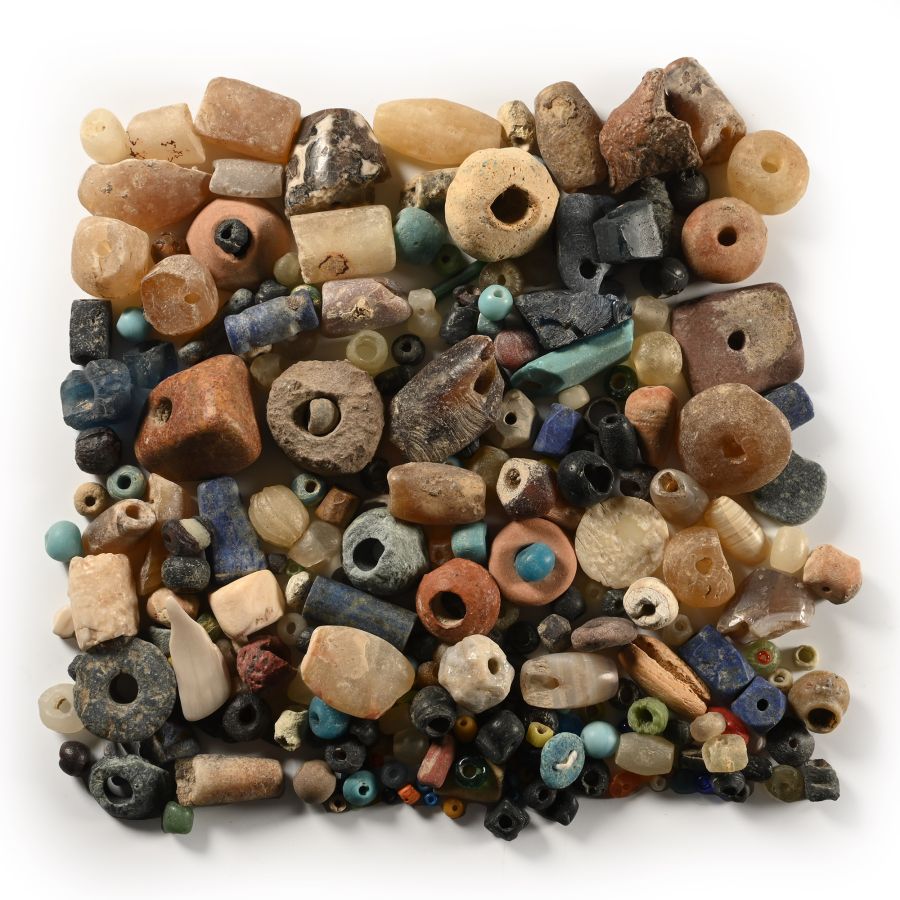
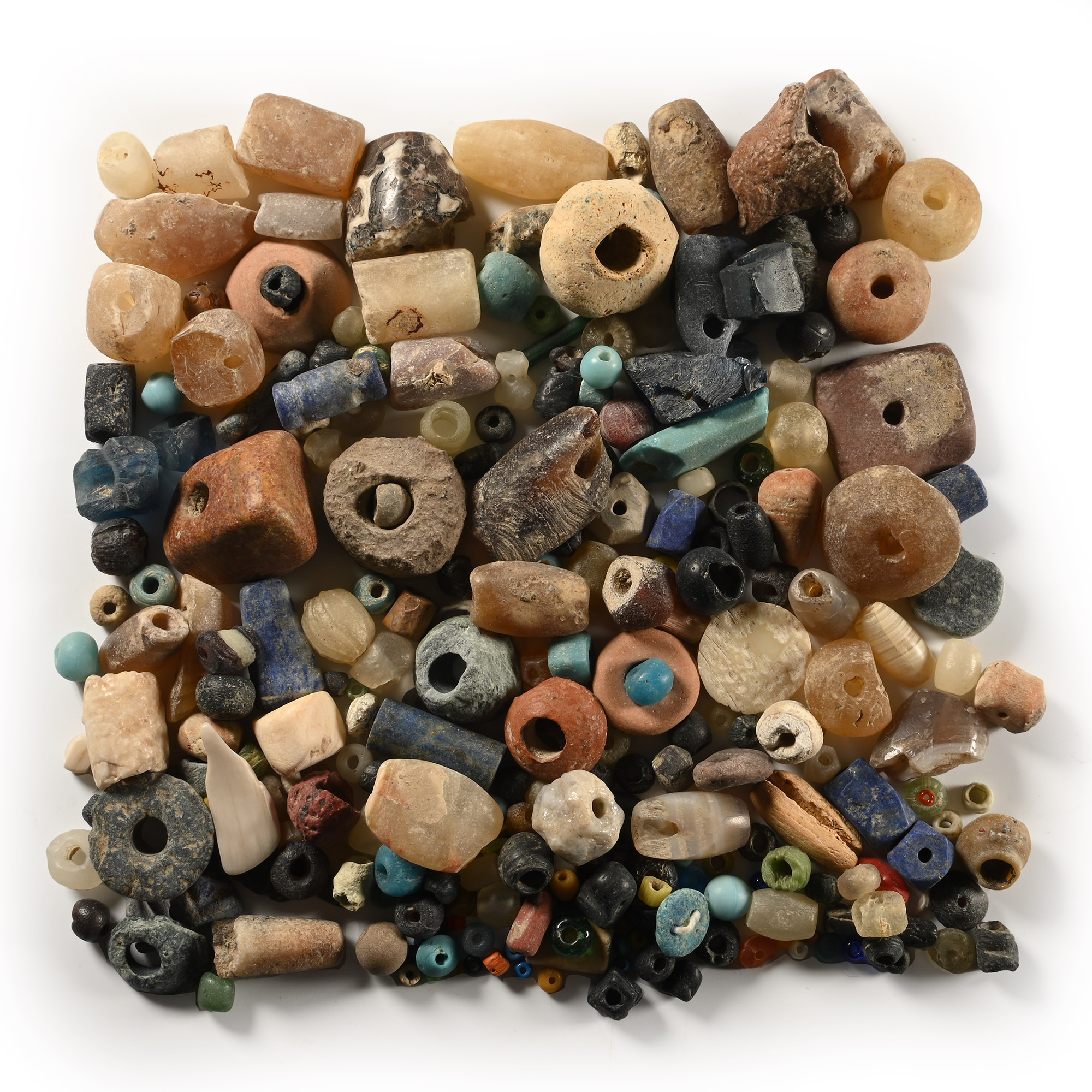
Roman and Other Ancient Bead Group
1ST MILLENNIUM B.C. AND LATER
1/8 - 7/8 in. (164 grams total, 1-22 mm).
Comprising a large quantity of mainly stone, glass and ceramic beads in various shapes, including some amuletic beads. [No Reserve]
ProvenanceEx London, UK, collection, 1990s.
This lot is accompanied by an illustrated lot declaration signed by the Head of the Antiquities Department, Dr Raffaele D’Amato.
TimeLine Auctions follows a vetting process to ensure the authenticity and legality of all items, reinforcing our commitment to integrity and responsible trading. Each antiquity, antique, and coin lot undergoes thorough examination by a vetting committee of at least ten external specialists, professional trade association members, scientists, and archaeologists: Our Vetting Process
AUCTIONS:
TimeLine is a leading auction house specialising in antiquities, ancient art, collectables, natural history, coins, medals, and books. Our auctions offer museums, collectors, historians, and enthusiasts the opportunity to acquire unique and historically significant pieces.
-
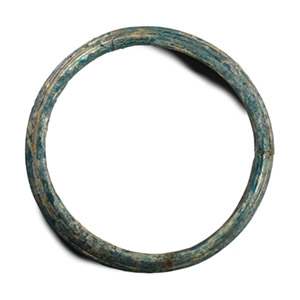
Very Large Roman Blue Glass Arm-Ring Bangle
Circa 4th century A.D.Sold for (Inc. bp): £124
D-shaped in section with slightly ribbed outer face. 31 grams, 92 mm
From an old English collection. Acquired from Alan Cherry, Bournemouth, UK, circa 2004. Ian Wilkinson collection, Nottinghamshire, UK, formed since 1985. This lot is accompanied by an illustrated lot declaration signed by the Head of the Antiquities Department, Dr Raffaele D’Amato.
The mass production of glass in ancient Rome prompted the development of glass jewellery of unique qualities. The ancient Romans considered jewellery to be an essential accessory, being a public display of the wealth of high social classes. Recent excavations have provided better information on the use of glass for necklaces and bracelets, and in some cases it has been possible to understand the exact arrangement of the jewellery. -
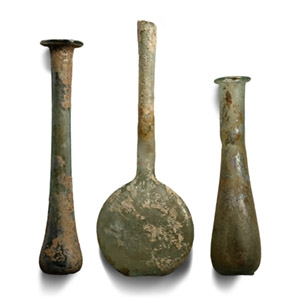
Roman Glass Vessel Group
1st-4th century A.D.Sold for (Inc. bp): £130
Comprising two small unguentaria with everted rim, a flask with discoid body. 43 grams total, 9.3-12.1 cm
Acquired from Ancient & Oriental, 1980s-1990s. Ian Wilkinson collection, Nottinghamshire, UK, formed since 1985. This lot is accompanied by an illustrated lot declaration signed by the Head of the Antiquities Department, Dr Raffaele D’Amato. -
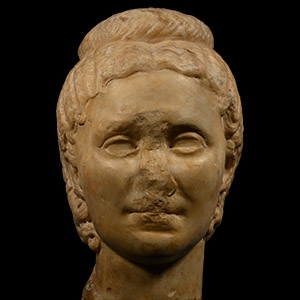
Life-Size Roman Portrait Head of a Roman Lady, Possibly The Empress Salonina
Late 3rd century A.D.Sold for (Inc. bp): £7,800
Portrait head of a woman with an elaborate coiffure, with the hair at the back parted in the middle and the two strands folded over each other and then pulled to the front to form a looped horizontal layer, then parted in the middle of the forehead and drawn to the back of the head, thereby forming ripples; individual curls represented along the hairline up to the completely exposed ears; some modern infills to the forehead area above the left eye, both upper eyelids, both cheeks in the middle area, left nostril and the chin up to the lower lip; heavily cleaned. 16 kg, 34.5 cm
Acquired on the Parisian art market. with Bernard Tinivella, Saint-Ouen. Accompanied by an academic report by Dr Raffaele D’Amato. This lot has been checked against the Interpol Database of stolen works of art and is accompanied by a search certificate number no.12464-228803. This lot has been cleared against the Art Loss Register database, and is accompanied by an illustrated lot declaration signed by the Head of the Antiquities Department, Dr Raffaele D’Amato.
The coiffure is known as 'Scheitelzopf hairstyle' or 'reverse plait'. The closest parallel for this hairstyle is a portrait bust in the Palazzo dei Conservatori (inv. no. 2767), which corresponds in every detail, including the various decorative curls. The same type of hairstyle, albeit with variations in the details (decorative curls and position of the hair loop), is found on a few other portraits of women that were dated to the Period of Gallienus by Marianne Bergmann. Some of the portraits in this typologically related group are likely to be private portraits. Nonetheless, the question must be raised as to whether the portrait shows a member of the imperial family. Hereby physiognomic features and especially imperial coin portraits need to be taken into account. In this context, it is important to note that both eyeballs were reworked, whereby the iris was completely erased. Furthermore, there are pick marks on the eyebrows, eyelids, nose, cheeks, mouth and chin (partly filled in modern times). If these were intentional changes made in the context of the practice of Damnatio memoriae, they would indicate that a lady from the imperial family was represented. The neck has been prepared for insertion into a sculpture.
