
Loading, please wait...
LOT 0952
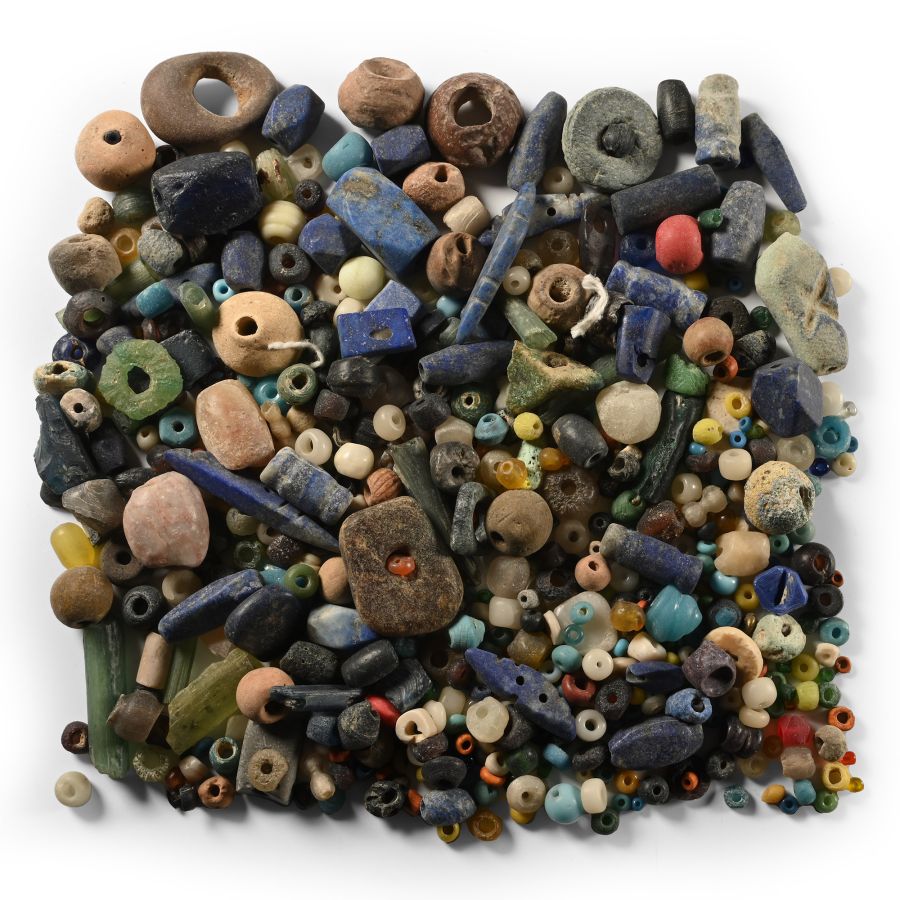
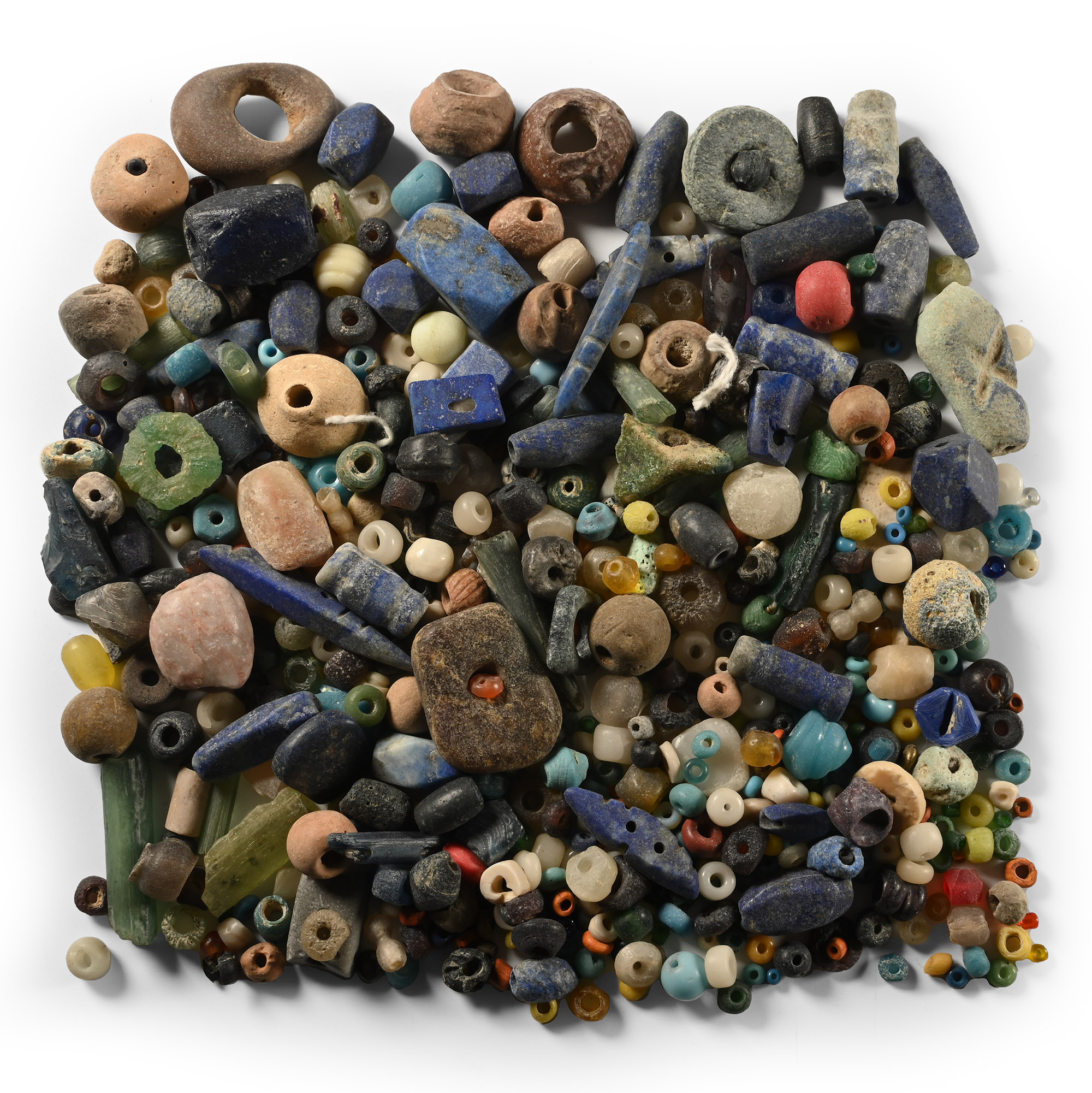
Roman and Other Ancient Bead Group
1ST MILLENNIUM B.C. AND LATER
1/8 - 1 in. (140 grams total, 1-25 mm).
A large quantity of variously shaped beads in stone, lapis lazuli, glass, and some ceramic, including some larger feature beads. [No Reserve]
ProvenanceEx London, UK, collection, 1990s.
This lot is accompanied by an illustrated lot declaration signed by the Head of the Antiquities Department, Dr Raffaele D’Amato.
TimeLine Auctions follows a vetting process to ensure the authenticity and legality of all items, reinforcing our commitment to integrity and responsible trading. Each antiquity, antique, and coin lot undergoes thorough examination by a vetting committee of at least ten external specialists, professional trade association members, scientists, and archaeologists: Our Vetting Process
AUCTIONS:
TimeLine is a leading auction house specialising in antiquities, ancient art, collectables, natural history, coins, medals, and books. Our auctions offer museums, collectors, historians, and enthusiasts the opportunity to acquire unique and historically significant pieces.
-
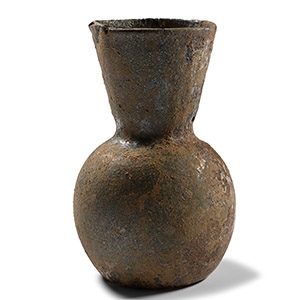
Roman Glass Vessel
1st-4th century A.D.Sold for (Inc. bp): £39
With a bulbous body, broad flared neck, recess to base; extensive iridescence, repaired. 47 grams, 10 cm
Ex London art market 1990s. From a London, UK, collection. This lot is accompanied by an illustrated lot declaration signed by the Head of the Antiquities Department, Dr Raffaele D’Amato. -
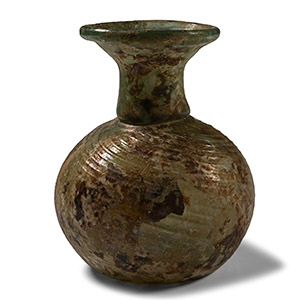
Roman Green Glass Patterned Flask
1st-2nd century A.D.Sold for (Inc. bp): £117
With dimple base, swirl pattern to the shoulder, partly restricted inner neck, applied rolled rim to the mouth. 69 grams, 97 mm
Ex London art market 1990s. From a London, UK, collection. This lot is accompanied by an illustrated lot declaration signed by the Head of the Antiquities Department, Dr Raffaele D’Amato. -
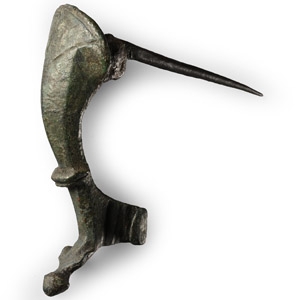
Roman Bronze Trumpet-Derivative Brooch
Circa 2nd century A.D.Sold for (Inc. bp): £33
Substantial D-section bow with flared upper section and fan-shaped head, ribbed ledge below the equator and scooped foot with lateral wings and ball finial; hooked catch to rear, hinged pin intact. 29.3 grams, 58 mm
Acquired on the UK art market before 2000. Property of an Essex, UK, gentleman. This lot is accompanied by an illustrated lot declaration signed by the Head of the Antiquities Department, Dr Raffaele D’Amato.
The brooch lacks the loop at the apex of the head which is characteristic of true trumpet brooches; its hinged pin did not require this feature which originates in the coiled spring mechanism.
