
Loading, please wait...
LOT 0803
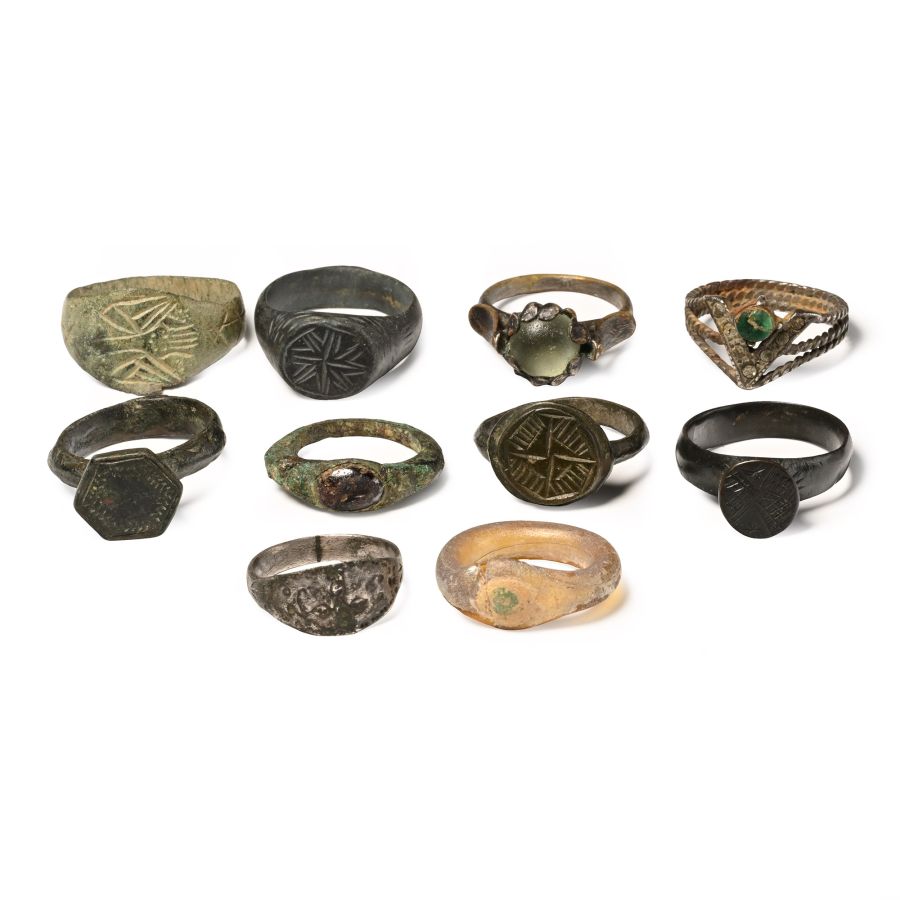
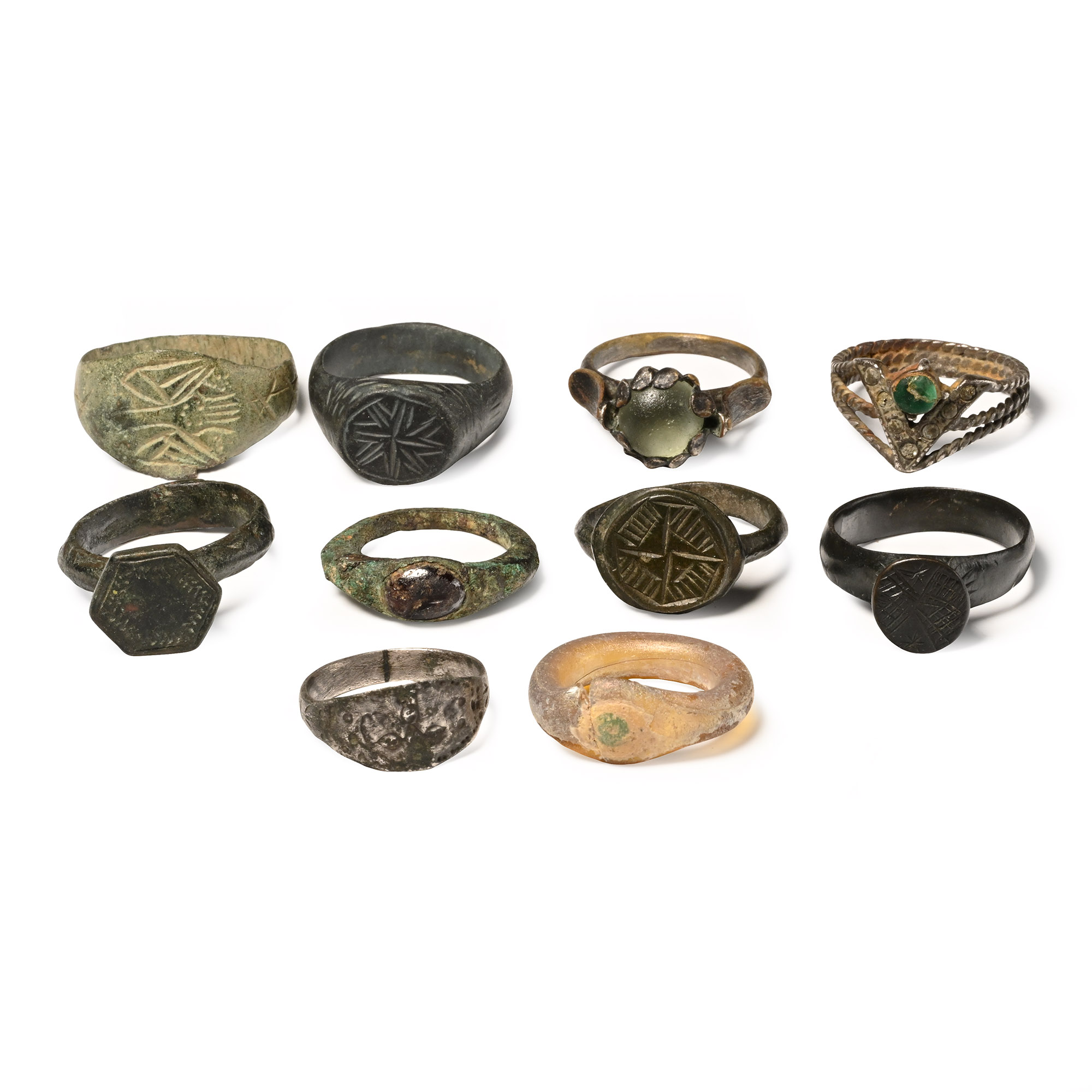
Roman and Later Ring Collection
3RD CENTURY B.C.-19TH CENTURY A.D.
3/4 - 1 1/8 in. (50 grams total, 20-28 mm).
Comprising: Roman orange glass ring; Roman iron ring with glass intaglio; three early Byzantine bronze rings with solar symbols engraved on the bezel; two early Medieval bronze rings, one with a coat of arms and one with an eagle; one late Medieval silver ring with a floriated cross; two Renaissance rings set with coloured glass insert. [10, No Reserve]
ProvenanceFrom the stock of a former UK antiquarian, acquired at trade fairs and from private collection formed in the 1980s-1990s.
Private collection, Europe.
TimeLine Auctions follows a vetting process to ensure the authenticity and legality of all items, reinforcing our commitment to integrity and responsible trading. Each antiquity, antique, and coin lot undergoes thorough examination by a vetting committee of at least ten external specialists, professional trade association members, scientists, and archaeologists: Our Vetting Process
AUCTIONS:
TimeLine is a leading auction house specialising in antiquities, ancient art, collectables, natural history, coins, medals, and books. Our auctions offer museums, collectors, historians, and enthusiasts the opportunity to acquire unique and historically significant pieces.
-
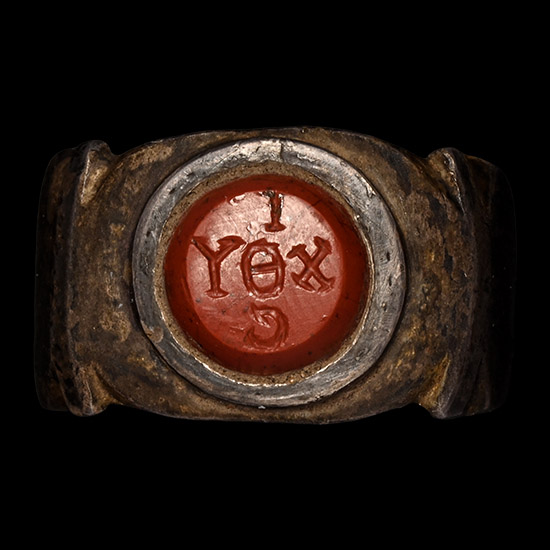
Roman Silver Ring with Early Christian Gemstone
4th-6th century A.D.Sold for (Inc. bp): £585
D-section hoop, elliptical in plan, with raised oval bezel set with a jasper intaglio engraved with inverted Greek inscription 'IXΘYC' (ichthys, meaning 'fish"), a Greek acronym for 'Jesus Christ, Son of God; supplied with a museum-quality impression. 9.18 grams, 21.91 mm overall, 18.68 mm internal diameter (approximate size British O 1/2, USA 7 1/4, Europe 15.61, Japan 15)
Private collector, acquired in the early 1990s. Private collection, England.
The term ichthys is the equivalent of the ancient Greek: ixθus, ichthýs ('fish'), used by early Christians to refer to Jesus Christ. For this reason, the fish symbol was very common in the catacombs of Rome. In particular, the ichthys is one of the oldest Christian symbols that has come down to us. Used covertly by Christians to mask their faith from Roman persecutors, when a Christian encountered a stranger whose loyalty he needed to know, he would draw one of the arches that make up the ichthys in the sand. If the stranger completed the sign, the two individuals recognised each other as followers of Christ. The symbol was also drawn on the doors of the houses of Christian families. Its use spread in the 3rd century to personal effects such as the ring offered here. -
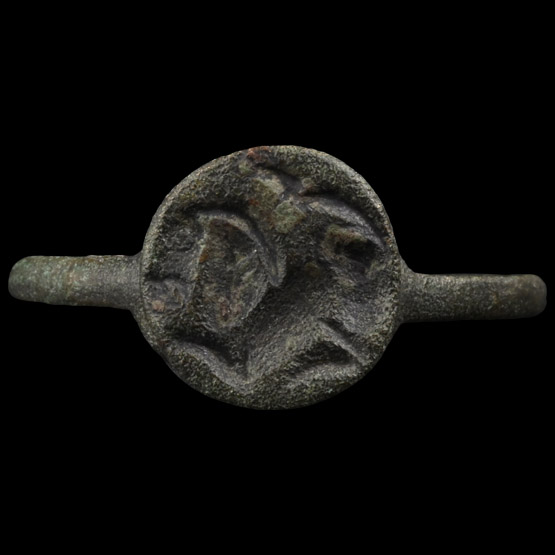
Roman Bronze Ring with Animal
4th-6th century A.D.Sold for (Inc. bp): £39
Slender hoop, cup-shaped bezel with low-relief advancing horse motif. 4.53 grams, 27.20 mm overall, 20.89 mm internal diameter (approximate size British U, USA 10, Europe 22.52, Japan 21)
Ex German art market, 2000s. Acquired from an EU collector living in London. From the collection of a Surrey, UK, gentleman. -

Roman Gold Ring with Minerva Gemstone
2nd-3rd century A.D.Sold for (Inc. bp): £845
Slender hoop with sloping shoulder, inset carnelian intaglio of Minerva standing wearing a floor-length robe; supplied with a museum-quality impression. 5.34 grams, 22.19 mm overall, 17.92 mm internal diameter (approximate size British N 1/2, USA 6 3/4, Europe 14.35, Japan 13)
Ex German art market, 2000s. Acquired from an EU collector living in London. From the collection of a Surrey, UK, gentleman.
