
Loading, please wait...
LOT 0649
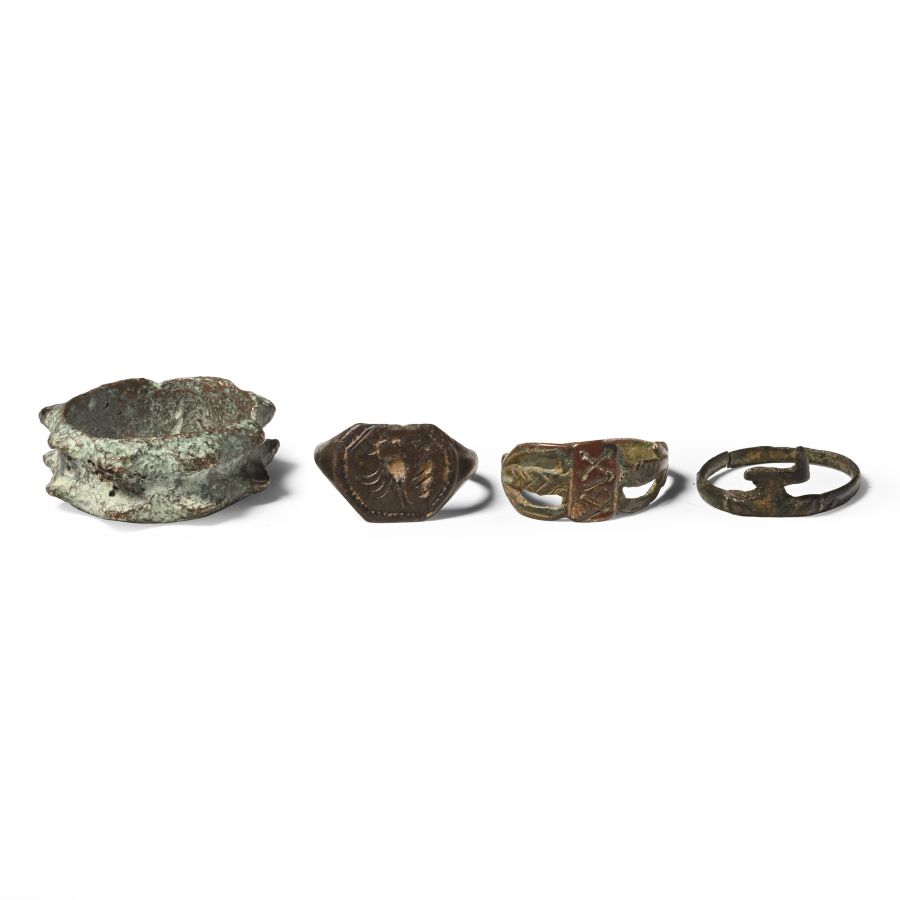
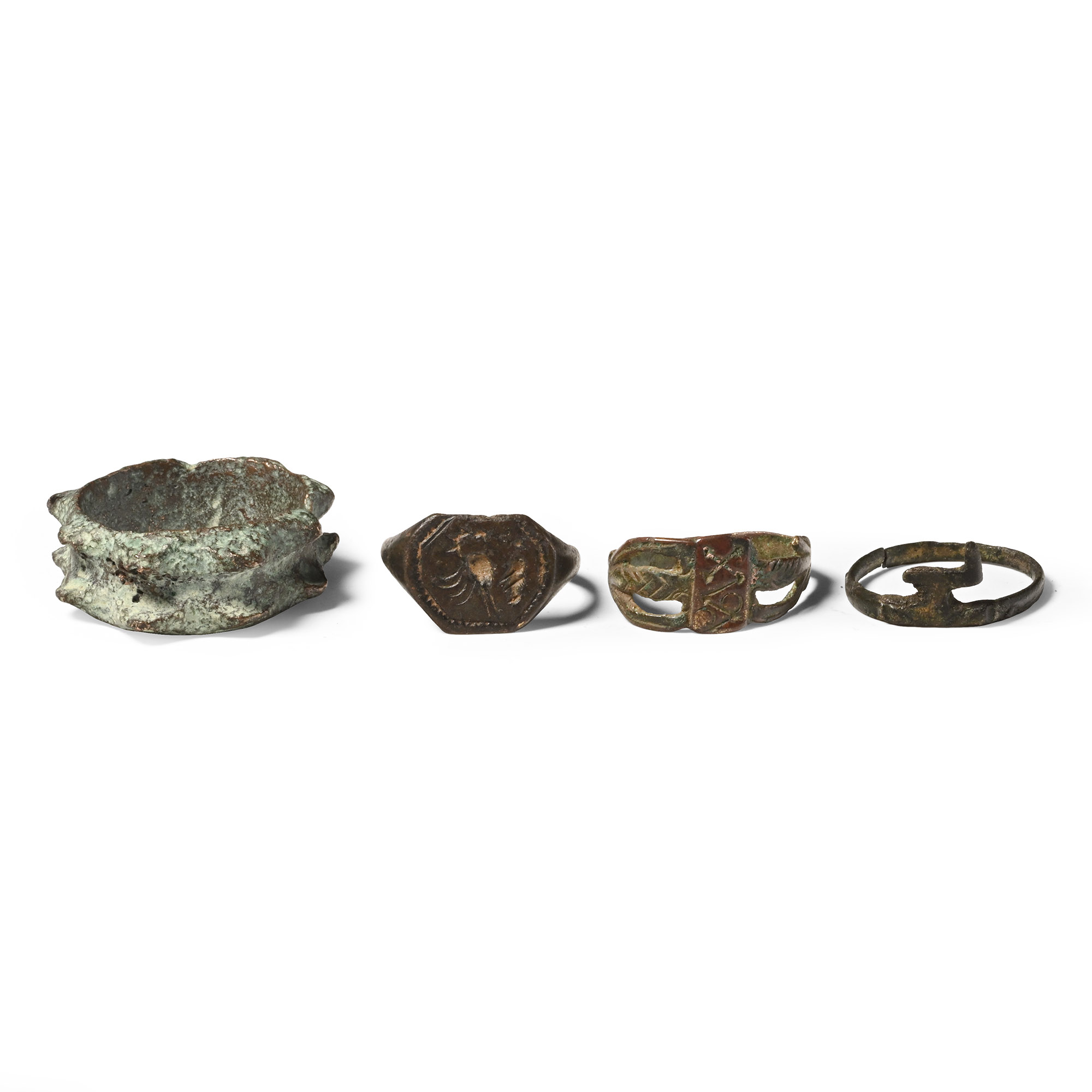
Roman and Later Ring Collection
1ST CENTURY A.D. AND LATER
7/8 - 1 3/8 in. (22.9 grams total, 21-34 mm).
Including openwork type with 'PAX' monogram, spiked band and other types. [4]
ProvenancePrivate collection, Europe.
Acquired on the English art market.
TimeLine Auctions follows a vetting process to ensure the authenticity and legality of all items, reinforcing our commitment to integrity and responsible trading. Each antiquity, antique, and coin lot undergoes thorough examination by a vetting committee of at least ten external specialists, professional trade association members, scientists, and archaeologists: Our Vetting Process
AUCTIONS:
TimeLine is a leading auction house specialising in antiquities, ancient art, collectables, natural history, coins, medals, and books. Our auctions offer museums, collectors, historians, and enthusiasts the opportunity to acquire unique and historically significant pieces.
-
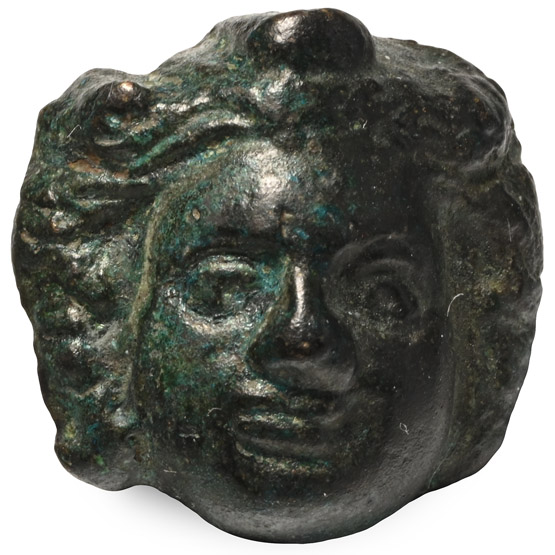
Roman Bronze Eros Head Mount
1st-4th century A.D.Sold for (Inc. bp): £46
Modelled in the half-round, the mask with youthful facial features and curly hair; stud to reverse. 7.38 grams, 18 mm
Ex P Chapman collection, 19080s-1990s. -
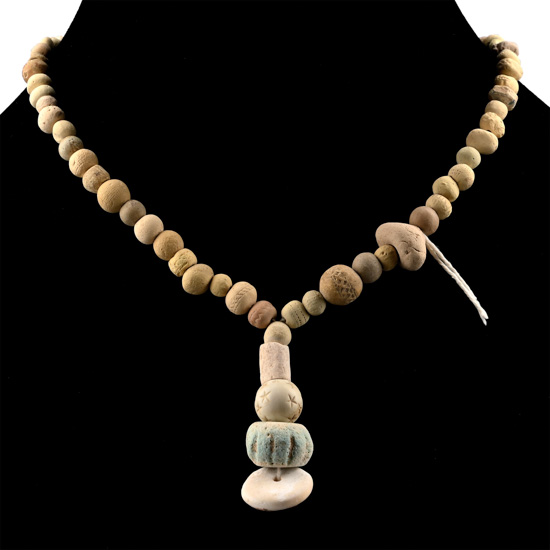
Roman and Other Ceramic Bead Necklace String
1st-4th century A.D. and laterSold for (Inc. bp): £52
Composed of graduated spherical and oblate beads, the central feature with a spherical stone bead with incised star motifs, a large discoid bead and a melon bead; restrung. 21.42 grams, 32.6 cm
From London, UK, gallery collection, 1990s. -
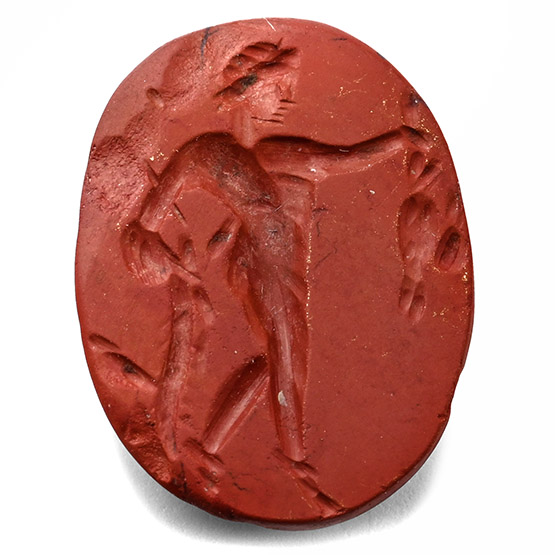
Roman Red Jasper Gemstone with Mercury
2nd-3rd century A.D.Estimate: £240 - 300 (+bp*)
Opening Bid: £120
Ellipsoid in plan with incuse figure of Mercury standing, holding out his coin-purse. 1.13 grams, 16 mm
From the Fadel family collection, London, UK, 1970s.
