
Loading, please wait...
LOT 0707
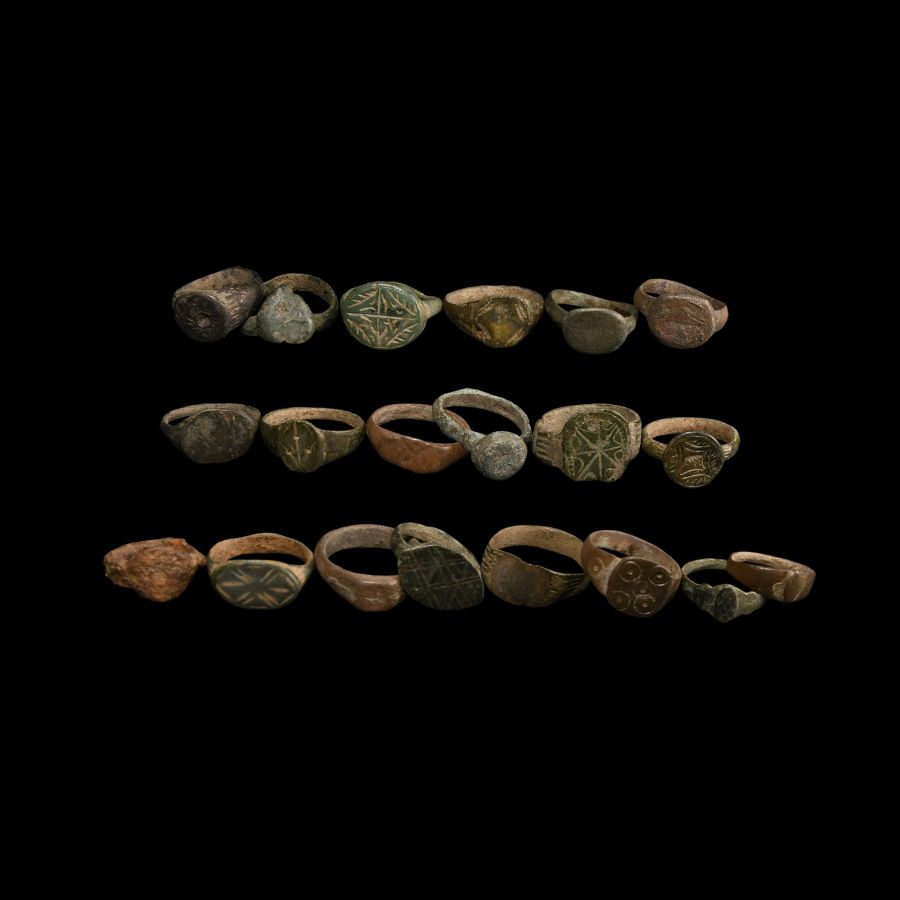
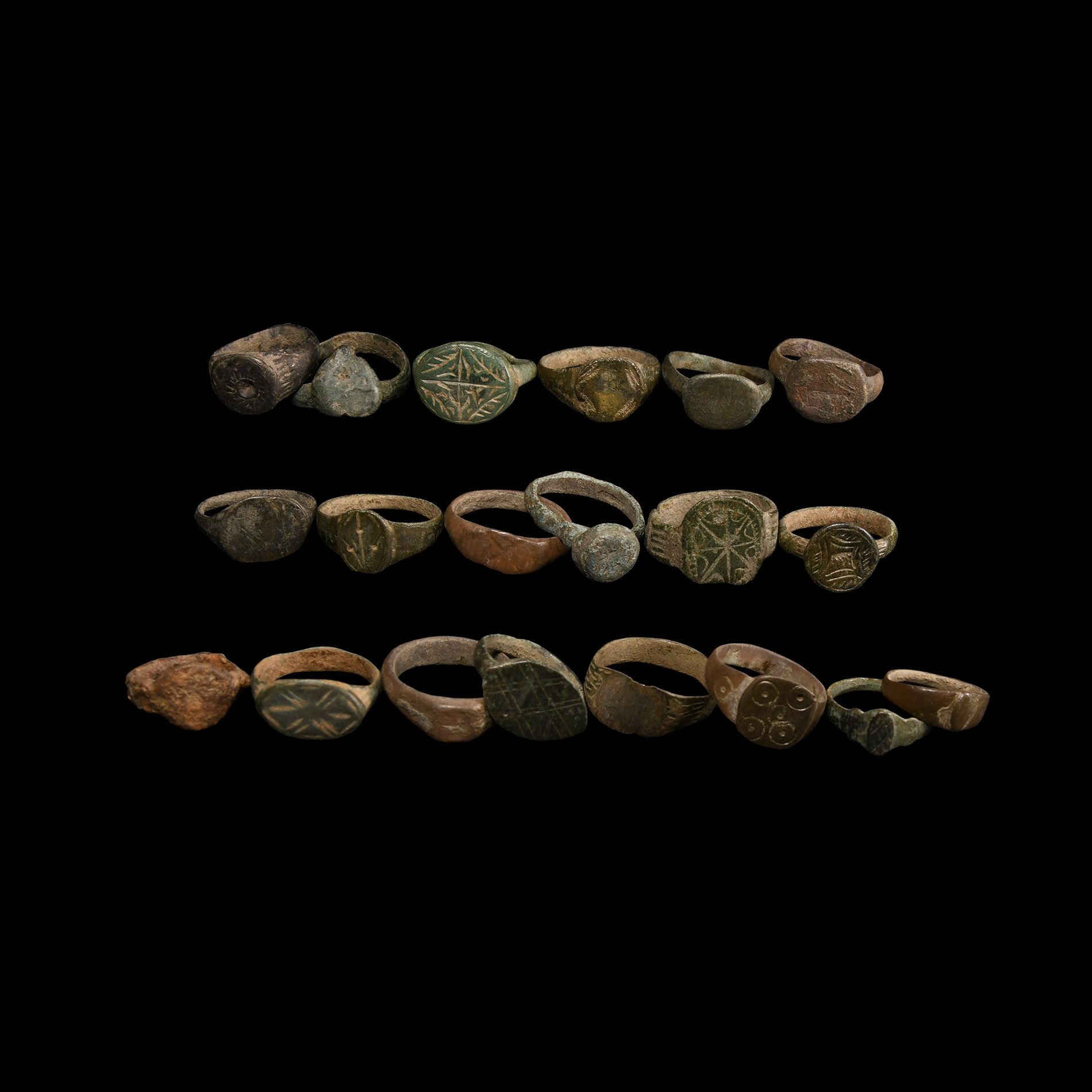
Roman and Later Ring Collection
1ST-19TH CENTURY A.D.
5/8 - 1 in. (76 grams total, 17-24 mm).
A mixed group of copper-alloy finger rings of various types and sizes, including examples with incised geometric motifs, stars, plants, ring-and-dot motifs. [20, No Reserve]
ProvenanceAcquired before 2000.
From the collection of a European gentleman living in the UK.
TimeLine Auctions follows a vetting process to ensure the authenticity and legality of all items, reinforcing our commitment to integrity and responsible trading. Each antiquity, antique, and coin lot undergoes thorough examination by a vetting committee of at least ten external specialists, professional trade association members, scientists, and archaeologists: Our Vetting Process
AUCTIONS:
TimeLine is a leading auction house specialising in antiquities, ancient art, collectables, natural history, coins, medals, and books. Our auctions offer museums, collectors, historians, and enthusiasts the opportunity to acquire unique and historically significant pieces.
-
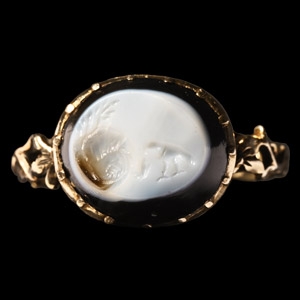
Roman Gemstone in Gold Ring
2nd century A.D. and laterEstimate: £1,500 - 2,000 (+bp*)
Opening Bid: £750
A sardonyx intaglio of a bird pecking at a worm, set into a Georgian gold finger ring with openwork tendril detailing to the hoop, cupped bezel with rosette to the underside. 3.13 grams, 25.68 mm overall, 18.43 mm internal diameter (approximate size British N 1/2, USA 6 3/4, Europe 14.35, Japan 13)
UK private collection. with Bertolami Fine Art, London, 22 April 2022, lot 79. English private collection. -
.jpg)
Roman Medical Instrument Group
1st-3rd century A.D.Sold for (Inc. bp): £25
A group of two medical instruments comprising: a probe with one thick rounded end and a triangular blade to the other; a probe with one knopped end and a flat spoon or pallette to the other. 26.9 grams total, 12.3-16 cm
Fine condition.
Ex UK art market, 1970s. Property of a London gentleman. -
.jpg)
Roman Bone Dice Pair
1st-4th century A.D.Sold for (Inc. bp): £130
A pair of bone dice with punched ring-and-dot numbering, each composed: 1:6; 2:5; 3:4. 3.4 grams total, 10 mm each
Fine condition.
German art market, 1990s. Mr A.H., a North American collector living in the UK.
