
Loading, please wait...
LOT 0758
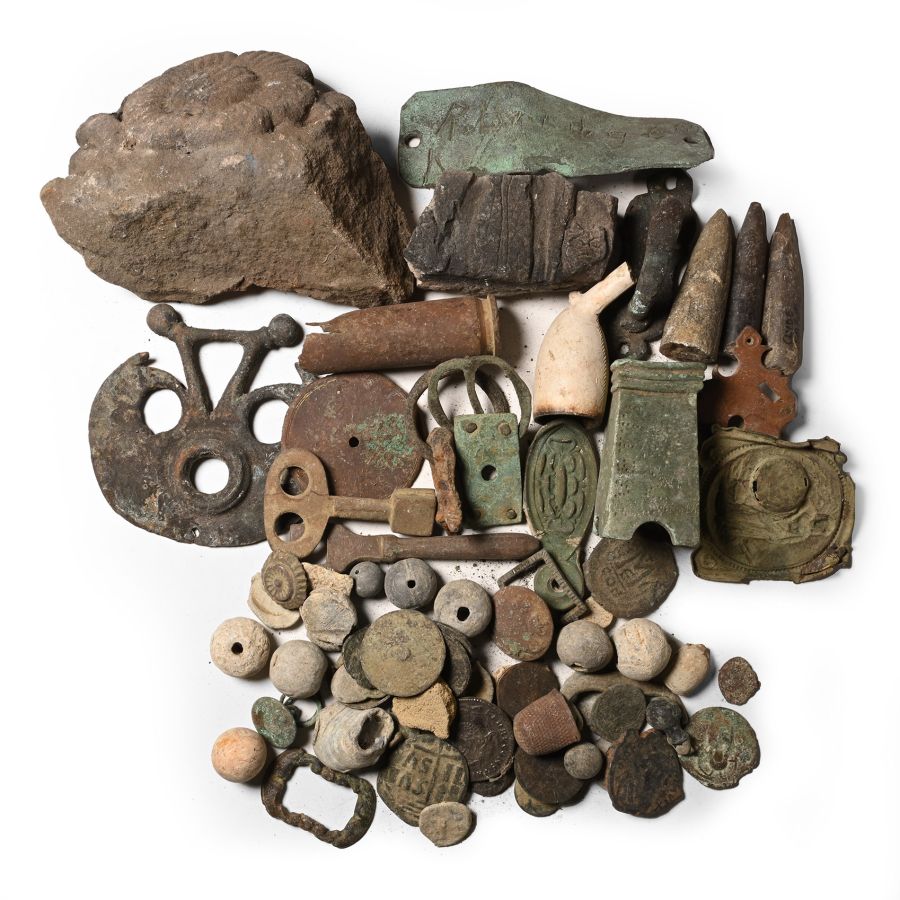
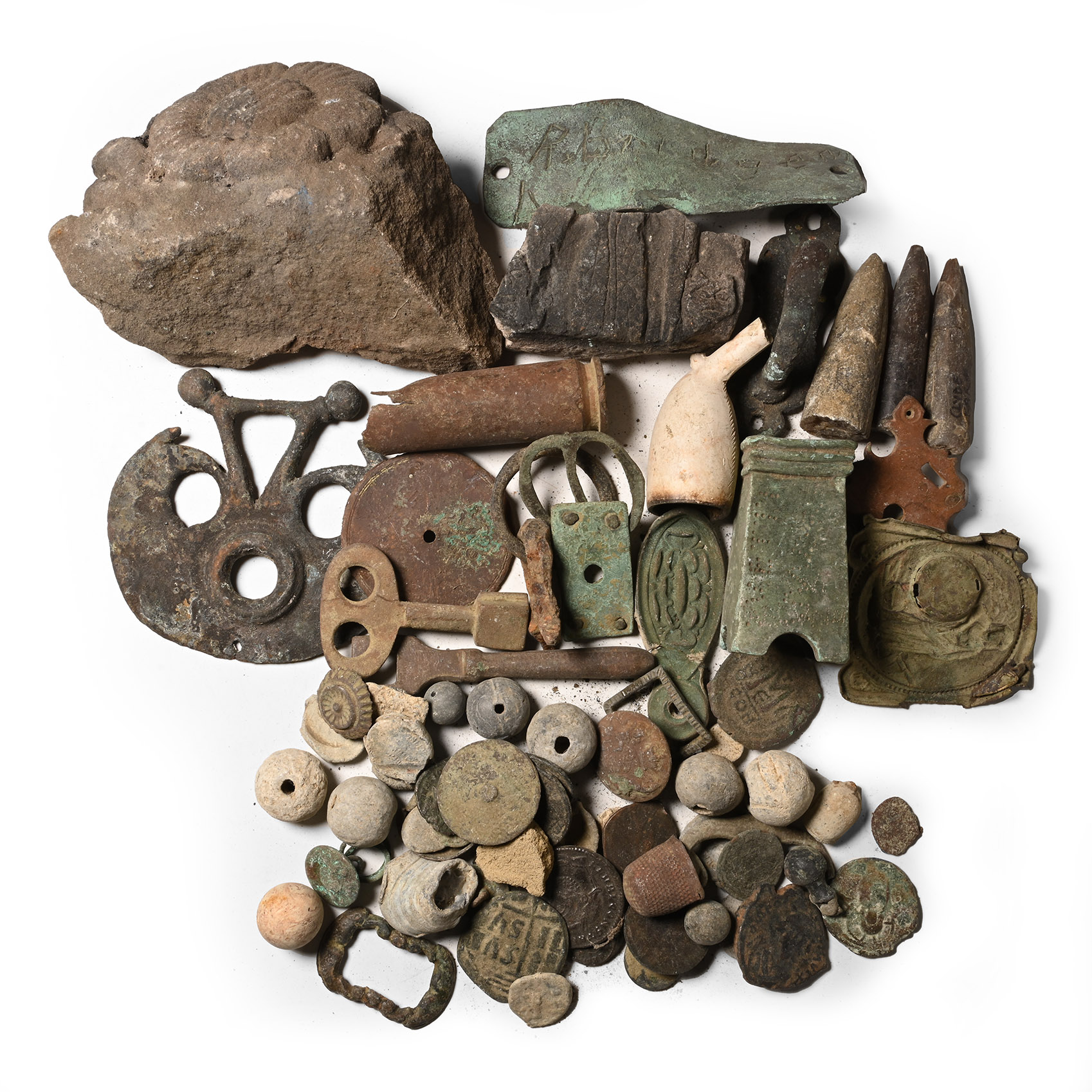
Roman and Later Mixed Artefact Group
MAINLY 2ND-18TH CENTURY A.D.
1/2 - 4 3/8 in. (1.35 kg total, 1.1-11.1 cm).
Including a bronze coin, buckle loops, glass marbles, lead tokens, thimbles, furniture fittings, and other items. [73, No Reserve]
ProvenanceFrom a collection acquired on the UK art market from various auction houses and collections mostly before 2000.
From an important Cambridgeshire estate; thence by descent.
TimeLine Auctions follows a vetting process to ensure the authenticity and legality of all items, reinforcing our commitment to integrity and responsible trading. Each antiquity, antique, and coin lot undergoes thorough examination by a vetting committee of at least ten external specialists, professional trade association members, scientists, and archaeologists: Our Vetting Process
AUCTIONS:
TimeLine is a leading auction house specialising in antiquities, ancient art, collectables, natural history, coins, medals, and books. Our auctions offer museums, collectors, historians, and enthusiasts the opportunity to acquire unique and historically significant pieces.
-
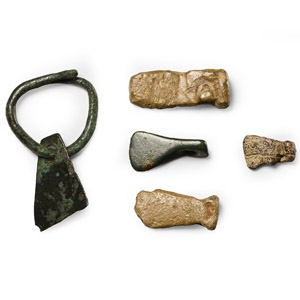
Roman Bronze and Lead Votive Axehead Collection
1st-4th century A.D.Sold for (Inc. bp): £65
Comprising: three lead axes; one bronze with rounded blade; one sheet-bronze with round-section loop. 15.8 grams total, 11-35 mm
Ex German art market, 2000s. Acquired from an EU collector living in London. From the collection of Surrey, UK, gentleman. -
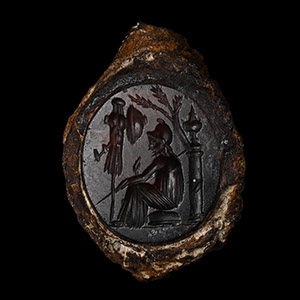
Roman Iron Ring with Gemstone
1st-4th century A.D.Sold for (Inc. bp): £1,105
discoid bezel with intaglio scene of figure wearing a helmet and pleated robe sitting on a rock beneath a tree with a spear resting on one shoulder, altar behind him flaming vessel, post with armour and shield. 5.59 grams, 23.23 mm overall, internal diameter 11.8x15.38 mm (approximate size British F, USA 2 3/4, Europe 3.67, Japan 3)
From the collection of a gentleman, acquired on the London art market in the 1990s. -
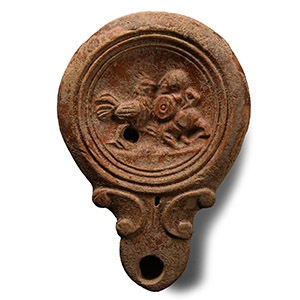
Roman Terracotta Oil Lamp with Dwarf Gladiator
1st-2nd century A.D.Sold for (Inc. bp): £780
Squat in profile with broad body, volute scrolls to nozzle, discus with high-relief scene of a grotesque dwarf wearing gladiator's costume and fighting with a cockerel. 47 grams, 10 cm
From the private collection of Mr K.A., acquired in the 1990s-early 2000s.
