
Loading, please wait...
LOT 0922
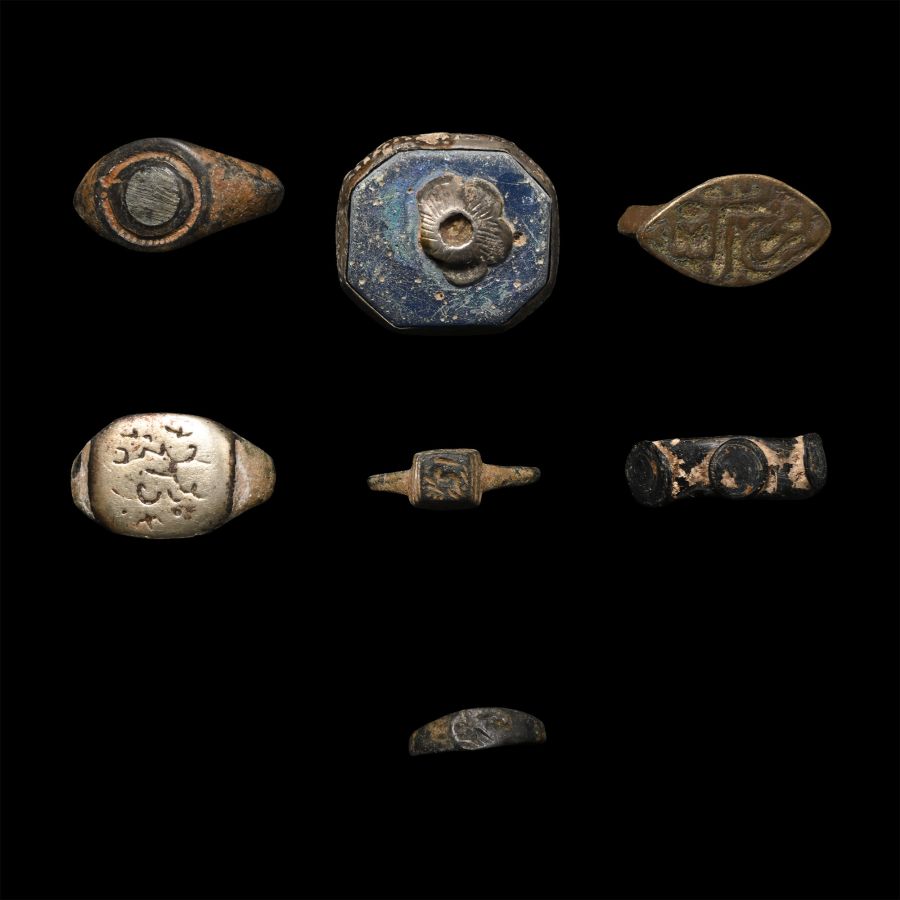
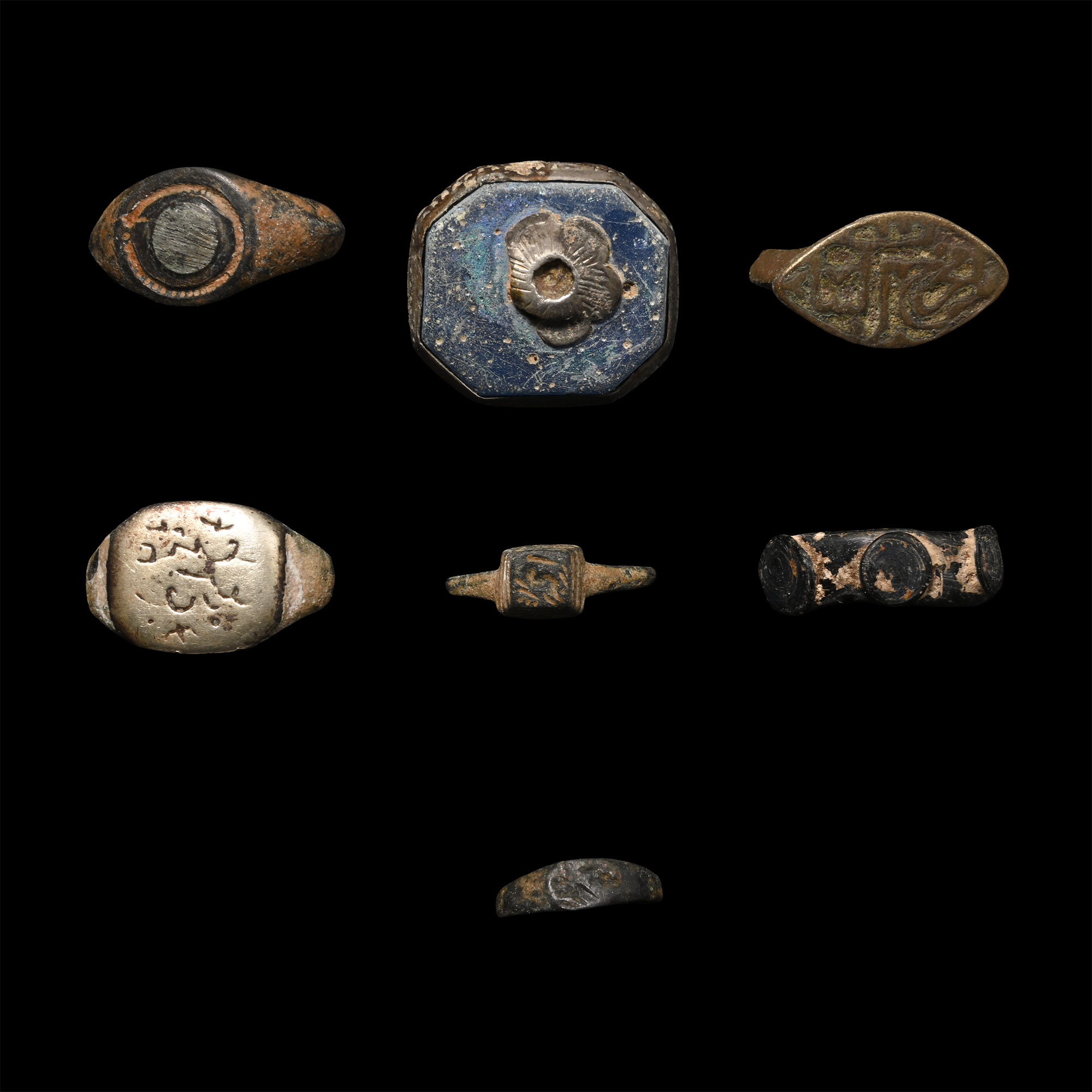
Roman and Later Bronze Ring Group
CIRCA 1ST-4TH CENTURY A.D.
1/2 - 1 1/8 in. (25.4 grams total, 13-29 mm).
Comprising: a slender ring with a rectangular tiered bezel; a ring with a large bezel with blue glass intaglio with a silver flower; a ring with oval bezel with linear motifs; a ring with a keeled hoop and lentoid bezel; a glass ring with three raised bosses; a small interphalangial ring; a ring with a raised disc on the bezel. [7, No Reserve]
ProvenanceFrom the private collection of a European gentleman (1942-2024), formed since the 1970s.
CONDITIONTimeLine Auctions follows a vetting process to ensure the authenticity and legality of all items, reinforcing our commitment to integrity and responsible trading. Each antiquity, antique, and coin lot undergoes thorough examination by a vetting committee of at least ten external specialists, professional trade association members, scientists, and archaeologists: Our Vetting Process
AUCTIONS:
TimeLine is a leading auction house specialising in antiquities, ancient art, collectables, natural history, coins, medals, and books. Our auctions offer museums, collectors, historians, and enthusiasts the opportunity to acquire unique and historically significant pieces.
-
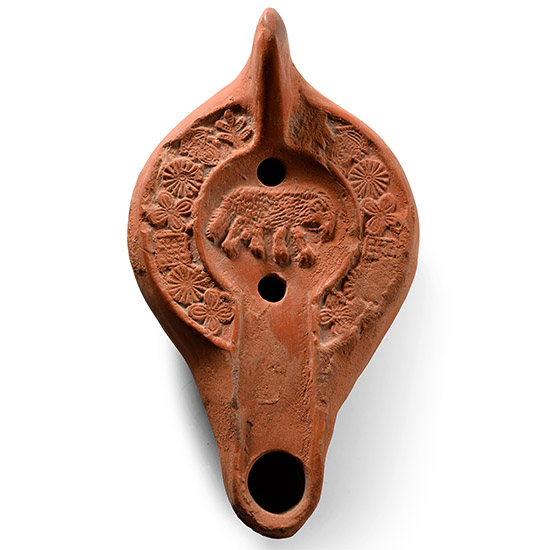
Late Roman Terracotta Oil Lamp with Ram
5th-6th century A.D.Sold for (Inc. bp): £208
Comprising an elongated nozzle with a raised rim extending to the discus, two filler holes flanking an advancing ram with curly fleece detailing and curving horns, floral detailing on the shoulder and a low basal ring. 176 grams, 14.5 cm
By descent to the son of a late Hertfordshire gentleman collector, whose collection was formed from the 1960s. -
.jpg)
Roman Bronze Pyre on Base Dedicated by Aurelius Rufus
Circa 3rd century A.D.Sold for (Inc. bp): £2,210
Model of an altar with tiered flames, socle base with flared base and pointillé Greek inscription in two lines: 'AYPHΛ [vine leaf] POYΦΟC THEω ΦΑΛ / [/]AMAE ZAMΕΝΟC ]ANETHEKEN': for 'Aurelius Rufus dedicated this for the god FAL ... The Roman name of the dedicant as well as the letter forms point most probably to the 3rd century A.D. 731 grams, 11.5 cm
Ex collection, before 1980. Private collection, Netherlands. -
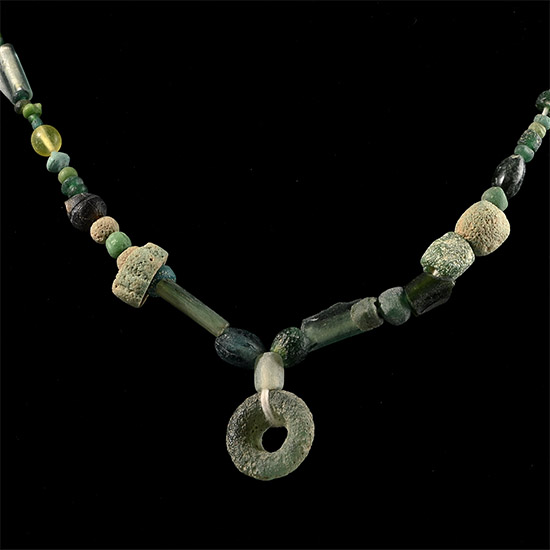
Roman Green Glass Bead Necklace String
1st-4th century A.D. and laterSold for (Inc. bp): £182
Composed of mixed beads including oblate, spherical, and other types, the central feature a large annular bead, restrung. 22.8 grams, 41 cm
Acquired in the 1990s. Ex London, UK, collection.
