
Loading, please wait...
LOT 0686
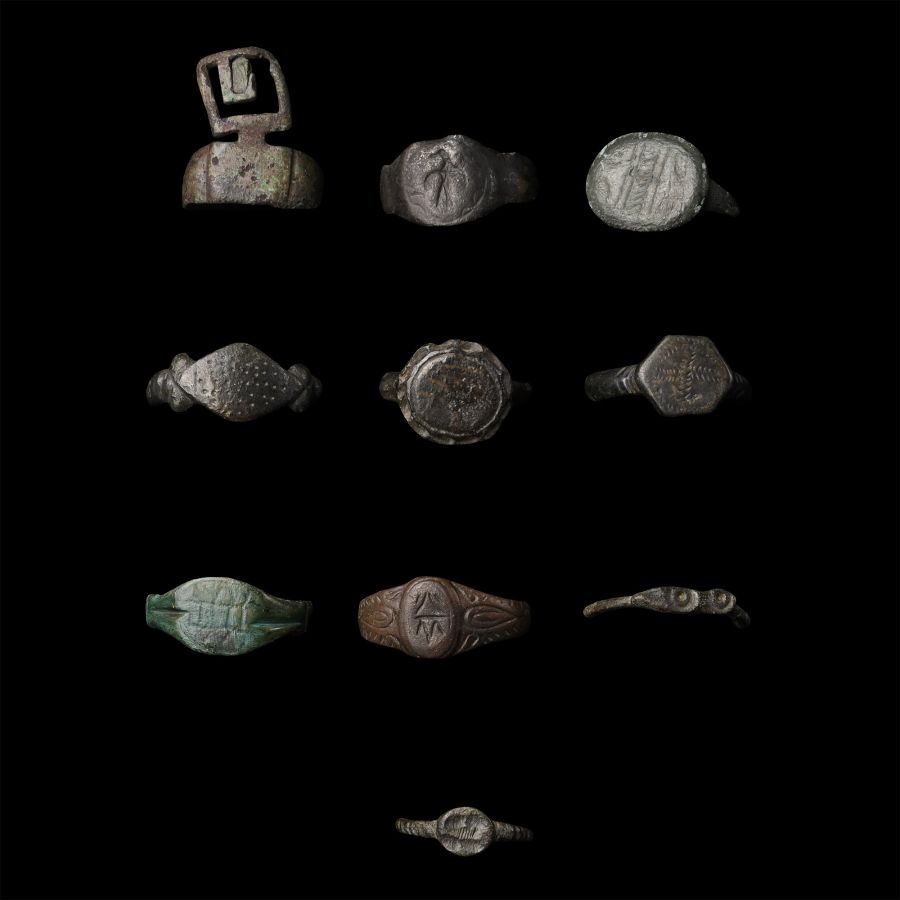
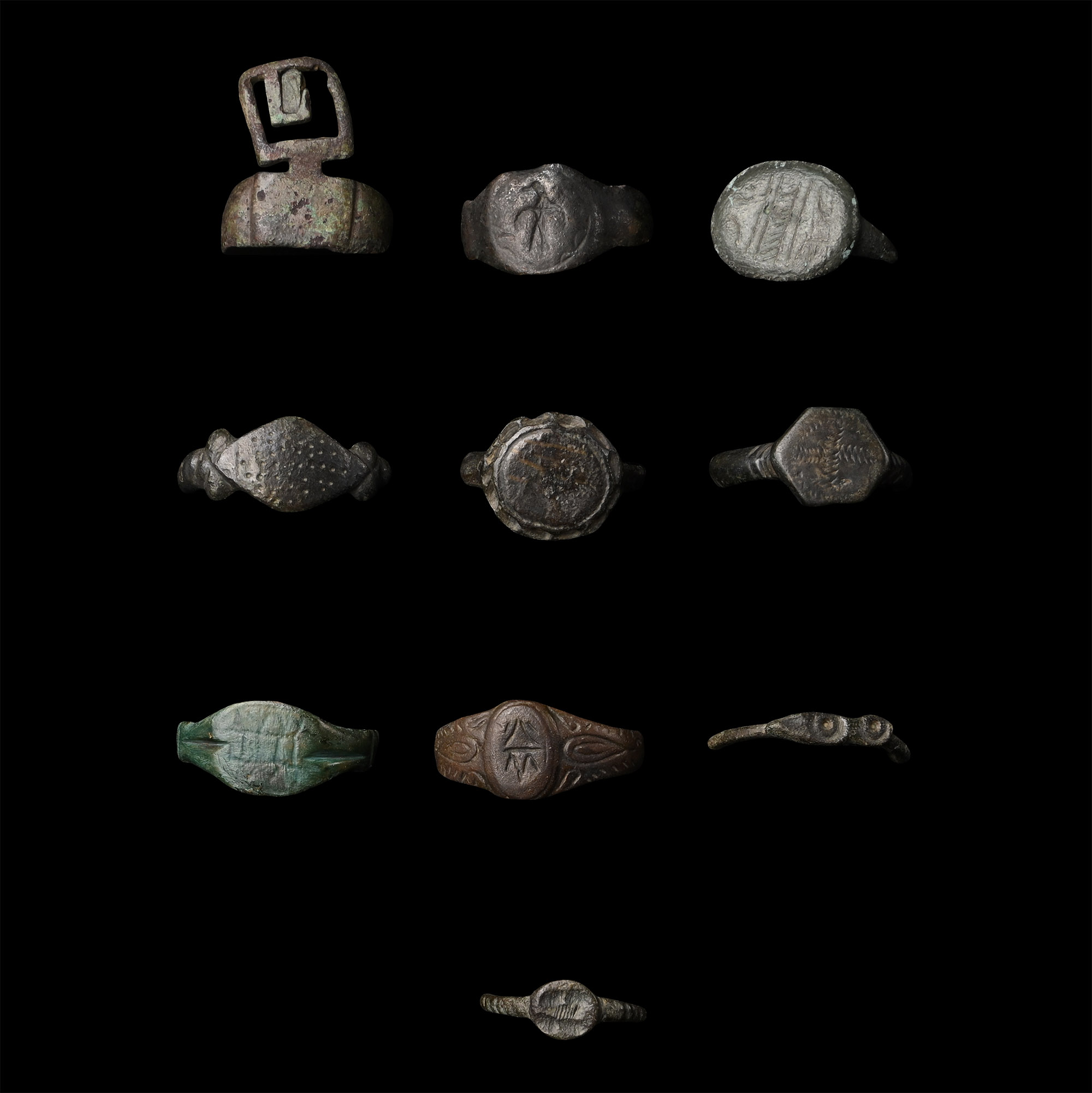
Roman and Later Bronze Ring Collection
1ST-16TH CENTURY A.D.
3/4 - 1 in. (36 grams total, 19-25 mm).
Comprising a key ring and nine rings with decorative bezels. [10, No Reserve]
ProvenanceEx German art market, 2000s.
Acquired from an EU collector living in London.
From the collection of a Surrey, UK, gentleman.
This lot is accompanied by an illustrated lot declaration signed by the Head of the Antiquities Department, Dr Raffaele D'Amato.
TimeLine Auctions follows a vetting process to ensure the authenticity and legality of all items, reinforcing our commitment to integrity and responsible trading. Each antiquity, antique, and coin lot undergoes thorough examination by a vetting committee of at least ten external specialists, professional trade association members, scientists, and archaeologists: Our Vetting Process
AUCTIONS:
TimeLine is a leading auction house specialising in antiquities, ancient art, collectables, natural history, coins, medals, and books. Our auctions offer museums, collectors, historians, and enthusiasts the opportunity to acquire unique and historically significant pieces.
-
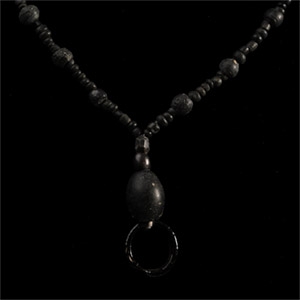
Roman Black Glass Bead Necklace String
1st-4th century A.D. and laterSold for (Inc. bp): £65
A designer necklace composed of mainly oblate beads, central feature composed of large barrel-shaped bead with a suspended glass ring below; restrung. 14.9 grams, 30.3 cm
From the London, UK, art market in the 1990s. This lot is accompanied by an illustrated lot declaration signed by the Head of the Antiquities Department, Dr Raffaele D'Amato.
In the Roman period there was a strong formal and chromatic diversity of glass beads used for necklaces and bracelets. The most common beads in forms were small biconical (lenticular), barrel-shaped, spherical and annular; the most common colours were dark blue, followed by green and yellow. The succession of glass beads often imitates jewellery made of costly materials (gold, silver, semi-precious and precious stones). Green, blue-green, blue, yellow, and black drawn and rounded glass beads (like here) are late Roman types. -
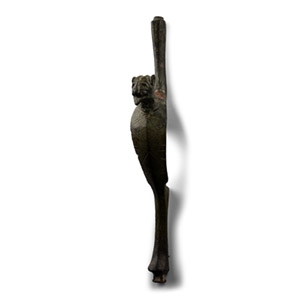
Roman Bronze Miniature Table Leg with Face of a Lion
1st-4th century A.D.Sold for (Inc. bp): £46
The shank formed as two octagonal-section bulbs with median carinated bow; incuse geometric pattern, lion-mask modelled in the round with protruding tongue. 60 grams, 13.2 cm
Acquired on the UK art market. Property of an East Anglia private collector. This lot is accompanied by an illustrated lot declaration signed by the Head of the Antiquities Department, Dr Raffaele D'Amato. -
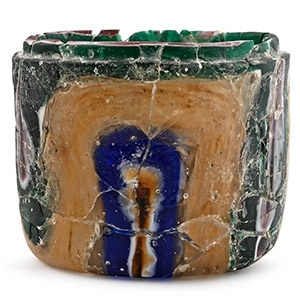
Roman Banded Glass Pyxis
1st century A.D.Estimate: £500 - 700 (‡+bp*)
Opening Bid: £250
Drum-shaped in profile with stepped rim; repaired. 87 grams, 60 mm
Acquired in the late 1980s. Private collection, thence by descent. Private collection, since the late 1990s. This lot is accompanied by an illustrated lot declaration signed by the Head of the Antiquities Department, Dr Raffaele D'Amato.
