
Loading, please wait...
LOT 0579
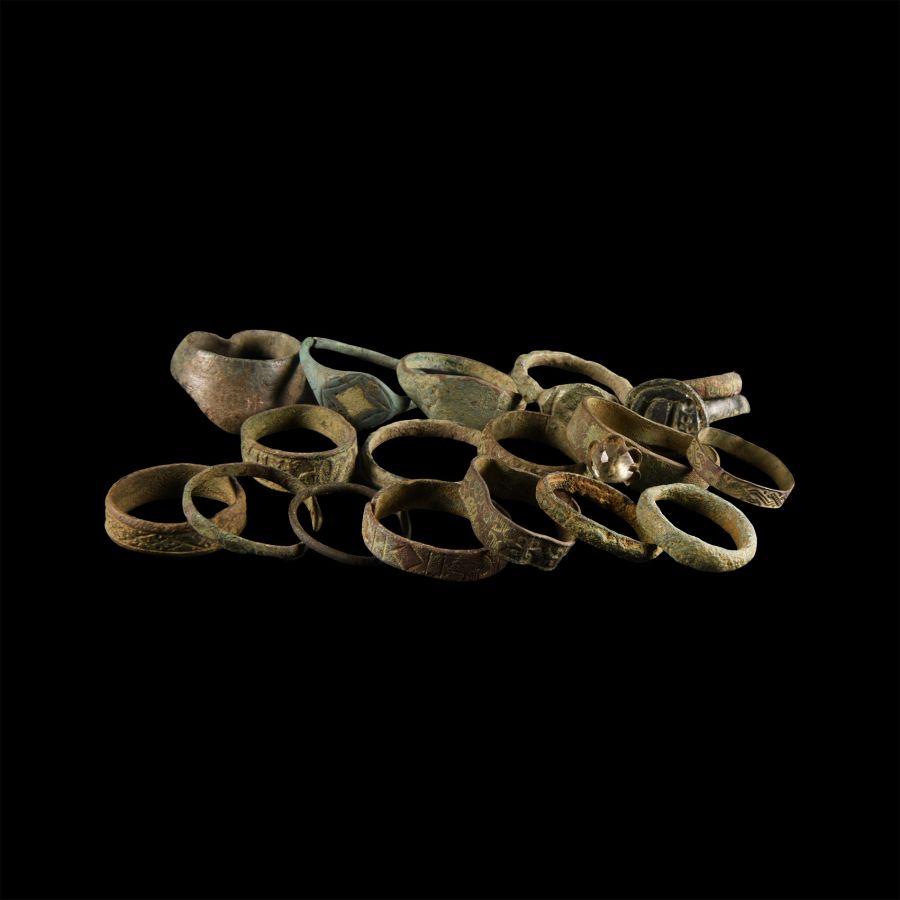
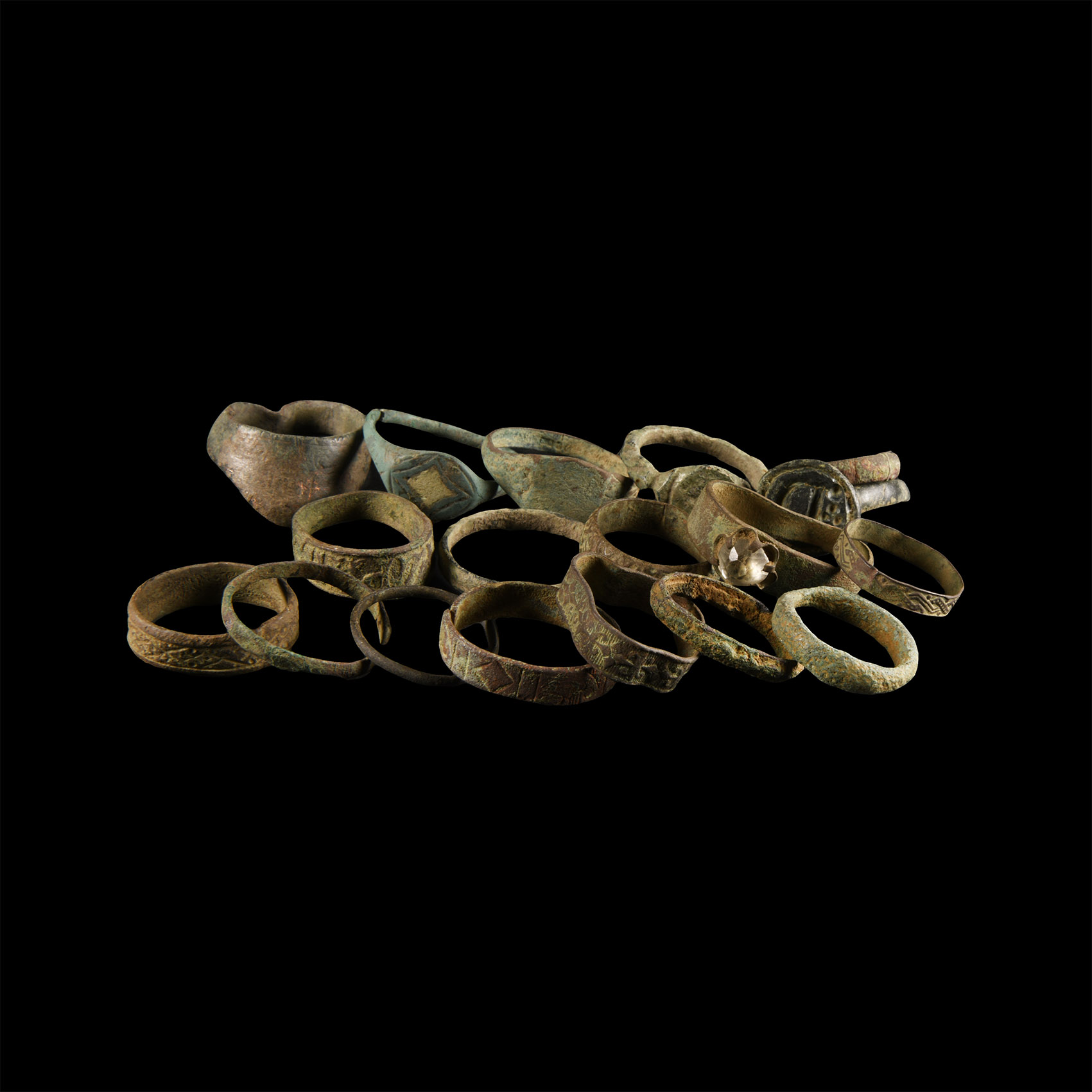
Roman and Later Bronze Ring Collection
1ST-20TH CENTURY A.D.
5/8 - 1 in. (42 grams total, 17-27 mm).
Comprising examples with: enamelled bezels; seal bezels; an archer's thumb ring; bezel set with a 'jewel'; hoops with inscriptions around the exterior; hoops with geometric schemes around the exterior; plain examples. [18, No Reserve]
ProvenanceFound Berkshire, UK.
CONDITIONTimeLine Auctions follows a vetting process to ensure the authenticity and legality of all items, reinforcing our commitment to integrity and responsible trading. Each antiquity, antique, and coin lot undergoes thorough examination by a vetting committee of at least ten external specialists, professional trade association members, scientists, and archaeologists: Our Vetting Process
AUCTIONS:
TimeLine is a leading auction house specialising in antiquities, ancient art, collectables, natural history, coins, medals, and books. Our auctions offer museums, collectors, historians, and enthusiasts the opportunity to acquire unique and historically significant pieces.
-
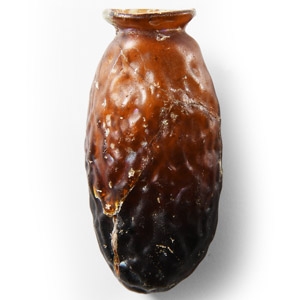
Roman Amber Glass Date Vessel
2nd-3rd century A.D.Sold for (Inc. bp): £169
Mould-blown with elliptical body, short neck and thick everted rim in amber-tinted glass, the body with modelled wrinkles to resemble a date. 30.3 grams, 64 mm high
Acquired 1970s-1996. Property of a North American collector. London collection, 2016. -
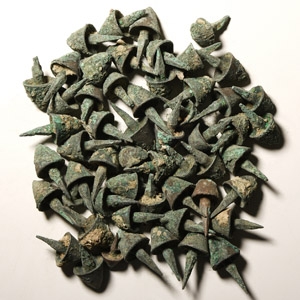
Roman Bronze Armoured Door Stud Group
1st-4th century A.D.Sold for (Inc. bp): £124
Fifty-five in total, most with conical or domed heads and tapering square-section pins. 1.67 kg total, 36-52 mm
From a UK collection before 2000. Acquired from a London, UK, gallery. -
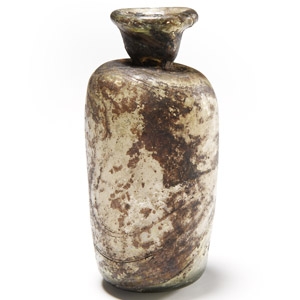
Roman Glass Barrel-Shaped Flask
2nd-3rd century A.D.Estimate: £120 - 170 (+bp*)
Opening Bid: £60
Cylindrical shape with flat bottom, short v-shaped neck with everted rim. 55.4 grams, 98 mm
Acquired 1980-2015. Ex Abelita family collection.
